
Find the Best Options Trading Platform for Secure, Smart Trading
Introduction: Why picking the right platform matters
Thinking about trading options can feel exciting, but before you dive in, there’s one very important step: picking the right platform.

Choosing the best options trading platform is like picking the right tools for a special job. If you pick the wrong tools, the job can be much harder, cost more, or even be risky.
Your choice of trading platform really matters for a few big reasons:
- Costs: Different platforms have different fees. Some might charge you every time you make a trade, while others have lower fees or even offer free trades on some things. These costs can really add up, especially for beginners or those interested in active strategies like day trading. You want a platform that helps you keep more of your money.
- Safety: When you open an account, you’ll share important personal details like your government ID and Social Security number [cite: https://www.fidelity.com/learning-center/smart-money/how-to-open-a-brokerage-account]. So, knowing your money and information are safe is super important. A trustworthy platform will protect your personal data and investments.
- Learning Curve for Beginners: If you’re new to options trading, some platforms can feel really confusing. The best brokerage account for beginners should be easy to use, with clear instructions and helpful tools.
You might even want a platform that offers an options trading simulator. This lets you practice trading with fake money, so you can learn without any real risk. This is a smart first step before you use real funds.
In 2026, there are many trading apps and platforms out there. This guide will help you understand what to look for so you can find the best options trading platform for your needs. We’ll talk about costs, security, and how easy platforms are to use. Our goal is to give you clear information so you can choose with confidence.
As you explore different platforms and learn about options, staying informed is key. For more simple, step-by-step trading education and safety tips, you might like the free Clicks and Trades newsletter.
Ready to learn more and make a smart choice for your options trading journey?
How to choose a trading platform: safety, features, and ease of use
Choosing the best options trading platform means looking closely at a few key things. You want a platform that keeps your money safe, has tools that help you learn and grow, and is easy to use every day.
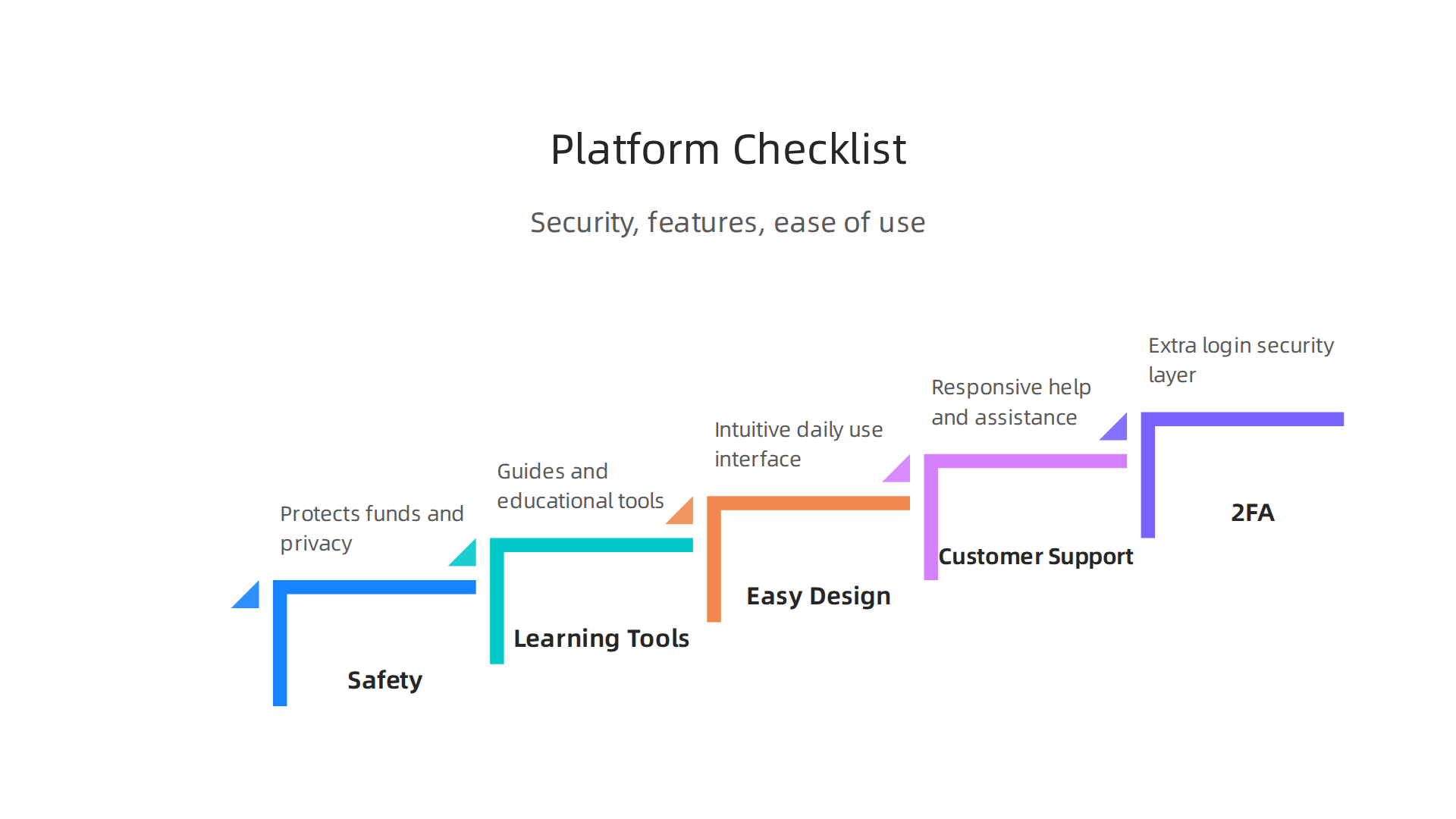
Let’s explore what to look for in 2026.
Your Money’s Safety and Rules
First and most important, you need to know your money and personal information are safe. Here’s how good platforms protect you:
- Regulatory Protections: Trustworthy platforms are overseen by important groups. For example, in the United States, the Securities Investor Protection Corporation (SIPC) protects your cash and investments if a brokerage firm fails [cite: https://www.sec.gov/files/ctf-written-craig-m-lewis-economic-analysis-defi-04-07-2026.pdf]. Other countries have similar protections, like the FSCS in the UK. These groups make sure financial firms follow strict rules [cite: https://www.oecd.org/content/dam/oecd/en/topics/policy-sub-issues/financial-consumer-protection/Revised-Compendium-of-Effective-Approaches-March-2026.pdf]. You can also look for oversight from groups like FINRA, which keeps an eye on brokers [cite: https://www.finra.org/sites/default/files/2025-12/2026-annual-regulatory-oversight-report.pdf].
- Keeping Your Money Separate: A good brokerage firm keeps your money and investments separate from its own company funds. This is called "segregation of client assets" [cite: https://www.sec.gov/files/ctf-written-input-daniel-bruno-corvelo-costa-011826.pdf]. It means if the company has problems, your money is usually protected.
Helpful Features for Beginners
The best options trading platform, especially for beginners, offers tools that make learning and trading simpler:
- Practice Accounts: Look for an options trading simulator, often called a "demo account" or "paper trading." This lets you practice buying and selling options with fake money. It’s a great way to learn without any real risk before you use real funds. You can learn more about this risk-free step in our guide to paper trading.
- Learning Tools: Many platforms offer free educational materials like videos, articles, and webinars. These can teach you how options work and how to use the platform.
- Easy-to-Use Design: A simple and clear website or trading app makes a big difference.

If you’re looking for the best brokerage account for beginners, you want one that’s easy to navigate, not confusing. This is also important if you plan on using it as a best day trading platform for beginners.
- Customer Support: Can you easily get help if you have a question or a problem? Good customer support, like chat or phone help, is very important.
Practical Checks for Your Peace of Mind
Before you open an account, do these quick checks:
- Deposits and Withdrawals: How easy is it to put money into your account and take it out? What options do they offer, like bank transfers?
- Two-Factor Authentication (2FA): This is a must for security. It means you need two ways to prove it’s you when you log in, like a password and a code from your phone. This extra step helps keep your account safe from hackers.
- Insurance and Dispute Process: Understand if there’s extra insurance for your account beyond what regulators offer. Also, know how the platform handles problems or disagreements. A clear process is a good sign.
Picking the right platform is a big step for your options trading journey. By checking for strong safety, helpful tools, and ease of use, you can find the best options trading platform for you.
For more simple, step-by-step trading education and safety tips, make sure to check out the free Clicks and Trades newsletter. It’s packed with clear guidance to help you trade with confidence.
Ready to learn more and make a smart choice for your options trading journey?
Now that you know what to look for, let’s talk about some of the top brokerage platforms in 2026. Thinking about which one is the "best options trading platform" means checking them side-by-side. We will look at what makes each good for different types of traders, especially beginners.
How We Compare Trading Platforms
When you’re trying to find the best brokerage account for beginners, it helps to compare them on a few main things:
- Best for Learning: Some platforms are like schools for traders. They have lots of free videos, articles, and ways to learn. Fidelity is often praised for its educational resources, for example.
- Low Costs: You want to keep your trading fees low. Many platforms offer no commissions for stocks, but options usually have a small fee per contract traded. Look for platforms that are known for fair pricing, like tastytrade or Firstrade when it comes to options trading [cite: https://www.stockbrokers.com/guides/optionstrading].
- Options Trading Tools: Does the platform make it easy to trade options? Does it have special tools to help you understand options risks and rewards? Platforms like Charles Schwab, Interactive Brokers, and E*TRADE are often highly rated for their options tools [cite: https://www.nerdwallet.com/investing/best/options-trading-brokers].
- Crypto Access: If you want to trade things like Bitcoin or other digital money alongside options, you will need a platform that lets you do that. Not all options brokers offer crypto. For more on this, you can learn about what cryptocurrency is.
What to Look at When Rating a Platform
When you see reviews or compare platforms, here are the main things they usually talk about:
- Fees: This includes how much you pay to buy or sell options. For options, this is often a small fee for each contract you trade [cite: https://www.sec.gov/files/roundtable-options-market-structure.pdf]. The fees can add up, so it’s a big deal.
- How Fast Your Trades Happen: This is called "execution quality." It means how quickly and smoothly your orders to buy or sell are processed. Good platforms make sure your trades go through at the price you expect.
- What You Can Trade: Can you only trade options and stocks, or can you also trade things like forex, mutual funds, or even crypto? The more options, the better if you plan to branch out.
- Research Tools: Top platforms offer tools and reports to help you decide what to trade. These can be charts, news feeds, or expert analysis. These tools are very important if you are trying to find the best day trading platform for beginners or the best platform for day trading. Many trading apps will have some of these features built in [cite: https://www.bankrate.com/investing/best-online-brokers/].
Making Your Quick Decision
It might feel like there are many choices for the best options trading platform. Here’s a simple way to decide:
- Shortlist: Pick 2 or 3 platforms that seem to fit your needs best based on the categories above. Think about which one is the best brokerage account for beginners for you.
- Try Them Out: Use their practice accounts, often called an options trading simulator or paper trading. This lets you play with fake money to see how the platform works and if you like its feel. We talked more about this risk-free step in our guide to paper trading.
- Start Small: If you feel ready, you can start with a small amount of real money. See how it feels to trade with actual funds before committing more.
Remember, the "best options trading platform" is the one that fits your goals, helps you learn, and makes you feel safe and confident. It’s all about finding the right fit for your trading journey.
For more simple steps and clear guidance on trading, you can always check out the free Clicks and Trades newsletter. It’s a great way to stay informed and trade with confidence.
Ready to take the next step and confidently choose your platform?
Best Options Trading Platforms (How to Find the Best Options Trading Platform)
Choosing the best options trading platform for you means looking at special features that help with options. It’s more than just buying and selling stocks. You want a platform that makes options trading clear and easy, especially if you’re just starting out in 2026.
Special Tools for Options Traders
When you trade options, you’re dealing with contracts that give you the right, but not the duty, to buy or sell something. This can get a bit complex, so good tools are a must. The best options trading platform will have:
- Options Chains: These are like lists that show you all the options contracts available for a certain stock. They help you pick the right one.
- The "Greeks": These are fancy names like Delta, Gamma, Theta, and Vega. They’re numbers that help you understand how risky an option is and how its price might change. A good platform shows these clearly so you can make smart choices.
- Strategy Builders: Sometimes, you want to trade a few options together to create a special plan. Strategy builders help you put these plans together and see how they might work. Platforms like Charles Schwab, Interactive Brokers, and E*TRADE are often praised for their strong options tools [cite: https://www.nerdwallet.com/investing/best/options-trading-brokers]. tastytrade also offers great tools for serious options traders [cite: https://www.stockbrokers.com/guides/optionstrading].
- Assignment Handling: This is what happens if your option contract is "exercised" or "assigned." The platform should make it easy to understand what to do next.
Learning and Practice for Options Trading
Options trading can be tricky, so learning is super important.

The best brokerage account for beginners in options will offer:
- Paper Trading or Options Trading Simulator: This lets you practice trading options with fake money. You can try out different strategies without risking your real cash. It’s a risk-free way to learn how the trading apps work and build confidence. You can read more about this important step in our guide to paper trading.
- Options Analytics and Strategy Labs: These tools help you understand how different options strategies might perform. They can show you possible profits or losses before you even make a trade.
- Good Education: Platforms like Fidelity are known for their strong educational materials, offering articles, videos, and webinars to help you understand fidelity options trading and more [cite: https://www.stockbrokers.com/guides/optionstrading].
What Options Trading Costs
Fees are a big deal in options trading. While many stock trades are free, options usually have a small fee for each contract.
- Per-Contract Fees: This is a small charge for every option contract you buy or sell. These fees can add up quickly, especially if you trade a lot.
- Exercise/Assignment Fees: Sometimes, if your option contract is completed, you might pay an extra fee.
- Margin Requirements: For some advanced options strategies, you might need to use "margin," which is money you borrow from your broker. This has its own rules and costs.
Platforms like tastytrade and Firstrade are known for having competitive pricing for options trading, which is great for keeping your costs down [cite: https://www.stockbrokers.com/guides/optionstrading].
Finding the best options trading platform means finding one that gives you the right tools, helps you learn, and keeps fees fair. It’s all about what makes you feel confident and ready to trade.
Ready to take the next step and confidently choose your platform?
Crypto-friendly exchanges and custody: what beginners need to know
After looking at options trading, let’s switch gears to crypto. If you’re thinking about buying digital money like Bitcoin or Ethereum in 2026, you’ll need a good place to do it and a safe way to keep it. This is where crypto-friendly exchanges and understanding "custody" come in.
Holding Your Crypto: Exchanges vs. Your Own Wallet
When you buy crypto, you have a big choice: let an exchange hold it for you, or hold it yourself in a personal wallet.
- Custodial Exchanges (Like a Crypto Bank): This is the easiest way for most beginners. You buy crypto on an exchange like Coinbase or Binance, and they keep it safe for you.
It’s like putting your money in a bank. These exchanges are great for turning your regular money into crypto and back again, and for quick trades [cite: https://www.cryptowisser.com/guides/crypto-custody-guide-2026/]. Many people use the trading apps offered by these platforms because they are simple.
- Self-Custody Wallets (Your Own Pocket): This means you are fully in charge of your crypto. You get special keys that only you control. No one else can access your crypto without these keys. This offers a lot of control and security, but it also means you are responsible for keeping your keys safe. If you lose them, your crypto is gone forever. Some people use special devices called hardware wallets for this. For a helpful video on how to protect your crypto, you can check out this guide [cite: https://www.youtube.com/watch?v=I5M3aCN8qLs].
The best brokerage account for beginners in crypto often starts with a trusted custodial exchange because it’s simpler to learn the ropes. But as you get more confident, you might want to learn about self-custody. Learning about "what is cryptocurrency" is a great first step to understanding all these choices.
Picking a Good Crypto Exchange
Not all crypto exchanges are the same. It’s important to pick one that is safe and follows the rules. Here’s what to look for in 2026:
- Regulatory Status: Make sure the exchange follows the law. Governments around the world are making more rules for crypto, so a platform that plays by these rules is usually safer [cite: https://sumsub.com/blog/global-crypto-regulations/]. In the U.S., regulators are clarifying how companies can hold crypto safely [cite: https://www.fintechanddigitalassets.com/2026/01/sec-staff-provides-clarity-on-the-custody-of-cryptoasset-securities/].
- Security for Your Crypto: Check if the exchange keeps most customer crypto in "cold storage." This means they store it offline, away from the internet, which makes it much harder for hackers to steal [cite: https://www.cobo.com/post/crypto-custody-solutions-complete-guide]. Some exchanges also offer "proof-of-reserves," showing they have enough crypto to cover what customers own.
- Reviews and Reputation: Look up honest reviews for different exchanges. For example, some might look for etoro reviews or information about interactive brokers crypto options to see what others say about their experiences.
Setting Up Your Account and Trading
Once you pick an exchange, here’s what usually happens:
- Account Verification: You’ll need to show who you are, often by providing an ID. This is called "Know Your Customer" (KYC) and helps keep everyone safe.
- Depositing Money: You’ll connect your bank account or use a credit card to put money into your crypto account.
- Trading: You can then use your money to buy cryptocurrencies. Be aware of fees. Crypto exchanges charge different types of fees, like a small percentage for each trade or a fee to withdraw your crypto. These fees can be similar to the per-contract fees you might see in options trading.
- Withdrawal Limits: Many exchanges have limits on how much crypto or money you can take out at one time.
Choosing a good crypto platform means finding one that fits your needs, keeps your digital money safe, and makes it easy to use. For more step-by-step crypto education, safety tips, and clear guidance, consider signing up for the free Clicks and Trades newsletter.
Ready to take the next step and confidently choose your platform?
Fees, commissions, and hidden costs explained
When you start trading, whether it’s stocks, options, or crypto, it’s super important to know about all the fees involved. Just like buying anything, there are costs for using a trading service. These costs can eat into your money if you’re not careful. Understanding them helps you choose the "best options trading platform" or any platform that truly fits your needs without surprises.
Common Trading Fees
Here’s a look at the typical fees you’ll find:
- Commissions: This is a basic charge for making a trade. Some platforms offer "commission-free" trading for stocks, but they might still charge for other things. For options trading, you often see a small fee for each options contract you buy or sell
[cite: https://www.sec.gov/files/roundtable-options-market-structure.pdf].
- Spreads: This isn’t a direct fee, but it’s a cost. It’s the small difference between the highest price someone wants to buy something for (the "bid") and the lowest price someone wants to sell it for (the "ask"). You always buy at the ask and sell at the bid, so you’re instantly paying this small difference.
- Platform and Market Data Fees: Some trading apps, especially those for advanced traders, might charge a monthly fee to use their software or to get real-time market information. This can apply to specialized tools or even some TradingView or MT5 trading setups. In 2026, market data fees are something many companies charge for [cite: https://www.govinfo.gov/content/pkg/FR-2026-04-03/pdf/2026-06463.pdf].
- Inactivity Fees: Some brokerage accounts might charge you if you don’t trade for a long time. It’s their way of saying, "Use us or lose us!"
When looking for the "best brokerage account for beginners," check if they make these fees easy to understand.
Calculating Your Total Trading Cost
To know the true cost of a trade, you need to add up all these small pieces. For example, if you buy 10 options contracts at $0.65 per contract, you’ll pay $6.50 just for that. Add any spread cost, and maybe a small platform fee if you have one, and that’s your total. For people doing a lot of trades, like those looking for the "best day trading platform for beginners," these costs can really add up quickly.
Some accounts, known as "wrap fee programs," charge a single fee for all services instead of per-trade commissions [cite: https://www.janney.com/docs/default-source/client-resources-disclosures/disclosures-agreements-by-account-type/managed-accounts/wrap-fee-program-brochure.pdf?sfvrsn=7085f1b8_45]. Depending on how much you trade, this could be more or less costly than paying commissions for each trade.
Hidden Costs to Watch Out For
Sometimes, fees aren’t so obvious:
- Overnight Financing Fees: If you hold certain types of trades overnight, especially with some forex trading platform accounts, you might get charged a small fee.
- Currency Conversion Fees: If you’re trading assets in a currency different from your home currency, your platform might charge you to change your money back and forth [cite: https://www.hbs.edu/ris/Publication%20Files/Du_Huang_Scharfstein_14Feb2016_66992079-2e6b-4584-95cf-014441c77485.pdf].
- Withdrawal Fees: Like with crypto, some brokers charge you a fee to take your money out of your account. Always check their rules.
Before you choose a platform, make sure to read all the fee schedules very carefully. Look up "etoro reviews" or information on "interactive brokers crypto" to see what other traders say about their fees. You might also try using an options trading simulator or a "paper trading" account. This lets you practice trading and see how fees would affect your profits without using real money.
Understanding fees is a big step to becoming a smart trader. For more helpful tips and clear guidance on trading, consider joining the free Clicks and Trades newsletter.
Ready to manage your trading costs effectively?
Account Types, Registration Steps, KYC, Margin, and Retirement Accounts
After learning about fees, the next big step is understanding the different kinds of trading accounts and how to open one. It’s like choosing the right type of bank account for your money. Knowing this helps you pick the best options trading platform or any platform that fits what you want to do.
What Kind of Trading Account Do You Need?
There are a few main types of accounts you might see:
- Individual Account: This is the most common. It’s just for you, in your name.
- Joint Account: This account is for two or more people, like a married couple, who share control.
- Retirement Accounts (IRAs): These are special accounts for saving for when you stop working. You can sometimes trade options in them, but rules can be different. Platforms like Fidelity are known for offering various options trading tools, even within certain retirement accounts [cite: https://www.nerdwallet.com/investing/best/options-trading-brokers]. Always check with your broker first.
- Custodial Account: This account is for a child, but an adult manages it until the child is old enough.
- Cash Account: With a cash account, you can only trade with the money you actually have. This is often the best brokerage account for beginners because it’s simpler and less risky.
- Margin Account: This account lets you borrow money from your broker to make trades. We’ll talk more about this risky option soon. Many of the top brokerage accounts for 2026 offer different types of accounts to suit varied investor needs [cite: https://www.finder.com/stock-trading/best-brokerage-accounts].
How to Register and What "KYC" Means
Opening a trading account in 2026 usually happens online. Here’s what you generally need:
- Your Information: You’ll need to give your name, address, date of birth, and your tax ID number (like a Social Security Number).
- Documents: Get ready to upload pictures of your government ID, like a driver’s license or passport. You might also need proof of your address, like a utility bill.
- KYC Check: This stands for "Know Your Customer." It’s a rule to help stop bad people from using trading accounts for illegal things. Your trading app or platform needs to confirm you are who you say you are. This often means sending in your documents and waiting for them to be checked.
- Verification Time: For most users, this process is quick, often just a few days. But sometimes, especially for international users, it can take longer or require more steps.
Some platforms, like those mentioned in many etoro reviews, make it very easy to get started. Other platforms, like Interactive Brokers, might have a more detailed signup process, especially for those interested in interactive brokers crypto trading.
Margin and Leverage: What Beginners Should Know
A margin account lets you trade with borrowed money. This is called "leverage." If you have $100, your broker might let you trade as if you have $200 or more.
- Risks: While leverage can make your winnings bigger, it can also make your losses much bigger. You can even lose more money than you put into your account.
- Maintenance Requirements: If your trades go bad, your broker will ask you to put more money into your account. This is called a "margin call." If you don’t, they can sell your investments to cover the borrowed money.
- Beginners Beware: For these reasons, new traders, even those looking for the best day trading platform for beginners, should generally avoid using margin accounts. It’s much safer to start with a cash account and only trade with money you actually own. This helps you learn the ropes without extra risk. Learning about different account types is important for understanding how to trade safely. If you want to learn more about cryptocurrencies, check out our guide on what is cryptocurrency.
Understanding these account basics is key to a good start. For more clear advice on getting started in trading and handling different platforms, join our free Clicks and Trades newsletter.
Ready to explore your trading options safely?
Security Best Practices: Protecting Your Account and Private Keys
Okay, so you’ve learned about different account types and how to sign up. That’s a great start! Now, imagine you’ve built a cool treehouse. You wouldn’t leave the door wide open, would you? The same goes for your trading accounts. Keeping your money and information safe is super important, whether you’re using the best options trading platform or just trying out a simple trading app.

How to Keep Your Accounts Safe
Think of these as the basic rules to protect your online money.
- Strong Passwords: Make sure your password is long and uses a mix of different letters, numbers, and symbols. Don’t use the same password for all your accounts.
- Two-Factor Authentication (2FA): This is like having a second lock on your door. When you log in, the platform sends a special code to your phone or email. You need both your password and that code to get in. Many financial experts recommend this extra step to fight against online fraud, which is a big concern in 2026 for all kinds of trading, even with the rise of AI trading platform tools [cite: https://www.finra.org/sites/default/files/2025-12/2026-annual-regulatory-oversight-report.pdf].
- Hardware Wallets for Crypto: If you trade cryptocurrencies, you might hear about "hardware wallets." These are small physical devices, like a USB stick, that keep your crypto safe offline. This is usually the safest way to store a lot of crypto, as it keeps your digital "keys" away from the internet [cite: https://www.cryptowisser.com/guides/crypto-custody-guide-2026/]. This is much safer than just leaving your crypto on an exchange, even with good platforms known for interactive brokers crypto options or tradingview crypto tools.
Watch Out for Scams
Bad guys are always trying new ways to trick people. In 2026, you need to be extra careful.
- Phishing: Be careful with emails or messages that look like they’re from your trading platform but ask for your login details. Always check the sender’s email address very closely. If something feels off, it probably is. Firms have rules they must follow to protect you, as outlined in consumer protection codes [cite: https://www.oecd.org/content/dam/oecd/en/topics/policy-sub-issues/financial-consumer-protection/Revised-Compendium-of-Effective-Approaches-March-2026.pdf].
- Fake Customer Support: If someone calls you claiming to be from your broker and asks for your password or to download special software, be suspicious. Real customer support will never ask for your password.
- Fake Apps: Only download trading apps from official app stores. Check
etoro reviewsor look up fidelity options trading on their official site to make sure you’re using the real thing. Fake apps can steal your information.
Planning for When Things Go Wrong
Even with the best safety steps, it’s good to have a plan B.
- Seed Phrases: For crypto, when you set up a hardware wallet, you’ll get a "seed phrase." This is a list of words that can get your crypto back if you lose your wallet. Write it down and keep it somewhere very secret and safe. Never store it on your computer or share it with anyone. You can learn more about protecting your digital money in our guide on crypto for beginners.
- Account Recovery: Know how your trading platform helps you get back into your account if you forget your password or lose your phone. A good brokerage, even the best brokerage account for beginners, will have clear steps for this.
- Backups: Keep important documents related to your account, like statements, in a safe place.
Keeping your accounts secure is a big part of being a smart trader, especially when dealing with any platform, from the best day trading platform for beginners to those offering complex options trading simulator tools. Stay alert and protect your financial future!
For more simple advice on keeping your crypto safe and learning how to trade with confidence, check out our free Clicks and Trades newsletter. It’s packed with easy-to-understand tips for beginners like you.
Ready to secure your trades and learn more?
Summary
This guide explains how to pick the best options trading platform in 2026 by focusing on three core areas: safety, useful features, and ease of use. It covers regulatory protections like SIPC, how brokers segregate client assets, and simple security steps such as two-factor authentication and hardware wallets for crypto. The article walks beginners through practical checks (deposits, withdrawals, customer support), the important tools for options traders (options chains, the Greeks, and strategy builders), and how fees and hidden costs can affect your returns. It also compares platform strengths—learning resources, execution quality, and crypto access—and explains account types, KYC, margin risks, and retirement account considerations. Readers will learn how to shortlist platforms, test them with paper trading, start small, and choose a service that matches their goals and comfort with risk.
