
How to find the official E*TRADE login page safely
Start here: a safe path to your E*TRADE login
You just want to sign in and see your money. But today, one wrong click on a fake “etrade login” page can put your account at risk. That can feel scary, especially if you are new to online investing.
This guide is here to slow things down and keep you safe.
We’ll walk step by step through:
- How to find the real, official E*TRADE login page and avoid look‑alike scam sites
- What the normal login process should look like for E*TRADE
- How to turn on extra safety, like multi factor authentication (MFA)
- Simple fixes for common login problems, like wrong passwords or locked accounts
- When it is time to contact E*TRADE support and what to say
You do not need to know about things like finra login, oanda login, ce broker login, or even zerodha login to follow this. We will keep every step in plain language, for true beginners. If you can handle an email login, you can handle your E*TRADE login.
E*TRADE from Morgan Stanley lets you check balances, move cash, and place trades in one place, on web or app, and it is built with strong security tools to help protect you when you sign in and trade online, any time of day or night, as they explain in their own overview of E*TRADE investing and trading.
As you read, stay focused on one key idea: never rush your login.

A slow, careful click can save you from a big loss.
If you also learn about crypto and want the same kind of simple, safe steps there, you can get more beginner tips from the free newsletter at Clicks and Trades. It shares clear guides on scams, logins, and account safety in the crypto world.
When you are ready to keep building your money skills with friendly, step by step help, you can Sign Up for the free Clicks and Trades newsletter and keep learning at your own pace.
Quick start: Safely access the official E*TRADE login on web and mobile
When you type “etrade login” into a search bar, you might see many look alike links. Some are real, some are fake. Your goal is simple: reach the real E*TRADE login page every time, with no guesswork.
This quick start guide shows you how to do that on both web and mobile, in a calm and safe way.
The one safe rule for your E*TRADE login
Use this rule every single time:
You start the login, not a link in an email, text, or ad.
That means:
- You type the address yourself, or
- You click a bookmark you made, or
- You open the official E*TRADE app on your phone
If you follow that one rule, you avoid most fake “etrade etrade login” traps, the same way you would avoid random links for things like finra login, oanda login, ce broker login, or coin zerodha login.
Safely reach the official E*TRADE login on a computer
Here is the easiest safe path on a laptop or desktop.
Option 1: Type the address yourself
- Open your web browser
- Click into the address bar at the top
- Carefully type:
us.etrade.com - Press Enter
You should land on the official E*TRADE home page, which is run by E*TRADE from Morgan Stanley. From there, you can click “Log on” at the top and you will go to the real sign in page where you can access your account any time of day or night to view balances and trade securely online, as they describe in their own login overview page for E*TRADE account access.
Option 2: Use a trusted bookmark
Once you reach the real login page one time, make life easier for next time.
- On the real login page, add it to your bookmarks or favorites
- Give it a clear name, like “E*TRADE login”
- Next time you want to sign in, use that bookmark instead of search
This simple habit protects you from fake sites that may copy the look of the E*TRADE brand.
Check these signs before you type your password
Before you enter your user ID and password, pause for two seconds and look for:
- The web address starts with
https://us.etrade.com - There is a lock icon next to the address
- The page design looks clean and simple, not messy or full of pop up ads
- The login box asks for normal things, like user ID and password, not odd items like your full Social Security number or full card number
If anything feels “off”, stop. Do not type your details. Close the tab and start again from us.etrade.com or your bookmark.
Safely reach the official E*TRADE login on mobile
On your phone or tablet, the safest way to handle your E*TRADE login is with the official app. In 2026, E*TRADE offers a full featured mobile app that lets you check balances, transfer cash, and place trades from almost anywhere, in line with their focus on simple, mobile friendly investing tools on their trading platforms page.
Here is how to install it the safe way.
Step 1: Go to your device’s official app store
- On iPhone or iPad: open the Apple App Store
- On Android: open the Google Play Store
Do not tap links in emails, texts, or social media to get the app. Start inside the store yourself.
Step 2: Search for “E*TRADE”
In the store search bar, type E*TRADE.
Look for:
- App name: “E*TRADE: Invest. Trade. Save.” or very close
- Developer name: “ETRADE from Morgan Stanley” or “ETRADE Securities LLC”
- Lots of downloads and real looking reviews
On Android, you can see this on the official E*TRADE app listing in Google Play.
If the name or developer looks strange, skip it.
Step 3: Install only the official app
Once you see the real app:
- Tap “Install” or “Get”
- Wait for it to finish
- Open the app from your home screen
- Use your normal E*TRADE user ID and password to log in
You can then turn on extra safety inside the app, like fingerprint or face unlock, which we will cover in a later section.
Safe habits that work on every site, not just E*TRADE
The steps you use for your E*TRADE login also help you with other logins in your life, such as:
- Online brokers like Zerodha, when you use your normal or coin zerodha login
- Work accounts that feel as tricky as a finra login
- Pro tools that need a ce broker login or oanda login
The pattern is the same:
- You start at the real site or app store
- You check the address or app developer
- You use a bookmark or saved app instead of random links
If you ever move into crypto, these same habits are vital, because fake wallet and exchange sites are very common. If you want simple, step by step help on that side, you can follow the free guides from the Clicks and Trades newsletter. It shows you how to handle logins, wallets, and scams in the crypto world with the same slow, clear approach you are using here.
Your next step
Right now, you can:
- Pick your method for web: type
us.etrade.comor set a safe bookmark - Install the official E*TRADE app on your phone if you have not yet
- Practice checking the address and lock icon before every login
If you like learning money and account safety in calm, tiny steps, you can keep building your skills beyond E*TRADE. For more easy lessons on spotting scams, staying safe online, and one day adding crypto when you feel ready, you can Sign Up for the free Clicks and Trades newsletter and learn at your own pace.
Set up MFA on E*TRADE: stronger protection in minutes
You just learned how to reach the real E*TRADE login page. Now it is time to lock that door a little tighter.
Multi factor authentication, or MFA, adds one more step to your etrade login. It is like adding a second lock to your front door. Even if someone guesses your password, they still cannot get in without your one time code or approval.
In 2026, E*TRADE lets you use strong sign in tools across web and mobile, in line with their focus on secure, modern trading platforms on their online trading apps and platforms page.
What MFA looks like on your E*TRADE login
With MFA turned on, your normal sign in flow looks like this:
- Go to the real E*TRADE login page or open the official app
- Type your user ID and password
- Get a one time code or prompt, often on your phone
- Enter the code or tap approve
- Now you can see your accounts and trade
That extra step can block most break in attempts, even if your password is weak or reused, which is very important when you keep money for trading, saving, or banking in one place that connects to both investing and cash tools such as E*TRADE online banking.
The same idea also helps protect you on other sites, like when you use a finra login, oanda login, zerodha login, ce broker login, or coin zerodha login. Any account that holds money or work data should have MFA if it is offered.
How to turn on MFA in your E*TRADE settings
You turn on MFA from inside your account.
The exact menu names can change over time, but the steps stay simple.
-
Sign in from a trusted device
- Use your safe bookmark or type
us.etrade.com - Log in with your user ID and password like normal
- Use your safe bookmark or type
-
Go to your security or profile settings
- Look for words like “Security”, “Privacy”, or “Login settings”
- You may see a link after you log in from the main home page, near your name or profile icon
-
Find the MFA or 2 step sign in option
- It might say “Two factor authentication”, “2 step verification”, or “Extra login security”
-
Pick your main MFA method
Common choices include:- Text message code to your phone
- Code from an authenticator app
- Push alert inside the E*TRADE mobile app
-
Follow the on screen steps
- Enter your phone number if needed
- Scan a QR code or enter a setup code if using an app
- Type in a test code to prove it works
Once you finish, E*TRADE will ask for this extra step the next time you log in from a new device or browser. This gives you more control when you access powerful tools like their online trading solutions.
Always add at least one backup method
Here is the part many people skip, and regret later.
If you lose your phone, change numbers, or delete an app, you still need to get into your account. That is why you must set at least one backup MFA method right away.
In your security settings, look for options like:
- Backup phone number
- Backup email for codes
- Recovery codes that you can print or save
- An extra authenticator app on a different device
Pick at least one, and write down any recovery codes in a safe offline place, such as:
- A locked drawer at home
- A small paper note in a safe
- A password manager that you already trust
That way, if your main device is lost or broken, you can still reach your E*TRADE login, see your balances, and manage trades without panic.
Make MFA a habit on all your money accounts
Once you see how fast this is on E*TRADE, it makes sense to repeat it:
- Turn on MFA for every broker, bank, and work tool
- Use it for any place you sign in with money or ID data
- Teach family members to do the same
If you ever step into crypto later, this habit becomes even more important, because fake sites and wallet scams are common. For gentle, step by step help in that world, you can learn from the guides at Crypto Beginner Blueprint. It keeps the same calm style you are using here, with a big focus on safety and simple checklists.
If you like learning about login safety in small, clear steps and want future lessons on avoiding scams, strong passwords, and safe crypto setups, you can Sign Up for the free Clicks and Trades newsletter and keep building your skills at your own pace.
Authenticator apps vs SMS: which should you use?
When you turn on MFA for your E*TRADE login, you usually see two main choices: text message (SMS) codes or an authenticator app.
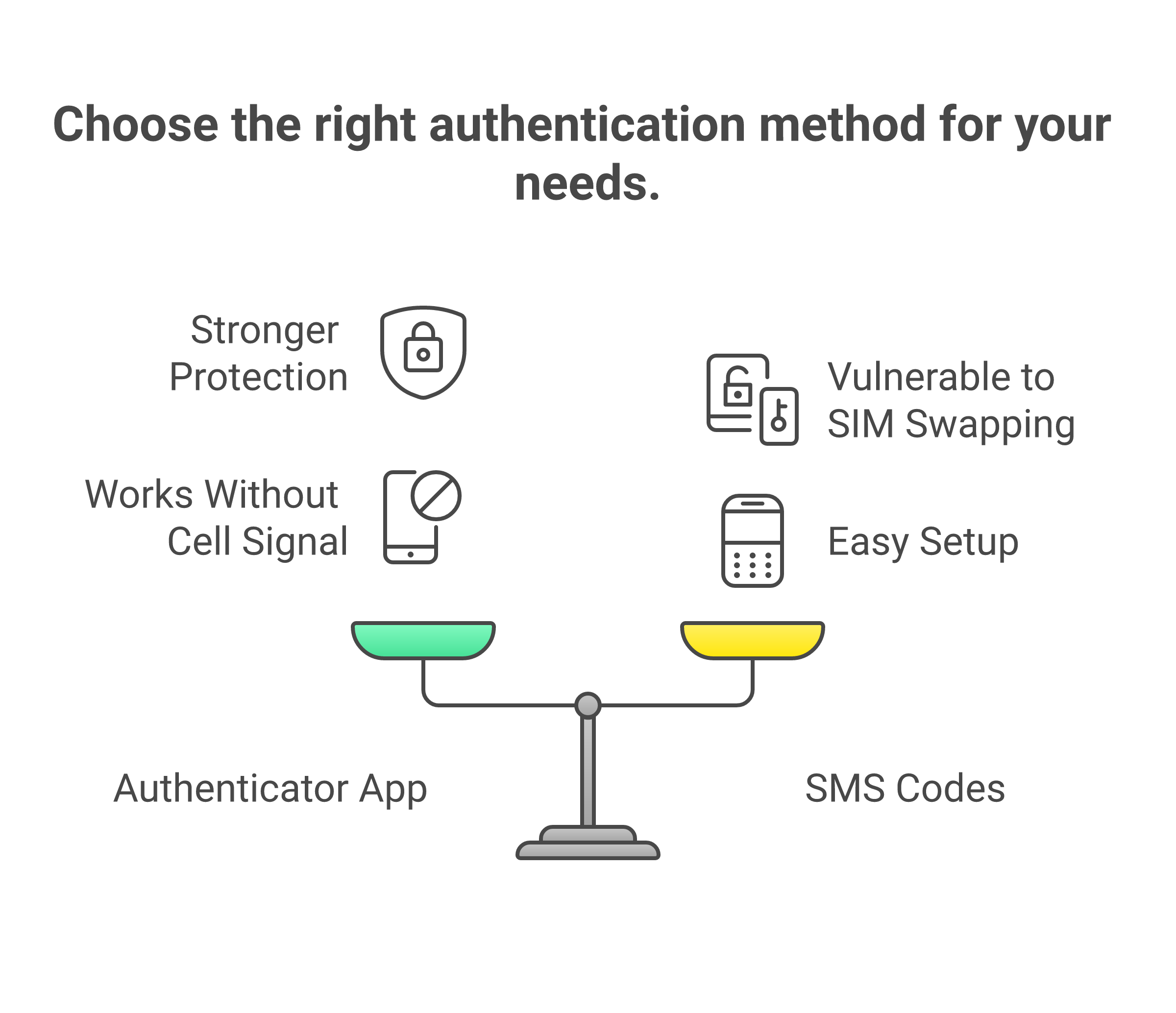
Both are better than no MFA at all, but they are not equal.
How SMS codes work
With SMS, E*TRADE sends a code to your phone number by text.
Good parts:
- Very easy to set up
- Works on almost any phone
- Feels simple for most people
Risk points:
- Attackers can try to hijack your phone number, called SIM swapping
- Text messages can sometimes be read or redirected by phone network tricks
Security pros often note that SMS is more open to number based attacks than app codes, so it is seen as a weaker method overall in 2026 compared to other MFA tools.[^1]
How authenticator apps work
Authenticator apps (like Google Authenticator or similar tools) show a 6 digit code that changes every 30 seconds. The code is made right on your device using a shared secret, not sent over the phone network, which makes it much harder for attackers to steal.[^2]
Good parts:
- Stronger protection than SMS in most cases
- Works even if you have no cell signal, as long as the app is on your device
- Not tied to your phone number
You do need a smartphone and a bit more setup, but after that, using the app feels quick and simple.
So which should you pick for your E*TRADE login?
For most people:
- Best choice for safety: Authenticator app as your main MFA
- Good backup: SMS as a second or backup method
This gives you strong security for your E*TRADE login, and still lets you in if your main device has a problem.
The same idea helps for other money accounts too, like a finra login, oanda login, zerodha login, ce broker login, or coin zerodha login.
If an authenticator app is offered, that is usually the safer pick.
If you know you will step into crypto later, starting with safer habits now will make that jump feel much easier. The guides at Crypto Beginner Blueprint use the same slow, calm style you see here, with clear lessons on setting up wallets, avoiding scams, and keeping your logins safe.
If you want simple, steady tips on safer sign ins, strong passwords, and beginner friendly crypto steps, you can Sign Up for the free Clicks and Trades newsletter and keep learning in short, plain language lessons.
[^1]: You can read more about why SMS codes are more at risk than other MFA methods in this overview of SMS vs authenticator app security.
[^2]: For a deeper look at why app based codes are seen as stronger than SMS for MFA in 2026, see this guide on passkeys, authenticator apps, and SMS tradeoffs.
Backup and recovery options you shouldn’t skip
Think about your E*TRADE login for a second. What if your phone gets lost, broken, or stolen? MFA is great, but without backups you can lock yourself out of your own money. Security pros say good MFA plans always include clear backup and recovery steps, not just a main factor alone.*
Here are simple backup options you should set up:
-
Backup codes:
Many sites give one time backup codes when you turn on MFA.- Save them right away
- Write them on paper
- Put that paper in a safe place at home, not in your wallet
-
A second device or app:
If your authenticator app lets you, add it on:- A second phone or tablet you own
- A secure desktop app you control
This way, if one device dies, you still have a way into your E*TRADE login, or even other accounts like a finra login, oanda login, zerodha login, ce broker login, or coin zerodha login.
-
Keep backups offline and private:
- Do not email codes to yourself
- Do not store them in plain text notes on your phone
- If you use a password manager, lock it with a strong, unique master password and MFA too, since good password habits are a key part of staying safe online in 2026.*
Think of it like a spare house key, you want it stored where you can get to it, but a stranger cannot.
If you like slow, safe, step by step help with things like MFA backups and scam checks, the guides at Crypto Beginner Blueprint follow the same calm style and focus on clear actions, not hype.
If you want simple tips on stronger sign ins today, plus friendly help for your first crypto steps later, you can Sign Up for the free Clicks and Trades newsletter and get short lessons you can read in a few minutes.
Troubleshooting login issues: a beginner safe workflow
You sit down to check your E*TRADE account, type your info, hit sign in, and boom. Error. Or the page just jumps back to the login screen. It feels scary when money is involved, but most etrade login problems are simple to fix.
Use this slow, clear workflow any time a login acts up.
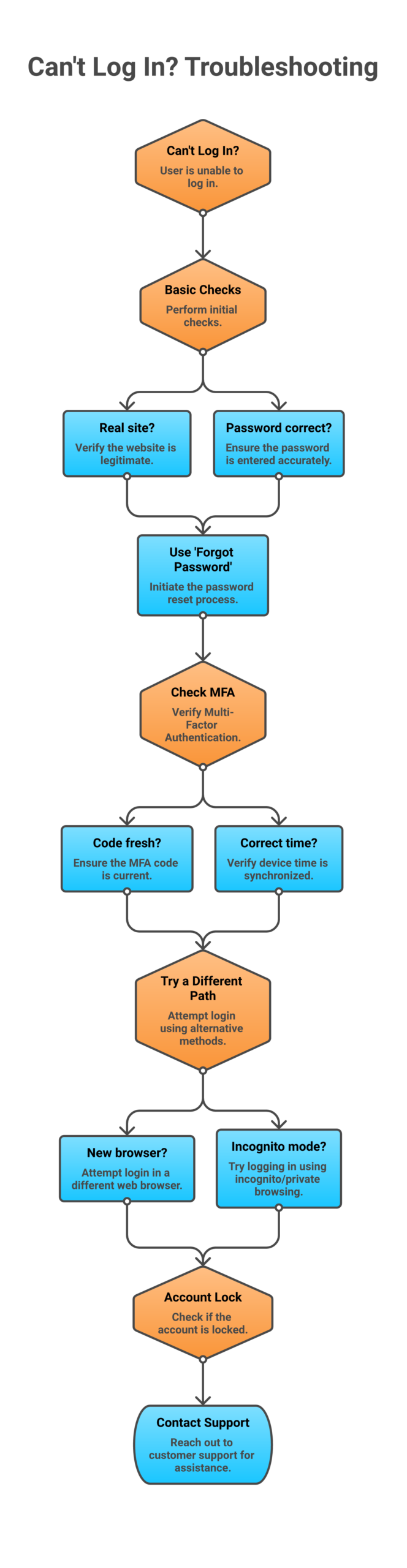
It also helps with other accounts, like a finra login, oanda login, zerodha login, ce broker login, or coin zerodha login.
Step 1: Do the super simple checks
Before you touch any settings, check the easy stuff:
- Are you on the real site or app?
- Type the address by hand
- Or use a saved bookmark you trust
- Check Caps Lock and Num Lock
- Make sure your username and password are correct
- Type slowly
- Watch for extra spaces at the start or end
- Try one more time, just once
- Do not keep guessing many times in a row
If you still can’t sign in, do not panic. Just move to the next step.
Step 2: Use “Forgot password” the safe way
If you might be using the wrong password:
- Click “Forgot password” on the etrade login page
- Make sure the page address still looks right
- Follow the steps to reset
- Use a new, strong password you do not use on any other site
If you never asked for a password reset but see reset emails, stop and treat that as a warning sign of someone else trying to get in.
Step 3: Check your MFA or authenticator
If E*TRADE or any other site sends you a code:
- Make sure the code is fresh
- Type it in right away
- Check the time on your phone
- Authenticator apps need the correct time to match codes
If your app or text code keeps looping you back to the sign in screen, it may be a “login loop” bug. Many sites and apps can get stuck like this and send you back to login over and over, even after you approve a code.Online account login loops are often fixed by clearing site data or changing browser settings.
If codes never arrive:
- Check your phone signal or Wi‑Fi
- Check spam or junk email if it is email based
- Make sure you did not block the number or sender
This is where the MFA backups you set earlier help a lot. Use a backup code or a second device if your main factor stops working.
If you like calm, patient walk throughs of login safety, you may also like the simple style at Crypto Beginner Blueprint, which uses the same slow, clear steps for crypto and wallet security.
Step 4: Try a different “path” in
If the basics look fine but you still cannot get past the etrade etrade login screen, change one thing at a time.
Try:
- A different browser (for example, switch from Chrome to Firefox)
- A private or incognito window
- Turning off browser extensions for a moment, one by one
- The official mobile app instead of the website, or the website instead of the app
Tech support guides say that login loops and stuck sessions often come from cookies, cache, or add ons. Clearing site data for just that site, or app storage on mobile, can fix issues where you log in, get a code, then bounce back to the login page.One step by step guide shows that clearing the right cookies and cache is a key move.
If you change one thing, test, then change the next thing, you will not feel as lost.
Step 5: Check for account lock or alerts
If you tried many times or used the wrong password a lot, E*TRADE may lock your account for safety. When that happens:
- Look for a clear “account locked” message
- Check your email and text for security alerts
- Do not keep trying random passwords
Follow any unlock steps they list. If you do not see a clear reason, move to support.
Step 6: Contact support with a simple script
If you worked through the steps and still cannot log in, it is time for help. When you contact E*TRADE support:
- Say what you see on the screen, word for word
- Tell them what you already tried, in order
- Say if you changed phones, numbers, or email lately
- Ask them to confirm you are using the correct login link or app
This makes the call or chat faster, and you will not be told to “just clear your cache” again and again.
A quick checklist for any login, not just E*TRADE
You can reuse this workflow for any sign in:
- Check basics (site, username, password, Caps Lock)
- Use “Forgot password” if needed
- Check MFA codes and backups
- Try a different browser or app
- Clear site data or app storage if stuck in a loop
- Look for lock messages
- Then call or chat with support
If you want more gentle, step by step help that uses the same calm flow for things like safer logins, first crypto buys, and scam checks, you can explore the guides at Clicks and Trades.
When you are ready for ongoing short lessons you can read in a few minutes, you can also Sign Up for the free Clicks and Trades newsletter for more beginner friendly safety tips and simple crypto walk throughs.
Forgot username or password? Locked out?
It feels awful when your etrade login says “wrong info” or “account locked.” The good news is, there are clear, safe steps to get back in.
1. Use the official “Forgot User ID or Password” links
For an E*TRADE or etrade etrade login:
- Go to the official E*TRADE log on page
- Click “Forgot User ID or Password?”
- Follow the prompts, step by step
- Create a new, strong password that you do not use on any other site
E*TRADE uses secure login tools to help you reset and protect your account, since they know you are dealing with real money and trading access in one place.Secure E*TRADE access lets you view balances, move cash, and place trades safely.
Use the same idea on other sites too, like a finra login, oanda login, zerodha login, ce broker login, or coin zerodha login. Always use the official “forgot” links on the real site, never in a random email or text.
2. Be ready to prove it is really you
During recovery, expect to:
- Answer security questions
- Enter a code sent by text, call, or email
- Confirm personal info you gave when you opened the account
Take your time and read each screen. If anything looks odd, stop and contact support using the phone number or chat listed on the official site.
3. If your account is locked
If you tried too many times, E*TRADE may lock your account on purpose to keep it safe.
If you see a lock message:
- Stop trying new passwords
- Read any message on the screen all the way
- Check your email or text for clear unlock steps
- Follow the steps, or call support from the number on the E*TRADE site
Most accounts can be unlocked after you confirm your identity. The same idea applies if a finra login, oanda login, or other finance site locks you.
If login problems and lockouts make you nervous, it can help to learn simple, repeatable safety habits. The calm guides at Crypto Beginner Blueprint use the same slow, clear style to show you how to keep both your trading accounts and crypto wallets safer.
If you want short, friendly tips on safer logins, scam checks, and first steps into crypto, you can Sign Up for the free Clicks and Trades newsletter.
Not getting your 2FA code (SMS / Email / App)?
You type your etrade login, it asks for a code, and then nothing shows up. Very stressful, since your money is behind that screen.
Let’s fix it step by step.
If your code comes by SMS text
Try these quick checks:
- Make sure your phone has signal and data
- Turn Airplane mode on, then off, or restart your phone
- Check if you blocked texts from short codes or from your bank or broker
- Check that your phone number on file is correct on your etrade etrade login profile (if you can get in later)
- Wait 30 to 60 seconds, then tap “resend code” only once
If you still do not get a text, it might be a network or carrier delay. SMS codes are easy to use, but can be less safe and less reliable than app codes, so many security experts now prefer app based 2FA instead of SMS for important accounts like trading and finance sites.Authenticator apps are usually more secure than text message codes.
The same checks help on other sites too, like a finra login, oanda login, zerodha login, ce broker login, or coin zerodha login.
If your code comes by email
- Check your spam or junk folder
- Search your inbox for “verification code” or the site name
- Make sure your email time and date match your real time
- Wait a bit, then try “resend code”
If emails from one site never reach you, add that site’s address to your contacts and try again.
If your code comes from an app
For an authenticator app (Google Authenticator, Authy, etc.):
- Make sure the time and date on your phone are correct and set to auto
- Check that you are picking the right account inside the app
- Type the code fast, before the timer circle runs out
- If you changed phones, be sure you moved the app and accounts over
App codes are made on your device and often stay safer than SMS codes, which can be attacked if someone takes over your phone number.Time based app codes usually provide stronger protection than text messages.
Use a backup method or contact support
If none of your codes work:
- Look for “use a different method” or “try backup code” on the 2FA screen
- Try a backup factor like a phone call, backup email, or saved recovery codes
- If that fails, contact support using the phone number or chat on the official site only
Tell them you cannot receive your 2FA code for your etrade login and follow their steps slowly.
If these login and code problems feel scary, you are not alone. Many new traders and crypto beginners feel the same. The simple guides at Crypto Beginner Blueprint can help you build safer habits for all your accounts, from E*TRADE to crypto wallets, in a calm, clear way.
If you’d like friendly, short tips on safer logins, scams, and first steps into crypto, you can Sign Up for the free Clicks and Trades newsletter and learn at your own pace.
Browser and app compatibility checks
Sometimes your etrade login fails not because of your password, but because your browser or app is stuck.
Try these quick checks:
- Update your browser or E*TRADE app to the newest version
- Close it fully, then open it again and try your etrade etrade login
- If you are in a login loop that keeps sending you back to the sign in page, turn off all extensions, then test again in a private or incognito window, which is a common fix for many login loops in 2026
- If that helps, turn extensions back on one by one to find the problem one, which follows what many browser help guides suggest for login loop issues
- Only if the official help page tells you to, clear cookies and cache for that single site, not for all sites, so you do not break other logins, since targeted site data is often enough to fix loops without wiping everything
These checks can also help when you have trouble with a finra login, oanda login, zerodha login, ce broker login, or coin zerodha login, since they all rely on the same web tech that can get stuck sometimes.
If login problems across money and crypto sites are making you nervous, you might like the calm, simple guides at Crypto Beginner Blueprint. For steady, step by step help on safer logins and scams, you can also Sign Up for the free Clicks and Trades newsletter and learn a little at a time.
Avoiding scams: spotting fake E*TRADE pages and messages
You can type your etrade login perfectly and still lose money if you land on a fake page. In 2026, scam sites and texts copy real brands very closely, and many new scams are growing fast according to recent reports on top consumer scams in 2026 and how to stay safe from them.[^1]
Let’s keep this simple and clear.
1. Never click login links from messages
Scammers want you to click fast. They may say:
- “Your E*TRADE account is locked, log in now”
- “Big problem with your etrade etrade login, fix it here”
- “Urgent tax issue, sign in to your broker account”
Here is the rule that protects you most of the time:
If a message asks you to tap a login link, don’t tap it.

Instead:
- Close the email or text.
- Open your browser or app yourself.
- Type the address by hand or use your own bookmark.
- Sign in like normal.
Use this same habit for other sites too, like your finra login, oanda login, zerodha login, ce broker login, or coin zerodha login. Scammers copy all of these brands, not just E*TRADE.
2. Check the web address very slowly
Fake sites often look almost right but the address is a little off. Before you enter your etrade login on any page, stop and look closely at:
- Spelling: one extra letter, or a missing one
- Strange words: “secure-etrade-check.com” or “etrade-login-help.net”
- Country endings that do not fit your normal site
If you are on a phone, tap the address bar and read the full link. On a computer, click once in the bar to see the whole thing.
If the address looks even a little odd, close the page. Open a new tab and type the official address yourself.
3. Read the sender line, not just the name
Email apps often show only a “From” name, like “E*TRADE Support”. Scammers know this.
Always tap or click on the sender to see the full email address. Warning signs include:
- Long strings of numbers or letters
- Free email services, like Gmail or Yahoo, used for “support”
- Misspelled brand names in the address
Text messages can be faked too. Many 2026 scam alerts note that scammers love to use texts and push you to act fast or lose money.[^2] If a text feels rushed or scary, treat it as suspicious.
4. Watch for pressure and fear tricks
Most scam messages, even government imposters, use the same tricks:
- They tell you to act right now.
- They say your money is in danger.
- They may ask you to move money, buy gift cards, or change banking details quickly.[^3]
A real company gives you time to think and lets you sign in the normal way. If you feel your heart race, stop. Take a breath. Do not enter your password on any page you did not open yourself.
5. Simple steps to test if something is real
When you are not sure:
- Do not click any link in the message.
- Open your browser and go to the site the way you normally do.
- Sign in with your normal etrade login.
- Check for alerts or messages inside your account.
If there is no alert inside your account, the message you got is very likely fake.
You can try the same thing for any broker or finance site, like your zerodha login or ce broker login. Go in through your normal door, not through the link that showed up out of the blue.
6. How to report a suspicious email or text
If you think a message is fake:
- Do not reply.
- Do not open attachments.
- Take a screenshot if you want a record.
- Use the company’s official “Contact us” or “Report phishing” page that you reach by typing the address yourself.
State and federal regulators are warning that investment scams are rising in 2026, so reporting helps protect you and other people too.[^4]
7. Extra help if you also use crypto
If you ever move money between your broker account and crypto, the risk can feel even higher. Crypto scams copy the same login tricks and often mix in fake “wallet help” or “exchange security checks.” New 2026 guides on avoiding investment scams show that “investment” and “crypto” scams are growing at the same time.[^5]
If that makes you nervous, you might like the slow, calm way Crypto Beginner Blueprint teaches people. It walks you through common crypto scams, how fake login pages work, and how to set things up more safely, step by step.
If you want simple tips in small doses, you can also Sign Up for the free Clicks and Trades newsletter. It sends short, plain-language notes on safer logins, spotting fake pages, and keeping both your trading and crypto accounts safer over time.
[^1]: See this 2026 overview of top scams and safety tips for more on current fraud trends: Top scams targeting consumers in 2026.
[^2]: For examples of fast growing 2026 scams and how they reach people, see March 2026 scam alert.
[^3]: The ABA Foundation outlines how imposters pressure people to act fast in its 2026 infographic: Government imposter scams.
[^4]: State regulators warn about a rise in investment scams in 2026, including online fraud, in this report: State regulators warn about rise of investment scams.
[^5]: For more context on how old scam tricks are being reused in 2026, see Old tricks, new twists: avoiding investment scams in 2026.
Security hygiene for beginners: passwords, managers, and device safety
You can spot every fake page and still lose money if someone already knows your password. So let’s slow down and set up your basic “security hygiene” for your etrade login and other accounts.
1. Use one strong password, only for your brokerage
Your broker account holds real money. It should never share a password with:
- Social media
- Shopping sites
- Other finance sites like your finra login, oanda login, zerodha login, ce broker login, or coin zerodha login
Security experts in 2026 say you should use strong, unique passwords for every account, and turn on extra checks when you can.Identity management best practices explain that this stops one leak from spreading to all your other logins.
For your etrade etrade login:
- Make it long, at least 12 characters
- Mix letters, numbers, and symbols
- Do not use names, birthdays, or simple patterns
If a site you used years ago gets hacked, you do not want that old password to open your broker too.
2. Let a password manager remember for you
No one can remember a different long password for every account. That is why a password manager helps so much.

A good password manager can:
- Create strong random passwords
- Store them in a locked “vault”
- Fill in your etrade login only on the real site
- Sync across your phone and computer
You just remember one strong master password. The manager does the rest.
If you also use crypto, a manager is even more helpful, since you may have logins for exchanges, wallets, and email resets. Tools like Crypto Beginner Blueprint walk through safe setup habits so your crypto and broker logins work together instead of becoming a messy risk.
3. Turn on multi factor authentication (MFA)
Multi factor authentication, or MFA, adds a second step to your sign in. For example:
- A code from an app
- A code by text
- A hardware key
In 2026, security groups note that MFA blocks many attacks because a thief would need both your password and the second proof to get in.Modern password and MFA guides show that this is one of the easiest ways to cut risk.
Turn on MFA for:
- Your etrade login
- Email that resets your broker password
- Any app that holds money or crypto
Codes from an app are usually safer than codes by text, since text messages can be hijacked.
4. Keep your devices clean and locked
Even the best password is weak if your device is open or infected with malware. Basic device safety in 2026 should include:
- System updates: Turn on automatic updates for your phone and computer
- App updates: Keep your broker app and browser up to date
- Screen lock: Use a PIN, password, or biometrics so others cannot wake your device and tap right into a saved session
- Device encryption: Most modern phones and laptops offer this. If your device is lost, your stored data is much harder to read
If someone steals your phone and it opens without a code, they may be able to reach saved sessions for your broker, your zerodha login, and even your email.
5. Be extra careful with saved sessions and shared devices
It can feel handy to “stay signed in.” For money accounts, that comes with risk.
Try to:
- Avoid logging in to your etrade login on shared or public computers
- Log out when you finish on any device that other people use
- Clear saved passwords from shared browsers
- Use your own device for trading and crypto whenever you can
If you ever feel unsure about what is safe, taking small steps over time is fine. You do not have to fix everything in one day.
If you want short, plain tips that build week by week, you can Sign Up for the free Clicks and Trades newsletter. It sends simple safety ideas for broker logins, crypto accounts, and everyday online habits, so your money life feels calmer and more in control.
Contacting support the right way (without oversharing)
Sometimes you really do need help with your etrade login. Maybe a trade looks wrong, you see a strange alert, or you just cannot sign in. Getting help is smart. The trick is to reach support in a safe way, without handing a scammer the keys to your money.
In 2026, fake “support” scams are rising fast. People get calls, texts, or chats from crooks who pretend to be from a bank or broker, then rush them to act and share private data.Common scam alerts for 2026 show that this trick is used on many money sites and apps, not just trading.
Here is how to keep control when you need help.
1. Use only official support channels
Always start support from the source, not from a link in a random message.
Safer ways to reach support:
- Type the broker site address by hand, like you do for your etrade login
- Use the support link inside the official app
- Call the phone number on the back of your bank or broker card, or on the main website
Do not:
- Click help links from scary emails or pop ups
- Call numbers you see in search ads that look “almost” right
- Reply to texts that say “urgent problem with your etrade etrade login, tap here”
If someone contacts you first and says they are from your broker, bank, or even a group like FINRA, treat it with care. Government and financial scam warnings in 2026 note that real staff should not pressure you to move money fast or share sensitive codes.New investment scam warnings stress that any rush or threat is a big red flag.
The same rule helps with other accounts too, like a finra login, oanda login, zerodha login, ce broker login, or coin zerodha login. You always start from the real site or app, never from a “helpful” link sent by a stranger.
2. Know what support should never ask for
Real support may ask for some info. But there are clear lines they should not cross.
Support may ask for:
- Your full name
- Last 4 digits of an ID or account number
- A partial code from a card, not the full card details
- Answers to security questions you set before
Support should never ask for:
- Your full password for your etrade login or any other account
- Your full 2FA code or app code
- Your full debit or credit card number plus full CVV and PIN
- Remote control of your phone or computer just to “check your account”
If someone on a call or chat asks for this, stop. Tell them you will call back using the number on the official website. Then do that. Do not use any phone number they give you.
3. Get ready before you contact support
Before you start a chat or call, gather a few safe details:
- Your username, if you remember it
- Any ticket number from earlier chats
- Date, time, and short notes of what went wrong
You can write things like:
- “Tried to log in at 3:10 pm, code did not arrive”
- “Trade at 11:02 am looks wrong, order was for 10 shares, filled for 100”
This helps support move faster without asking for extra data.
If you also deal with crypto or other trading apps, a simple note system keeps things clear. Platforms like Crypto Beginner Blueprint teach you to track which email, which broker, and which wallet go together. That way your etrade login, your crypto exchanges, and your other logins stay organized and less risky.
4. Ask how they will confirm your identity
You have a right to ask questions too. When you reach support, you can say:
- “How will you confirm my identity in a secure way?”
- “Can you explain why you need this detail?”
A careful support agent might:
- Send a one time code to your email or phone on file
- Ask you to confirm past actions, like “last 4 digits of the account that got a deposit last week”
If their method sounds strange, or they get upset that you ask, that is a warning sign. It is okay to end the chat or call and start fresh from the main website.
5. Share only what is needed
Keep this mindset: “Give the least info needed to solve the problem.”
For example, if you cannot sign in to your etrade login:
- Say: “My login is locked and I see error code ABC123.”
- Do not say: “My password is X, can you test it?”
If a trade looks wrong:
- Say: “Order number 5678 on this date looks off.”
- Do not send full screenshots that show all your other accounts, balances, or email inbox, unless support clearly needs a small part and you can blur or crop the rest.
This same habit helps when you call about a finra login issue, or ask a question on a chat about your oanda login or zerodha login. Less is safer.
6. Watch for pressure and “urgent” tricks
Scammers like to rush you. They may say things like:
- “If you do not do this now, your account will be closed.”
- “You must tell me your code or your money will be frozen.”
Consumer groups in 2026 point out that high pressure, scare tactics, and requests to break normal rules, like sharing 2FA codes, are classic scam signs.Top scams targeting consumers in 2026 explain that crooks use fear and fake “emergencies” to push quick mistakes.
If you feel rushed, slow down:
- Say you need time to think
- End the call or chat
- Start again from the official website or app
Real support should respect that.
If you want more plain language tips like this, for both broker logins and crypto, you might enjoy the free Clicks and Trades newsletter. It sends short, step by step ideas that help you feel calmer when you deal with money online. You can Sign Up any time, learn at your own pace, and keep your etrade login and other accounts safer with simple habits.
For crypto‑curious beginners: safe next steps after login
You might log in to your etrade login, see “crypto” or “bitcoin ETF,” and think, “Should I try this?” Curiosity is normal. In 2026, a lot of new scams aim at people who are just learning about investing and crypto, not experts.State regulators warn about a rise in investment scams and say beginners are easy targets.
So if you are crypto curious, here is how to move in a slow, safe way.
1. Keep your login habits strong
Before you touch any crypto:
- Treat your etrade login like a house key
- Use a unique password, not one you reuse on a finra login, oanda login, zerodha login, ce broker login, or coin zerodha login
- Turn on 2FA and never share codes
- Only sign in from the real website or app, not from links in random emails
Scams chase your curiosity. Crooks know you might click “just to see.” Keeping the same clean habits on every account makes their job harder.
2. Learn first, click later
If your broker offers crypto, ETFs that hold crypto, or “web3” funds, pause before you buy.
Ask yourself:
- Do I understand what I would own?
- Do I know how the price can move up and down?
- Do I know how fees work?
Many 2026 frauds use fake “crypto experts” or “secret platforms” that promise steady, easy gains.New scam warnings for 2026 explain that these schemes often show fake profits to pull in more money. If something sounds easy, fast, or “guaranteed,” step back.
3. Use simple, beginner friendly guides
You do not need to learn crypto by guessing or chasing hype videos. A step by step guide is safer and calmer.
Platforms like Crypto Beginner Blueprint are built for true beginners. They:
- Use plain language, not heavy jargon
- Show how to set up wallets and pick exchanges safely
- Teach you how to spot common crypto scams before you send money
You can read the free starter guide first, then decide if you ever want to go deeper.
If you would like more short, clear lessons like this, you can also Sign Up for the free Clicks and Trades newsletter. It shares simple tips on crypto basics, safe logins, and how to avoid scams, so you can explore at your own pace without pressure.
4. Take tiny steps, or just watch
You do not have to buy crypto at all. Watching and learning is a real plan.
Safe choices:
- Start with reading and practice notes, not “real money”
- If you do invest, begin with a very small amount you can afford to lose
- Check your etrade login or other accounts only from trusted devices and networks
Curious is fine. Rushed is risky. If you keep your login safe, move slowly, and keep learning, you can explore new assets without giving scammers an easy win.
Summary
This comprehensive guide walks beginners through the process of safely accessing their ETRADE account while avoiding common security pitfalls and phishing scams. The article explains how to identify the official ETRADE login page on both web and mobile devices, set up multi-factor authentication for stronger account protection, and troubleshoot typical login issues like forgotten passwords, missing two-factor codes, and account lockouts. Readers will learn essential security habits including using unique passwords, recognizing fake login pages and scam messages, and contacting support safely without oversharing sensitive information. The guide emphasizes a slow, deliberate approach to online account security and covers practical steps anyone can follow, regardless of technical experience. By the end, readers will understand how to protect their investment accounts from common threats, establish strong authentication practices, and apply these same safety principles to other financial accounts and platforms.
