
How to Buy Cryptocurrency Your First Time Step by Step Safe Guide
Introduction: Why learning how to buy cryptocurrency doesn’t need to be scary
Thinking about how to buy cryptocurrency can feel a bit like exploring a new country without a map.

You hear big, confusing words like "blockchain," "crypto assets," or "Decentralized Finance," and suddenly, it all seems too complicated [Source: Blockchain for beginners- basic guiding principles]. Maybe you’re worried about scams, or perhaps you’re just unsure where to even begin buying something like Bitcoin or XRP. Many people feel this exact way, especially when they think about using their debit card to buy crypto for the first time.
Actually, it’s totally normal to feel a little lost in the world of digital money. The idea of holding an "ETH buy or sell" order or needing a "BTC address" can sound like a lot. But here’s the good news: learning how to buy cryptocurrency doesn’t have to be hard or scary. In fact, many guides and experts aim to make understanding crypto easier for new learners, like the World Economic Forum’s efforts to help people get started with cryptocurrencies [Source: A Guide to Getting Started Global Future Council on Cryptocurrencies].
In 2026, the crypto world is more accessible than ever, and this guide is here to be your friendly map. We will give you a clear, step-by-step plan that focuses on keeping you safe, making things easy to understand, and building your confidence. You’ll learn the practical steps, like how to choose a safe platform to buy crypto with debit card, and how to protect your investment. We want you to feel smart and ready to make your own choices, whether you’re wondering if Bitcoin is a good investment or just curious about the Bitcoin price CAD.
We believe that everyone deserves a clear path to understanding this exciting space. If you’re looking for even more helpful tips and step-by-step advice, the free Clicks and Trades newsletter offers great insights for beginners.
It’s another simple way to keep learning safely.
Ready to take the first step and learn how to buy cryptocurrency without all the stress? We’ll show you exactly how to get started.
Don’t miss out on clear, simple crypto guidance.
Sign Up
1) Cryptocurrency basics: key terms and how it works
Okay, let’s start with the basics, just like getting a map before your trip. When you want to learn how to buy cryptocurrency, it helps a lot to know a few simple words first.

You don’t need to be an expert, but understanding these few ideas will make everything else much clearer.
What is a Blockchain?
Imagine a special digital notebook that everyone shares. Every time something new happens, like a transaction, it’s written down in a new "block" or page. Once written, that page is linked to the one before it, making a long, unbreakable chain. That’s why it’s called a "blockchain" [Source: Blockchain for beginners- basic guiding principles]. What’s super cool about this is that everyone agrees on what’s written, and no one person can change it by themselves. This makes it very secure and transparent.
What is Cryptocurrency?
Cryptocurrency is simply digital money that uses this blockchain technology. Unlike the money in your bank, no single bank or government controls it [Source: Bitcoin: A Peer-to-Peer Electronic Cash System]. Bitcoin is the most famous example, but there are many others, like XRP. When people ask how to buy cryptocurrency, they’re usually looking to buy these digital coins. For a deeper dive into this, check out our guide on What is Cryptocurrency? The Simple Beginner’s Guide Nobody Gives You.
What are Crypto Assets or Tokens?
While all cryptocurrencies are crypto assets, not all crypto assets are just money. Think of "crypto assets" as a bigger family name [Source: Handbook: Crypto assets – KPMG International]. Some crypto assets are "tokens," which might represent other things, like points in a game or a share in a project. They all live on a blockchain.
What is a Crypto Wallet?
A crypto wallet is a digital place where you keep your cryptocurrency.

It’s not a physical wallet, but a piece of software or a special device. This wallet has a unique address, like a "BTC address" for Bitcoin, which is how people send you crypto. When you want to send crypto, you’ll use your wallet to start the process. This is also where you’d see an "ETH buy or sell" order if you were dealing with Ethereum.
How Do Crypto Transactions Work?
Let’s say you want to send some Bitcoin to a friend. You use your crypto wallet to start the transaction. You tell your wallet, "I want to send X amount of Bitcoin to my friend’s BTC address." This request is then sent to the blockchain network. Computers on the network check to make sure you have enough Bitcoin and that everything is correct. Once approved, the transaction is added to a new block on the blockchain, and your friend receives the Bitcoin. All of this happens without a bank as an in-between.
Why Custody Matters for Beginners
When you first learn how to buy cryptocurrency, you’ll hear about keeping your crypto safe. "Custody" simply means who holds the keys to your digital money.
- Platform Custody: Often, when you buy crypto with a debit card on a platform like an exchange, that platform holds your crypto for you. It’s like a bank holding your regular money. This can be easier for beginners, but you rely on the platform to keep your funds safe.
- Self-Custody: You can move your crypto to your own personal wallet, where only you have the keys. This is called "self-custody" and gives you full control. It means you are fully responsible for its safety.
As you explore questions like "is Bitcoin a good investment" or "is XRP a good investment," understanding these basics helps you make smart choices. Knowing how crypto works and how to protect it, whether you’re checking the "Bitcoin price CAD" or making an "ETH buy or sell," is super important.
For more helpful tips and step-by-step guidance on how to buy cryptocurrency safely, consider checking out the free Clicks and Trades newsletter. It’s a great way to keep learning safely in 2026.
Ready to confidently buy your first crypto?
Don’t miss out on clear, simple crypto guidance. Sign Up
Now that you know some basic crypto words, let’s talk about a few more terms you’ll hear when you want to learn how to buy cryptocurrency.
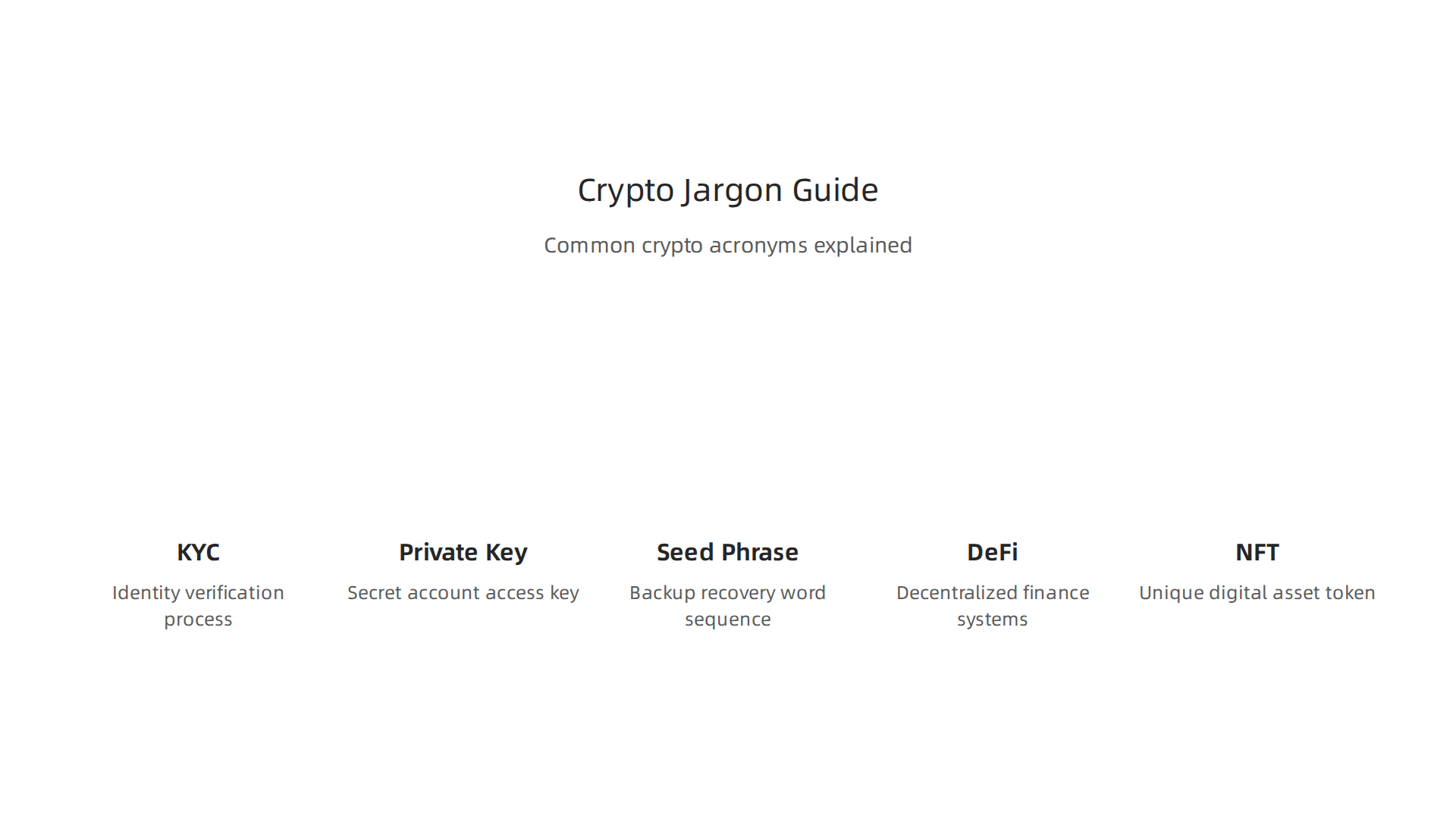
These words might sound big, but they’re easy to understand. Knowing them will help you feel safer and smarter when dealing with digital money.
KYC (Know Your Customer)
When you want to buy crypto with a debit card on many big platforms, you’ll likely run into KYC. This stands for "Know Your Customer." It’s a rule that means these platforms need to know who you are. So, you’ll typically be asked to show an ID, like your driver’s license or passport. This helps stop bad actors from using crypto for illegal money activities, making the system safer for everyone [Source: 2026 National Money Laundering Risk Assessment]. It’s a common step for almost any regulated financial service in 2026, not just crypto.
Private Key
Think of your crypto wallet as a digital safe. Your "private key" is the secret code that only you have to open that safe and use your crypto. It’s a long, mixed-up string of letters and numbers. If someone else gets your private key, they can take your Bitcoin, XRP, or any other crypto. That’s why keeping your private key super private and secure is the most important thing you can do for self-custody.
Seed Phrase (Recovery Phrase)
Also called a "recovery phrase," your seed phrase is like a master key to all the private keys in your wallet. It’s usually a list of 12 or 24 simple words in a specific order. If you ever lose your crypto wallet, or it breaks, you can use this seed phrase to get all your crypto back on a new wallet. Seriously, write it down and keep it hidden in a very safe place, away from your computer. Losing it or letting someone else find it means losing access to your funds, whether it’s an ETH buy or sell order or your entire Bitcoin balance.
DeFi (Decentralized Finance)
DeFi means "Decentralized Finance." This is a new way to do financial things, like borrowing, lending, or saving, but without traditional banks or companies in charge. Instead, special computer programs on the blockchain handle everything automatically. It’s a powerful idea that aims to make finance more open and fair [Source: BIS Working Paper No 1061 Cryptocurrencies and Decentralized …]. While exciting, it’s often more complex than just buying and holding crypto, so many beginners might explore DeFi after getting comfortable with the basics.
NFT (Non-Fungible Token)
An NFT is a "Non-Fungible Token." This means it’s a unique digital item that can’t be easily swapped for another identical item. Think of it like a one-of-a-kind baseball card or a special piece of art, but it lives on a blockchain. NFTs can be digital pictures, videos, music, or even virtual land. They’re different from cryptocurrencies like Bitcoin, where one Bitcoin is always the same as another Bitcoin. Learning about NFTs comes a bit later for most folks asking how to buy cryptocurrency for the first time.
Knowing these terms helps you understand the crypto world better, especially when you’re thinking about things like "is Bitcoin a good investment" or trying to figure out the "Bitcoin price CAD." For more easy-to-understand advice on navigating cryptocurrency, including how to set up apps like the Crypto.com App for Beginners or the Gemini Crypto App for Beginners, and for safely learning how to buy cryptocurrency, you can get more clear, simple guidance from the free Clicks and Trades newsletter.
Ready to keep learning how to invest safely in crypto?
Don’t miss out on clear, simple crypto guidance. Sign Up
3) Scams, frauds, and security basics: how to protect your money
Learning how to buy cryptocurrency can be exciting, but it’s super important to also learn how to stay safe. Sadly, some bad people try to trick others in the crypto world. In 2025, a lot of money was lost to crypto crimes, showing how real these risks are [Source: CYNTHIA KAISER – Homeland Security Committee]. But don’t worry, by knowing the tricks and taking simple steps, you can protect your money.
Common Crypto Scams to Watch Out For
Here are some common ways scammers try to get your crypto:
- Phishing Scams: This is when someone pretends to be a trusted company or person. They might send you fake emails, texts, or messages that look real. They want you to click on a bad link or give away your private keys or login info. In 2026, phishing remains one of the most common types of cyber attacks [Source: Global Cybersecurity Outlook 2026 – World Economic Forum]. Always double-check where messages come from.
- Fake Apps and Websites: Scammers make apps or websites that look just like real crypto exchanges or wallets. If you download a fake app or log into a fake website, they can steal your login details and take your crypto, whether you’re trying to make an ETH buy or sell order or manage your Bitcoin. Always download apps from official app stores and check website addresses very carefully.
- "Rug Pulls" (Fake Projects): This is when people create a new crypto coin or project, get many others to invest their money, and then suddenly disappear with all the funds. It’s like pulling the rug out from under everyone. Be careful with new projects that promise huge, fast returns, or those that don’t have a clear team behind them. You should always do your own research before deciding if something like XRP is a good investment.
- Imposter Scams: Scammers might pretend to be a famous person, a government official, or even someone you know online to ask you for crypto. They might say you’ve won something or that they need money urgently. Remember, legitimate people or organizations will almost never ask you to send them crypto directly [Source: Recognize and Report Scams – Nebraska Attorney General].
Simple Steps to Keep Your Crypto Safe
Protecting your crypto doesn’t have to be hard. Here are some basic rules to follow when you decide how to buy cryptocurrency:
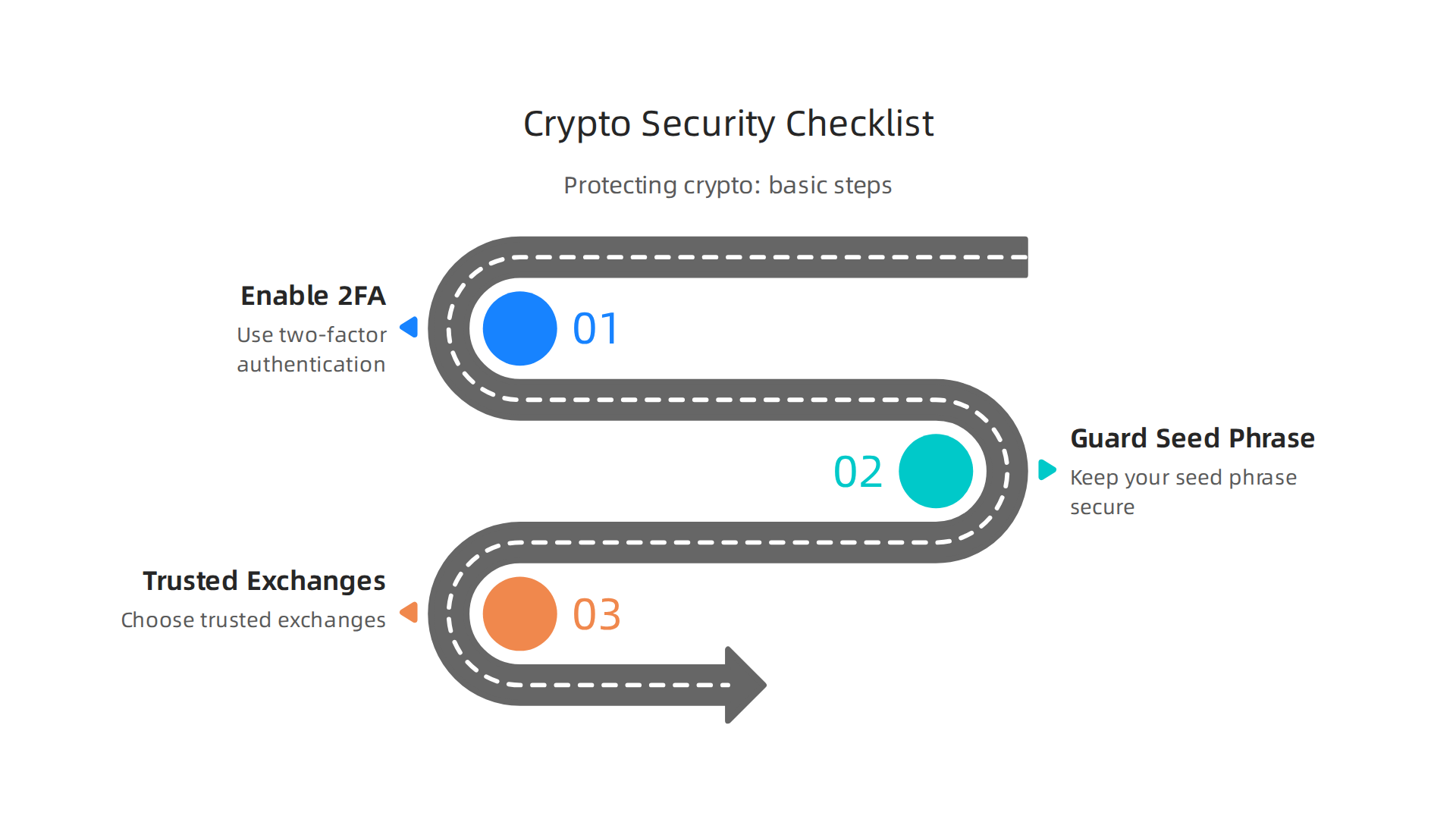
- Secure Your Email: Your email is often linked to your crypto accounts. Use a strong, unique password for your email and never share it.
- Turn On Two-Factor Authentication (2FA): This is a must-have! 2FA adds an extra layer of security. Even if a scammer gets your password, they’d still need a code from your phone (or a special app) to get into your account. Many reliable platforms for how to buy crypto with a debit card will offer this feature.
- Guard Your Seed Phrase (Recovery Phrase): We talked about this before. Write your seed phrase down on paper and keep it in a very safe, hidden place, far away from your computer. Never store it online or share it with anyone. If you lose it, you might lose access to all your crypto.
- Choose a Trusted Exchange: When you’re looking for where to buy crypto, pick an exchange that is well-known and has good security features. Many exchanges in 2026 use things like "cold storage" (keeping crypto offline) and "proof-of-reserves" to show they are safe [Source: Top 10 Most Trusted Crypto Exchanges in 2026 – Cointribune]. You can read guides on safe apps like the Crypto.com App for Beginners or the Gemini Crypto App for Beginners to help you choose.
- Be Smart, Be Skeptical: If something sounds too good to be true, it probably is.

Don’t rush into decisions. Take your time, do your research, and don’t let anyone pressure you into making a crypto trade or purchase. This helps you figure out if Bitcoin is a good investment for you, or understand the current Bitcoin price CAD, rather than relying on someone else’s advice.
By following these simple safety steps, you can feel much more confident as you learn how to buy cryptocurrency and explore the digital world. For more tips on keeping your crypto safe and getting clear, step-by-step guidance, check out the free Clicks and Trades newsletter.
Ready for more simple crypto guidance?
Don’t miss out on clear, simple crypto guidance. Sign Up
Now that you know how to stay safe, the next big step is figuring out where to actually buy cryptocurrency. There are a few main places to do this, and choosing the right one is key to a good start. For most beginners learning how to buy cryptocurrency, a crypto exchange is usually the best place to begin.
What is a Crypto Exchange?
Think of a crypto exchange like an online marketplace. It’s a platform where you can trade your regular money (like dollars or euros) for digital money, or trade one type of crypto for another. Exchanges are the most common way people buy crypto with a debit card or bank transfer.
How to Pick a Good Crypto Exchange
Not all exchanges are the same, so it’s smart to look at a few things before you pick one. In 2026, many reliable exchanges are available, but doing a little homework helps you find the best fit for you.
- Reputation and Security: This is number one! You want an exchange that is known to be safe and trustworthy. Look for ones that use strong security like "cold storage" (keeping crypto offline) and "proof-of-reserves" (showing they have enough crypto to cover what users own) [Source: Top 10 Most Trusted Crypto Exchanges in 2026 – Cointribune]. Many top exchanges in 2026 focus a lot on user protection [Source: Safest Crypto Exchanges in 2026: Best Platform for Security – Phemex].
- Fees: Exchanges charge small fees for buying and selling. These fees can be different, so it’s good to compare. Some exchanges might have lower fees for larger trades, or different fees for different ways you pay.
- Payment Methods: How do you want to pay? Most exchanges let you buy crypto with a debit card, credit card, or bank transfer. Make sure your chosen exchange supports the way you want to put money in.
- Supported Coins: Do you want to buy Bitcoin, Ethereum, or maybe learn how to buy XRP? Some exchanges offer many different coins, while others focus on just a few popular ones. If you’re wondering if Bitcoin is a good investment or if XRP is a good investment, check if the exchange lists those coins.
- Ease of Use: As a beginner, you want a platform that’s easy to understand and navigate. Some exchanges are made for expert traders, while others are designed to be super simple for new users.
- Know Your Customer (KYC): Most trusted exchanges will ask you to prove who you are by sharing some personal info like your ID. This is called KYC, and it’s done to follow laws and prevent bad guys from using crypto for illegal stuff [Source: How to Verify a Crypto Exchange Is Safe [2026] – NFT Plazas]. It’s a sign of a real, regulated exchange.
For a helpful visual guide on getting started, you can also check out a simple YouTube guide like How To Buy Bitcoin For Beginners (2026 Guide).
Custodial vs. Non-Custodial Options
When you buy crypto, how it’s stored is important. There are two main ways:
- Custodial Options (Exchanges): This means the exchange holds your crypto for you. It’s like a bank holding your money. This is often easier for beginners because you don’t have to worry as much about managing your own private keys or btc address. But it also means you don’t have full control over your crypto until you move it to your own wallet. Most beginners start here to simply learn how to buy cryptocurrency and watch the bitcoin price CAD.
- Non-Custodial Options (Your Own Wallet): This is where you keep your crypto in your own digital wallet, like a special app or a hardware device. You have full control over your private keys, which means you’re fully responsible for its safety. This gives you more freedom but also more responsibility. Many beginners start with a custodial option and then move their crypto to a non-custodial wallet once they feel more comfortable. For more on the basics of what cryptocurrency is, you can read our guide on What Is Cryptocurrency: The Simple Beginner’s Guide Nobody Gives You.
Choosing where to buy is a big decision, but by looking at these points, you can pick a platform that feels right and safe for you. Taking the time to understand these options is a smart move for anyone new to crypto.
Ready for more simple crypto guidance?
Don’t miss out on clear, simple crypto guidance. Sign Up
Now that you know how to pick a good crypto exchange, let’s walk through how to buy your first cryptocurrency. It’s like a simple checklist, making sure you hit all the right steps for a smooth start.
5) Step-by-step: How to Buy Your First Cryptocurrency (Beginner Checklist)
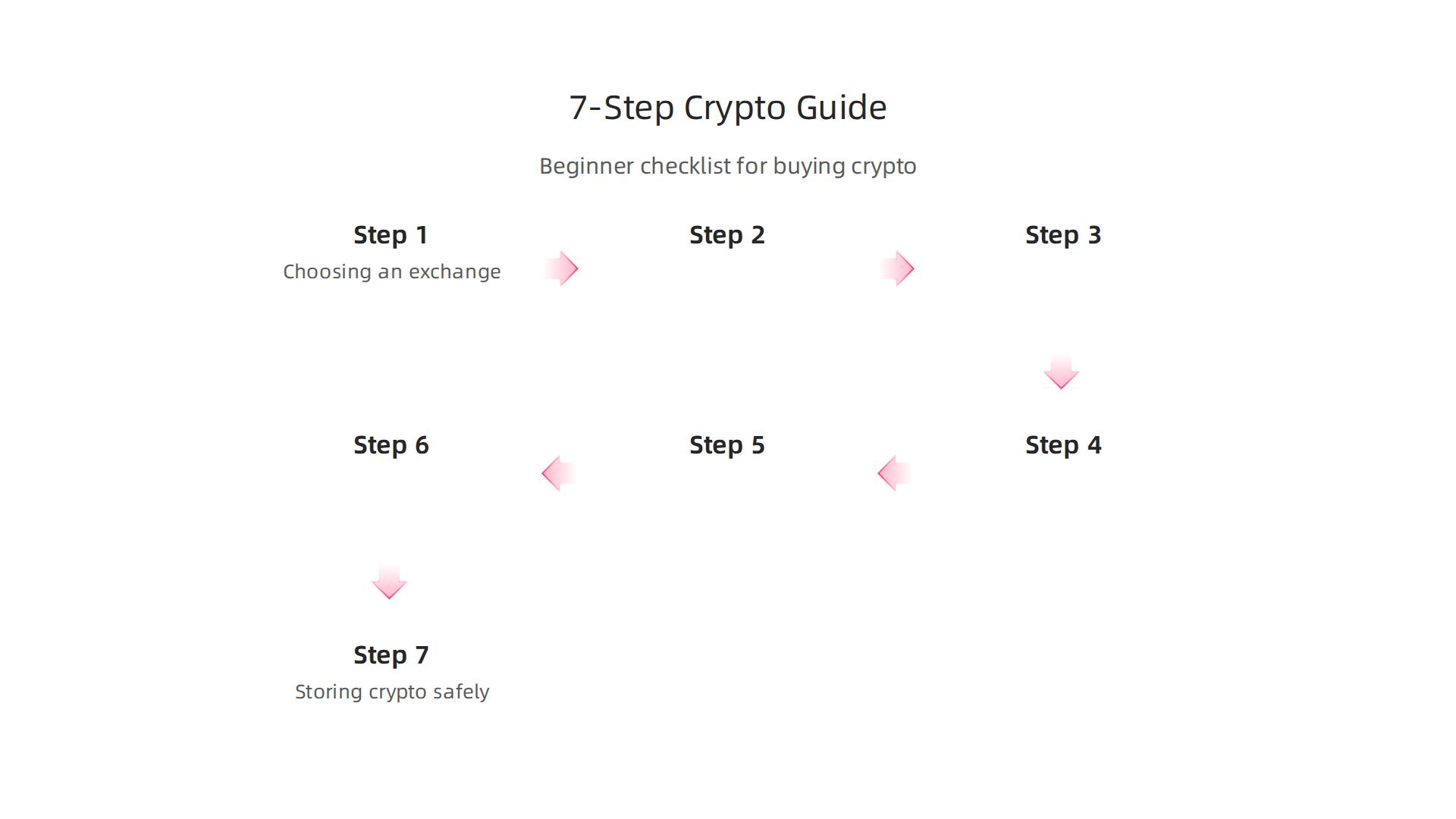
Buying crypto might seem tricky at first, but with a good plan, it’s quite easy. Here’s a simple guide on how to buy cryptocurrency for the very first time in 2026.
-
Pick Your Exchange and Sign Up:
First, you need to choose one of the reliable crypto exchanges we talked about earlier. Once you’ve picked, go to their website or app and sign up. You’ll need to give some basic info like your name and email. Many beginners like exchanges that are easy to use, like the Gemini crypto app for beginners or the Crypto.com app for beginners. -
Verify Your Account (KYC):
After signing up, most exchanges will ask you to prove who you are. This is called "Know Your Customer" (KYC) and it’s a normal step to keep things safe and follow rules. You might need to upload a picture of your ID and take a selfie. It helps prevent bad actors from using the system. -
Add Money to Your Account:
Now it’s time to put some regular money into your exchange account. Most platforms let you buy crypto with a debit card or connect your bank account for a transfer. Just follow the steps on the exchange to link your payment method. -
Choose Which Crypto to Buy:
For your first purchase, it’s a good idea to start with well-known cryptocurrencies. Many experts suggest beginning with popular coins like Bitcoin (BTC) or Ethereum (ETH) because they are widely accepted and easier to understand for beginners [Source: How to Buy Cryptocurrency in 2026: A Beginner’s Step-by-Step Guide]. You might be wondering, "is Bitcoin a good investment?" or "is XRP a good investment?". These are common questions, and starting with a well-known coin helps you learn the ropes without too much risk. -
Understand Fees and Minimum Purchases:
- Fees: Exchanges charge a small fee for each trade you make. These are usually a small percentage of your trade. It’s smart to check the fees before you buy so you know how much you’ll pay.
- Order Types: For beginners, the simplest way to buy is usually a "market order." This means you’ll buy the crypto right away at the current market price. Some exchanges also let you set a "limit order," where you say you only want to buy when the bitcoin price CAD hits a certain level. But for your first time, a market order is often the easiest.
- Minimum Purchase: Most exchanges let you buy a small amount of crypto. You don’t need to buy a whole Bitcoin; you can buy just a fraction of one. This means you can start with an amount you’re comfortable with.
-
Make Your Purchase!
Once your money is in, and you’ve picked your crypto, just enter how much you want to buy (either in dollars or in crypto amount). Double-check everything, and then confirm your purchase. Congratulations, you’ve just learned how to buy cryptocurrency! -
Store Your Crypto Safely:
After buying, your crypto will usually sit in your exchange account. This is a custodial option, meaning the exchange holds it for you, which is easy for beginners. But as you get more comfortable, you might want to move it to your own non-custodial wallet for full control. You won’t need a specific btc address until you’re ready to send it to a different wallet. For a helpful video walkthrough, you can watch How To Buy Bitcoin For Beginners (2026 Guide).
Remember, learning about crypto is a journey. For more simple explanations and helpful tips, consider checking out the free Clicks and Trades newsletter. It’s a great way to keep learning without getting overwhelmed.
Ready for more simple crypto guidance?
Don’t miss out on clear, simple crypto guidance. Sign Up
You just learned how to buy cryptocurrency, which is a big first step. But there’s another important part of having crypto: understanding taxes and the rules that go along with it. Think of it like buying a toy; you also need to know how to keep it safe and what rules apply to playing with it.
6) Taxes, record-keeping, and legal basics every beginner should know
Even though crypto feels new, governments around the world treat it like other types of money or property. This means you usually need to keep track of your crypto dealings for tax reasons. It’s not just about learning how to buy cryptocurrency; it’s also about being smart with your records.
Why Good Records Matter
Every time you buy, sell, or trade cryptocurrency, it’s called a transaction. Keeping good records of these transactions is super important.
Why? Because when tax season comes, you’ll need to show what you did. This helps you pay the right amount of tax and avoids problems later on.
Imagine you decide to buy Bitcoin with a debit card, and later you sell it. You need to remember:
- The date you bought it.
- How much you paid for it.
- The date you sold it.
- How much you sold it for.
- Any fees you paid.
This tracking helps you figure out if you made money or lost money. Many countries are paying closer attention to crypto activities in 2026 to prevent financial crimes and make sure everyone follows the rules, as noted in reports about global financial crime and money laundering prevention efforts [Source: 2026 Global Financial Crime Report, 2026 National Money Laundering Risk Assessment]. So, keeping clear records is not just good practice, it’s a must.
Simple Tax Basics for Crypto
When you deal with crypto, there are two main ways it might get taxed:
- Capital Gains: This happens when you sell crypto for more money than you bought it for. Let’s say you bought some Ethereum (ETH) and its price went up. If you sell that ETH for a profit, that profit is usually called a "capital gain." You might have to pay tax on this gain, just like if you sold a house or a stock for a profit.
- Income: Sometimes, you can earn crypto in other ways. For example, if you get into something like crypto staking, the crypto you earn from that might be seen as income. This means it could be taxed like the money you earn from a job.
Here’s the thing: Crypto tax rules are different everywhere. What might apply if you’re tracking the bitcoin price CAD in Canada could be very different from rules in other countries. Governments worldwide, including those in the EU, are putting new tax reporting rules in place for crypto services to ensure better tracking [Source: PwC Global Crypto Regulation Report 2026, Quoted: Crypto asset services – MiCAR & DAC8]. This means you need to look up the rules for your specific country or even your state or province. A report by PwC in 2026 talks about how important it is to get advice from experts in your area because these rules change often [Source: PwC Annual Global Crypto Tax Report 2026].
Always remember: It’s smart to talk to a tax advisor who knows about cryptocurrency. They can help you understand the specific rules for where you live and make sure you’re doing everything correctly.
Learning about crypto can feel like a lot, especially with all these rules. But don’t worry, there’s plenty more easy-to-understand guidance available. For ongoing education and clear insights into safely navigating the crypto world, consider joining the free Clicks and Trades newsletter.
Ready for more simple crypto guidance?
Don’t miss out on clear, simple crypto guidance. Sign Up
Now that you know how to buy cryptocurrency and handle its tax rules, let’s talk about being smart with your crypto journey. Think of it like learning to ride a bike; you need to know how to pedal, but also how to balance and steer safely.
7) Simple investing principles and next steps: building confidence safely
Investing in cryptocurrency isn’t just about knowing how to buy Bitcoin with a debit card. It’s also about making smart choices to protect your money and grow it over time.
This means understanding a few simple rules, especially because crypto can be quite bouncy, meaning its price can go up and down quickly. Studies even show how important it is for investors to understand the risks of cryptocurrencies compared to traditional stocks in 2026 [Source: Cryptocurrencies vs Stocks: Analyzing Returns, Risks, and…].
Keep Your Risks Low
Here are easy ways to manage risk when you buy crypto:
- Don’t Put All Your Eggs in One Basket (Diversification): This is a fancy way of saying don’t put all your money into just one type of cryptocurrency. Instead, spread your money across different ones. For example, if you’re thinking "is Bitcoin a good investment?" or "is XRP a good investment?", you might put some money in each, and maybe even a few others. This way, if one goes down, you still have others that might be doing well. Many big companies are looking to add different digital assets to their portfolios by 2026 to spread out their risk [Source: 2025 Institutional Investor Digital Assets Survey]. Research also highlights how assets like Bitcoin can help make an investment plan more varied [Source: Bitcoin and portfolio diversification during crises].
- Decide How Much to Invest (Position Sizing): Only invest a small amount of money in crypto that you are okay with losing. Never put in money you need for bills or emergencies. If you’re just starting and learning how to buy cryptocurrency, a small amount is usually best. This helps you learn without big worries.
- Don’t Let Feelings Take Over: It’s easy to get excited when prices go up or scared when they fall. But making quick decisions based on strong feelings can be a bad idea. Stick to your plan. If you decided to hold your crypto for a year, don’t sell it just because the price dips for a week.
Set Your Goals and Learn More
Before you even begin, think about what you want to achieve.
- What are your goals? Do you want to save for something far away, like retirement? Or are you just curious to learn? Having clear goals helps you pick the right crypto and stick to your plan.
- How long will you invest? Some people invest for a long time, hoping for big growth over many years. Others might look for shorter-term gains. Knowing your timeframe helps you handle the ups and downs better.
The world of crypto is always changing. What’s true about the bitcoin price CAD today might be different tomorrow. So, keep learning. Reading guides like this one is a great start. You can also explore more about the basics of crypto in general to build your understanding and confidence [Learn More About Crypto for Beginners].
If you find yourself with a lot of money in crypto, or if you feel unsure, it’s always a good idea to talk to a financial advisor. They can give you advice that fits your personal situation.
Remember, learning how to buy cryptocurrency is just the first step. Being smart and safe with your investments helps you grow your confidence.
Ready for more clear, simple crypto guidance to keep learning?
Don’t miss out on clear, simple crypto guidance. Sign Up
Summary
This guide breaks down how to buy cryptocurrency in plain language so beginners can start safely and confidently. It explains core concepts like blockchain, wallets, private keys and seed phrases, plus practical differences between custodial and non‑custodial storage. The article walks you through choosing a trusted exchange, completing KYC, adding funds (including debit card options), and placing your first market order while checking fees and minimums. It highlights common scams—phishing, fake apps, rug pulls—and simple protections such as 2FA, securing email, and keeping your seed phrase offline. You’ll also get an overview of tax and record‑keeping responsibilities, basic investing principles like diversification and position sizing, and next steps such as using beginner apps or paper trading. Read this to learn the exact steps to buy crypto, reduce risk, and build a safe investing habit.
