
Paper Trading: The Risk-Free First Step Every Beginner Should Take
Why Practice Trading is Your Safest First Step
Starting to trade can feel scary. You want to invest and learn, but what if you lose money right away?

What if you fall for a scam because you don’t know the rules yet? This fear stops many smart people from even trying.
Here’s the good news. There is a perfectly safe way to learn, make mistakes, and build real skill without risking a single dollar. It’s called paper trading.
Paper trading is simulated trading. You use pretend money in a realistic market environment that behaves just like the real one. As experts at CMC Markets explain, it’s simulated trading that mirrors real market conditions without requiring you to risk actual funds.
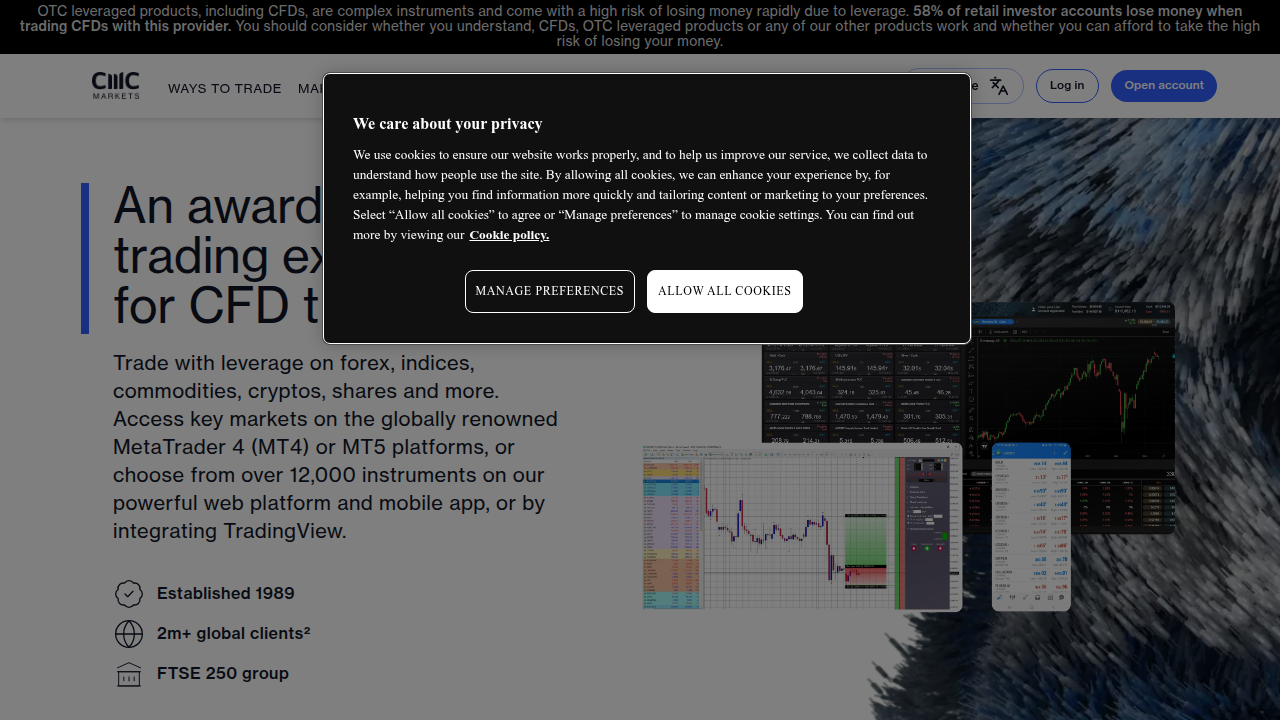
You can practice buying stocks, try crypto leverage trading, or test out day trading strategies. Everything feels real, but the money isn’t. It’s a powerful training ground.
Think of it like a flight simulator for pilots. Before they fly a real plane with passengers, they spend hours in a simulator.
They learn how to handle every control and what to do in an emergency, all in complete safety. Paper trading is your financial flight simulator.
This guide is your trustworthy, step-by walkthrough. We will show you how to use the best paper trading tools and strategies to build unshakable confidence. You’ll learn how to choose a safe platform, just like we discuss in our guide on how to find the official E-Trade login page safely. You’ll discover how to track your progress with a trading journal and develop a plan before you ever open a real brokerage account.
Ready to turn fear into confidence? Let’s begin your risk-free journey.
The best way to stay on track as you learn is with clear, simple guidance. For ongoing step-by-step crypto education and safety tips delivered right to you, consider our free newsletter. Sign Up for helpful insights to support your learning journey.
What Is Paper Trading? Demystifying the Simulated Trading World
Remember the flight simulator? Paper trading is exactly that for your money. It’s a safe, simulated space where you can learn the controls.
In simple terms, paper trading is practice trading with pretend money. As explained in a beginner’s guide, it’s a simulated trading activity where you can practice buying and selling without risking real cash. You get to test your ideas in a market that behaves just like the real one.
How Modern Paper Trading Really Works
Gone are the days of tracking prices with a pencil and paper. Today’s paper trading platforms are powerful simulators.
They use real, live market prices. When you place an order to buy a stock or try crypto leverage trading, the platform uses the same prices you’d see on a live brokerage screen. You can practice different order types, set stop-losses, and build a portfolio, just like professionals do for swing trading or day trading.
The best platforms, often called a day trading simulator or demo account, track your every move. You can see your portfolio value change, review your trade history, and learn from your wins and losses. This is where using a trading journal becomes a powerful habit, helping you understand what works.
What Paper Trading Is NOT
It’s important to know the limits so you don’t get the wrong idea.
- It is NOT a guarantee of future profits. Doing well with fake money doesn’t always mean you’ll succeed with real money. Real trading involves emotions like fear and greed that a simulator can’t fully replicate.
- It is NOT a way to earn real money. You cannot withdraw your simulated profits.
- It is NOT a replacement for learning the basics. You still need to understand what you’re trading. Jumping into forex trading or crypto without knowing the fundamentals is risky, even in a sim.
Think of it as your training wheels. It’s the perfect place to learn how to balance, pedal, and steer before you ride on the busy road with real traffic. It’s also the safest way to learn the interface of a new platform before you open a real brokerage account, a step we cover in our guide on how to find the official E-Trade login page safely.
The goal is to build muscle memory and confidence. As experts at CMC Markets note, this simulated practice mirrors real market conditions without the risk. It’s your personal sandbox for apex trading strategies.
Learning is a journey, and it helps to have a clear map. For straightforward, step-by-step lessons that break down complex topics, many beginners find value in a dedicated learning resource. Our friends at Clicks and Trades offer a free newsletter full of practical crypto tips and education to support your path.
Ready to try it? Your next step is to choose a trustworthy simulator and start your first practice trade.
Sign Up for free weekly insights to help guide your learning journey from paper to practice.
The Undeniable Benefits of Paper Trading for Crypto Beginners
Now that you know what paper trading is, you might wonder, "Is it really worth my time?" The answer is a clear yes. For anyone new to crypto, using a day trading simulator is one of the smartest first steps you can take. It transforms confusing theory into practical, risk-free experience. Here are the three biggest benefits you’ll get.
1. It Builds Real Confidence
The fear of losing real money can freeze you. It’s a big reason many people never make their first trade. Paper trading melts that fear away.
When you practice with simulated funds, there’s no anxiety. You can buy Bitcoin, try leverage trading crypto, or experiment with altcoins without a single worry.

This safe space lets you learn how the market moves and how you react. As noted by trading education experts, this kind of practice helps you build the discipline you need before going live. Doing this builds a muscle memory of success. When you finally switch to a real brokerage account, you won’t be clicking buttons blindly. You’ll be executing a plan you’ve already practiced, which is a huge confidence boost.
2. You Can Test Any Strategy Safely
Have you heard about a new swing trading tactic or a forex trading method? Want to see if day trading crypto fits your style? A simulator is your perfect lab.
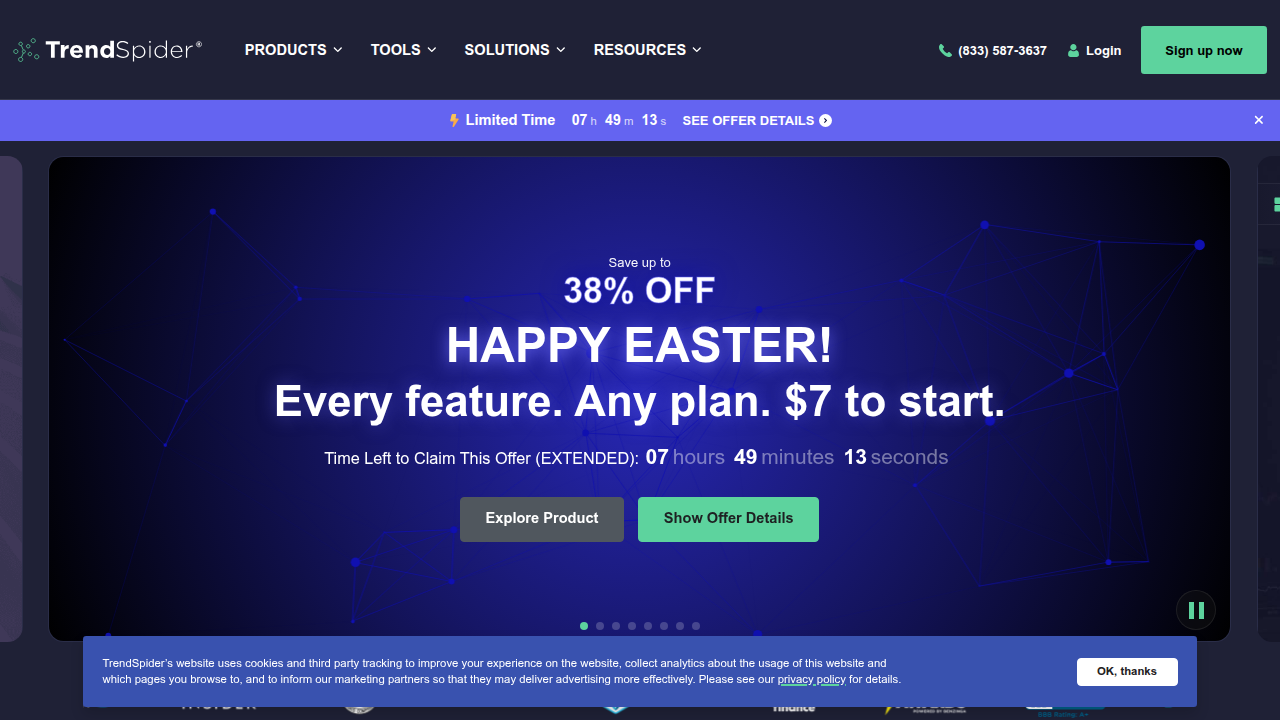
Modern platforms use real, live market data. This means you can test your ideas against actual price movements. You can see if a strategy would have made money last week or lost it yesterday. A leading day trading simulator platform like TrendSpider offers historical data and real-time simulation to do just this.
This is where keeping a simple trading journal becomes powerful. Write down what you tried and why. Did it work? Learning what doesn’t work with fake money is a priceless lesson that saves your real cash.
3. You Learn the Platform Inside and Out
Every trading app or website, like Trading 212 or others, has its own layout and buttons. Confusion leads to costly mistakes. Is this the buy button? How do I set a stop-loss? A simulator lets you answer all these questions stress-free.
You can practice placing different order types, reading charts, and understanding fees without consequence. This familiarity is crucial. It prevents the panic of fumbling through a live platform when real money is on the line. Getting comfortable with the mechanics on a demo account is a key step before you ever need to log into a real one, similar to knowing how to find the official E-Trade login page safely to protect your assets.
Your Next Step Forward
Think of paper trading as your mandatory flight school before piloting a real plane. It builds skill, strategy, and composure. The goal is to make all your beginner mistakes here, where they don’t cost a thing.
To keep learning in a simple, step-by-step way, many beginners find great value in clear, ongoing education. Our friends at Clicks and Trades offer a free newsletter full of practical crypto tips and straightforward lessons that can guide your journey from practice to real trading.
Ready to turn knowledge into confident action?
Sign Up for free weekly insights and continue building your skills safely.
How to Start Paper Trading: Your First 5 Steps
You understand the why of paper trading. Now, let’s get into the how. Starting is easier than you think. Here is your simple, five-step plan to go from curious beginner to confident simulator trader.
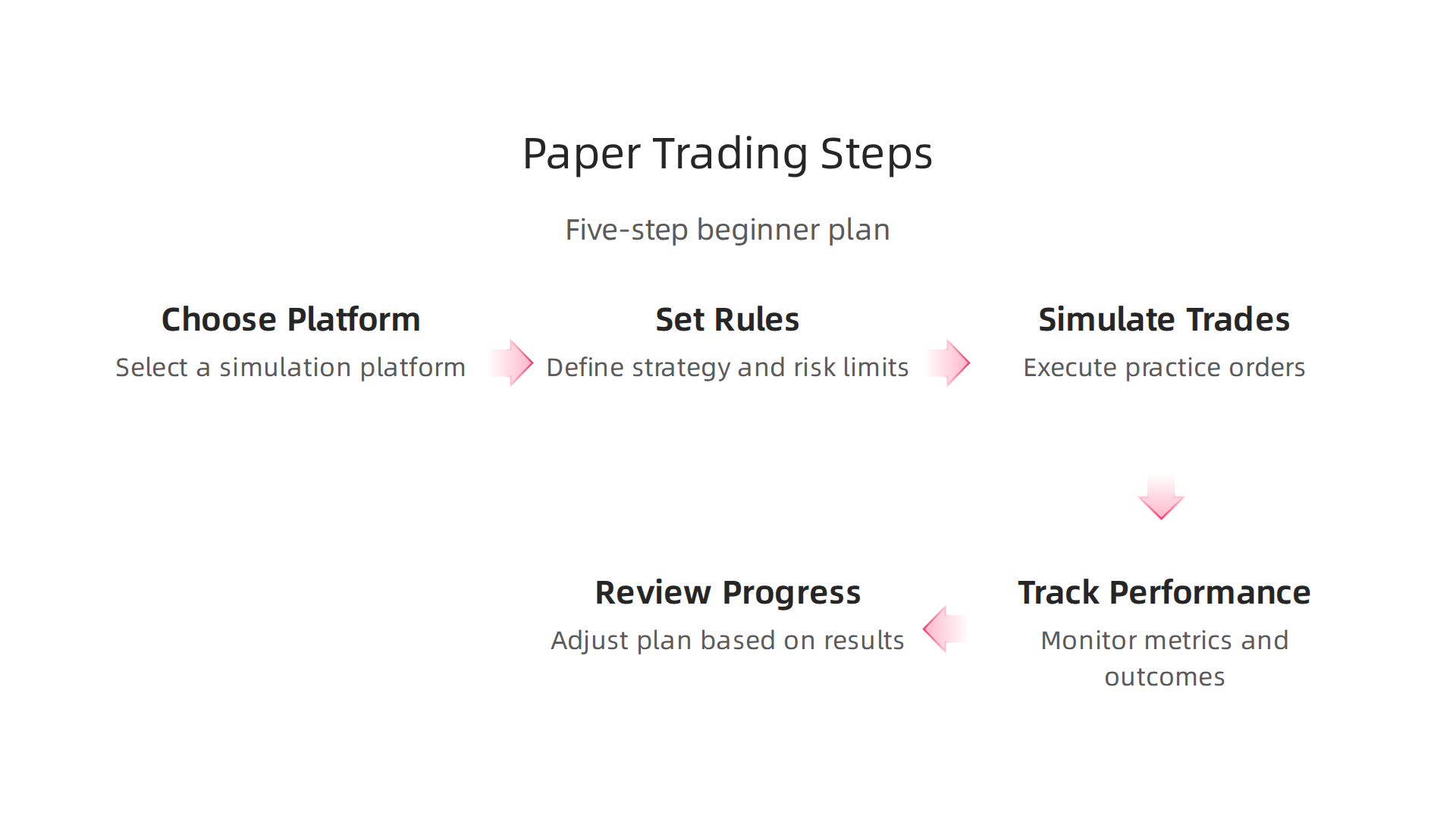
Step 1: Choose Your Paper Trading Platform
The first step is picking your training ground. You want a day trading simulator that feels real and is easy to use. Look for three key things:
- Realistic Data: The platform should use live or delayed real market prices, not made-up numbers. This is crucial for testing real strategies.
- User-Friendly Interface: As a beginner, you don’t want to fight confusing menus. Look for a clean, simple layout.
- Good Security: Even though you’re using fake money, you’re still giving personal info to sign up. Choose a reputable provider.
For crypto specifically, platforms like Phemex or TradingView offer great simulated trading experiences.
For a broader look at traditional and crypto brokers that offer practice accounts, resources like NerdWallet’s list of the best paper trading platforms for 2026 are very helpful.
Always make sure you’re on the official site when signing up, just as you would when looking for the official E-Trade login page for a real brokerage account.
Step 2: Set Up Your Practice Account
Found your platform? Great. Now, sign up for a demo or paper trading account. This process is usually fast and free.
You’ll typically need to give an email and create a password. The platform will then give you a starting balance of virtual money, often between $10,000 and $100,000 in fake funds. This is your risk-free capital to learn with. Take a moment to explore your new dashboard. Find where the charts are, where your balance shows, and where the order buttons are.
Step 3: Place Your First Simulated Trade
Let’s make your first practice move. Keep it super simple. Here’s an example using Bitcoin (BTC):
- Find the Market: Search for "BTC/USD" or "Bitcoin" on your platform.
- Choose an Order Type: Start with a basic "Market Order." This means you buy at the best available price right now.
- Decide on Amount: Don’t use all your fake money. Maybe buy $500 worth of simulated BTC.
- Click Buy (or Long): Execute the trade.
That’s it. You now have a simulated Bitcoin position. Watch what happens to its value over the next hour or day. The goal here isn’t to make fake profit. It’s to get comfortable with the mechanics of placing an order.
Step 4: Keep a Simple Trading Journal
This is the secret weapon smart traders use. Open a notes app or get a notebook. After each practice trade, write down three things:
- What you did: "Bought $500 of BTC at $XX,XXX with a market order."
- Why you did it: "I thought the price was bouncing off a support level I saw on the chart."
- The outcome: "The price went down 2% over the next 4 hours."
This trading journal turns random clicks into real lessons. You’ll start to see patterns in what works and what doesn’t for you.
Step 5: Review, Learn, and Repeat
Paper trading isn’t a one-time thing. It’s a cycle. Go back and review your journal. Did your swing trading idea work? What happened when you tried a little crypto leverage trading? Lose some virtual money? Fantastic. That mistake just taught you a valuable lesson for free.
Use your simulator to test everything. Try a day trading crypto strategy one day. Practice setting stop-loss orders the next. The more you repeat this process in a risk-free environment, the more prepared you’ll be.
To get clear, step-by-step guidance as you practice, many beginners find it helpful to follow along with simple lessons. Our friends at Clicks and Trades offer a free newsletter full of practical tips that can help you connect your paper trading practice to smart, real-world decisions.
Ready to build your skills with a structured plan?
Essential Crypto Trading Strategies to Practice First
You have your paper trading account set up. You’ve placed your first practice trade. Now you might be thinking, "What do I actually do here?"
It’s a great question. A simulator is just a tool. You need a plan to use it well. Instead of randomly clicking buttons, start by practicing these three essential crypto trading strategies.
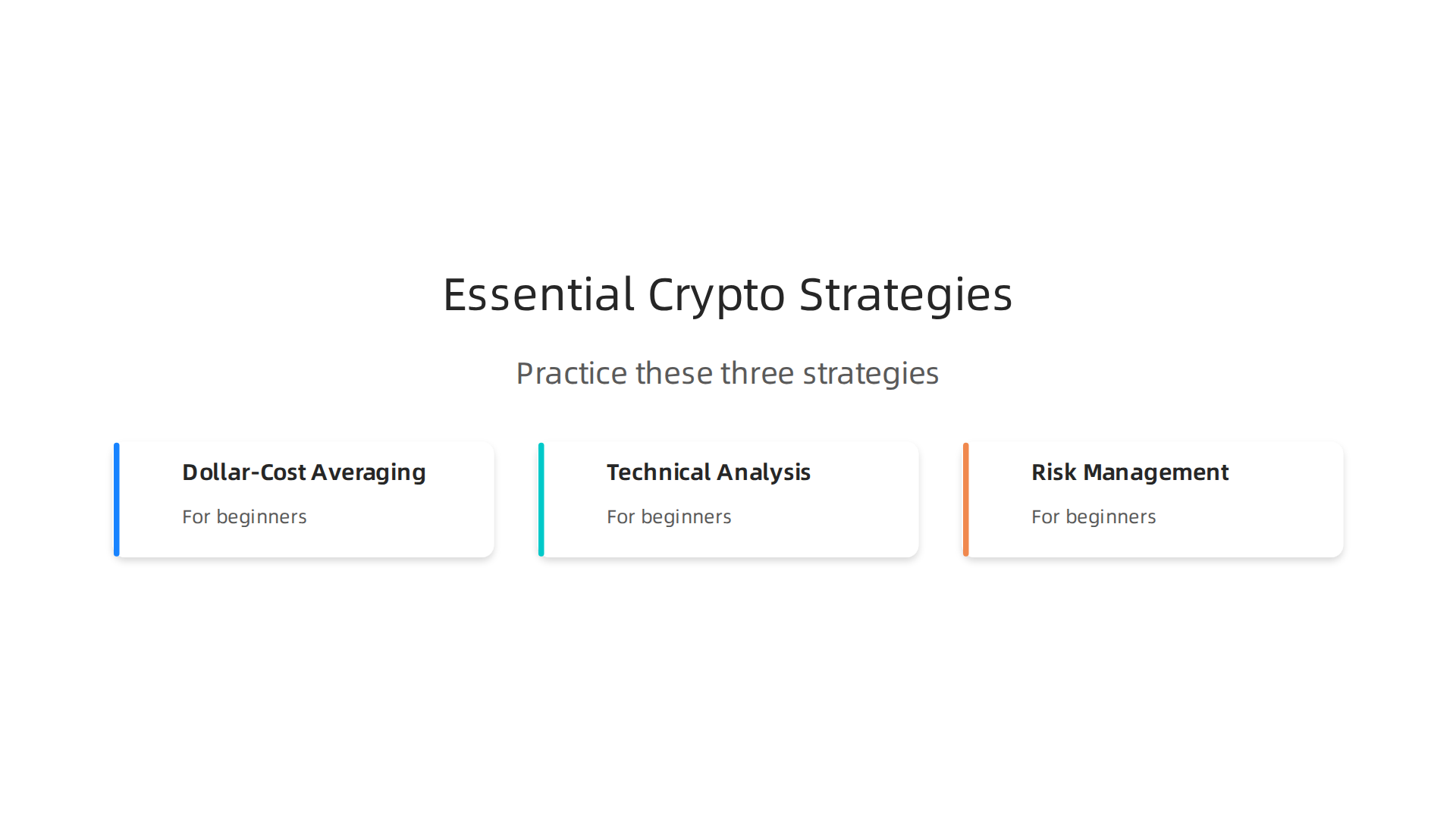
They are the foundation every smart trader builds on, and your day trading simulator is the perfect, risk-free place to learn them.
1. Practice Dollar-Cost Averaging (DCA)
Dollar-Cost Averaging is one of the simplest and most powerful strategies for beginners. The idea is easy. Instead of trying to time the market perfectly, you invest a fixed amount of money on a regular schedule.
For example, you decide to "buy" $50 of Bitcoin in your simulator every Tuesday, no matter what the price is. Some weeks you get more Bitcoin for your $50. Some weeks you get less. Over time, this averages out your purchase price and removes the stress of guessing.
Why practice DCA first? It teaches discipline. It gets you comfortable with making regular, unemotional decisions. Experts at Mudrex list DCA as a top strategy for newcomers because it builds good long-term habits without the guesswork. Use your paper trading account to set up a recurring "purchase" and watch how the position grows over weeks of simulated time.
2. Learn Basic Technical Analysis
Technical analysis is just a fancy term for reading the story that price charts tell. You don’t need to learn complex indicators right away. Start with two simple ideas:
- Support and Resistance: Think of support as a floor where the price tends to stop falling. Resistance is like a ceiling where it tends to stop rising. On your simulator’s chart, look for price levels where the asset has bounced multiple times.
- Trend Lines: Is the price generally making higher highs and higher lows? That’s an uptrend. Is it making lower highs and lower lows? That’s a downtrend. Drawing a simple line along these points can help you see the market’s direction.
How to practice: In your paper trading platform, pick an asset like Bitcoin or Ethereum. Look at the chart and try to spot a clear support level. Place a simulated buy order near that level. Then, try to identify a resistance level and place a simulated sell order there. Guides for beginners, like the one from Equiti, emphasize that understanding these basic chart concepts is crucial before moving to more active swing trading or day trading crypto.
3. Master Risk Management Fundamentals
This is the most important skill you will ever practice. It’s not about making the most money. It’s about protecting the money you have. Every single simulated trade should include a risk management plan.
Always practice using these two orders:
- Stop-Loss Order: This is an automatic sell order that closes your trade if the price moves against you by a certain amount. It limits your loss. If you buy simulated Bitcoin at $60,000, you might set a stop-loss at $58,000.
- Take-Profit Order: This is an automatic sell order that closes your trade when it reaches a profit target you set. It locks in your gains. For the same trade, you might set a take-profit at $63,000.
Why this matters: Using these orders in your simulator trains you to think about risk before reward. It makes protection automatic. As highlighted in resources on day trading crypto, not managing risk is a top reason new traders lose money. Your trading journal should note the stop-loss and take-profit levels for every practice trade you make. This habit is more valuable than any single winning trade.
Remember, security is a part of risk management, too. Just as you should always use the official E-Trade login page for safety with a traditional brokerage account, you should practice safe and disciplined habits in your simulator.
Learning these strategies step-by-step is the best way to build real confidence. For clear, ongoing lessons that connect practice to smart decisions, joining a free educational newsletter can be a huge help. Our friends at Clicks and Trades offer a free newsletter packed with practical tips perfect for beginners.
Ready to turn your practice into a plan?
Sign Up for the Clicks and Trades newsletter and get step-by-step guidance delivered straight to you
Common Paper Trading Pitfalls (And How to Avoid Them)
You are getting the hang of your strategies. You are placing practice trades. It feels good to learn without risk.
Here is the thing. The biggest danger in paper trading is not losing fake money. It is developing bad habits that will hurt you when the money is real.
A simulator is a powerful tool, but only if you use it correctly. Watch out for these three common mistakes and learn how to avoid them.
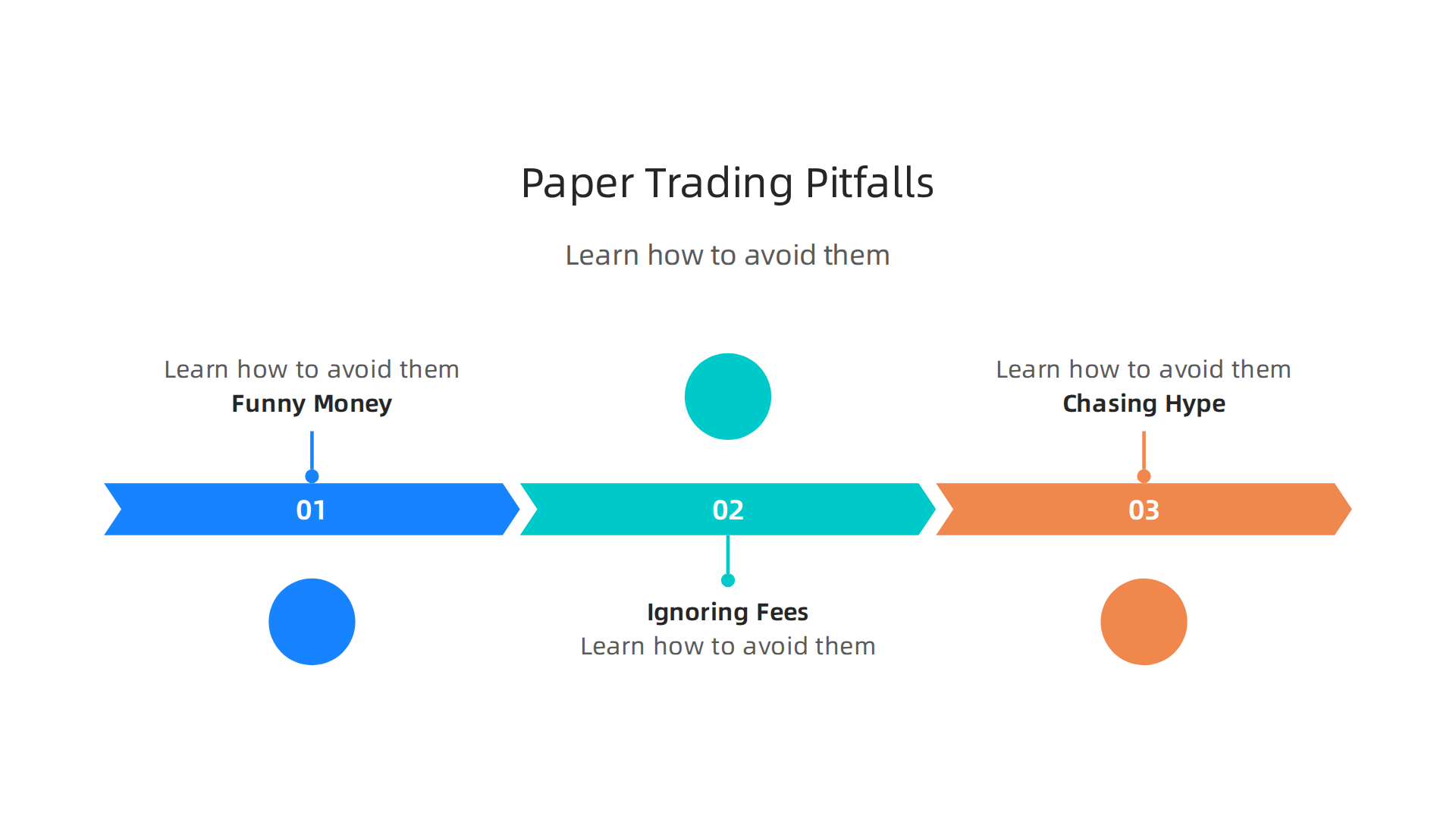
1. Treating ‘Funny Money’ Casually
This is the number one trap. Because the balance on your screen is not real, it is easy to take crazy risks. You might put your entire simulated portfolio into one wild trade. Or you might ignore your stop-loss because "it’s just practice."
The problem? Your brain is learning. It is learning that reckless behavior has no painful consequences. When you switch to a live brokerage account, that learned carelessness can lead to real losses.
How to avoid it: Treat every single simulated dollar as if it were real. Set a realistic practice account balance that matches what you would actually start with. Use the same position sizing and risk rules you plan to use live. The goal is to build discipline, not to see how high you can pump a fake number. Regulators have even created tools to show how gamification can influence behavior, highlighting why a serious mindset is crucial.
2. Ignoring Transaction Fees & Slippage
In a perfect simulator world, you buy at exactly $50,000 and sell at exactly $52,000. You pocket a nice $2,000 profit.
In the real world, you pay a fee to the exchange to make that trade. You might also experience "slippage" where your order fills at $50,050 instead of $50,000 because the price moved between your click and the trade execution. Suddenly, that $2,000 profit is much smaller.
How to avoid it: Research and factor in real costs. If your target platform charges a 0.1% fee per trade, calculate that fee for every practice trade you make. Deduct it from your simulated profit and loss. Some advanced day trading simulators let you customize these parameters. This habit is essential for accurate forex trading or crypto leverage trading where fees and spreads can quickly eat into profits. As trading educators note, a simulator’s main job is to help you prepare for live markets with all their real-world friction.
3. Chasing Hype Without Analysis
Your paper trading account is the perfect place to test impulsive, emotionally-driven trades. You see a coin pumping on social media and you "buy" it in your simulator with one click. If it works, you feel like a genius. If it fails, no harm done.
This trains the exact wrong instinct. It rewards you for acting on hype rather than analysis. When you go live, that same impulse could make you a victim of insider trading rumors or "pump and dump" schemes.
How to avoid it: Use your simulator to practice your process, not your impulses. Before any practice trade, write down the reason in your trading journal. Is it a technical setup at a support level? Is it part of your DCA schedule? If the only reason is "I saw it trending on Twitter," do not take the trade. A good trading simulator is for testing your strategies, not your emotions.
Think of your paper trading journey like a pilot using a flight simulator. They do not try reckless stunts because the plane is not real. They practice exact procedures for real-world conditions. That is how you build true confidence and skill for day trading crypto or any other market.
Keep your practice grounded in reality. For clear, ongoing lessons that help you build safe and smart habits, getting regular guidance can make all the difference. Our friends at Clicks and Trades offer a free newsletter with practical tips perfect for turning your practice into real readiness.
Ready to trade with more confidence?
Sign Up for the Clicks and Trades newsletter and get helpful insights delivered straight to you.
Transitioning from Paper Trading to Real Trading
You have been careful in your practice. You avoided the big pitfalls. Your simulated results look good, and your confidence is growing. Now what?
Moving from paper trading to your first real trade is the most important step in your journey.

It is exciting, but it can also be nerve wracking. The key is not to jump in blindly. You need a smart plan.
Here is how to make that leap safely and set yourself up for real success.
Setting Your ‘Ready to Go Live’ Checklist
How do you know you are truly ready? It is not just about having a winning streak in your simulator. True readiness comes from consistent, disciplined performance over time. Experts suggest that if you can successfully execute your plan over several months in a simulator, you may be ready to go live.
Before you open your live brokerage account, make sure you can check these boxes:
- Consistent, Rule-Based Profits: Are you making simulated profits by following your strategy, not by taking random, lucky shots?
- Emotional Control: Can you handle a string of simulated losses without breaking your rules or getting frustrated?
- Process Perfection: Is your pre-trade analysis, entry, exit, and journaling routine now a solid habit?
Think of this checklist as your pilot’s final exam before flying a real plane. As one guide on making the switch notes, having a user-friendly platform with easy fund access is also a key practical step once you are ready.
Starting Small with Real Capital
This is the golden rule. When you go live, you must start with an amount of money you can truly afford to lose. This is not the time to transfer your life savings.
Why is starting small so critical? Because the moment real money is on the line, everything changes. Fear and greed become powerful forces. A small loss with real money can feel like a huge simulated loss. This emotional shift is the single biggest difference between practice and reality. As market analysis shows, the emotional and psychological impact of live trading is profound.
Begin with the smallest position size your broker allows. This is especially vital for leverage trading crypto or day trading crypto, where risks are magnified. Your goal for the first month of live trading is not to get rich. It is to learn how your mind and emotions react when the stakes are real, without risking significant capital.
Maintaining a Trading Journal (Now More Than Ever)
You have kept a trading journal during your paper trading, right? Good. That habit just became ten times more important.
With real money, your journal is your most honest coach. It is where you will spot if fear is causing you to exit winning trades too early. It is where you will see if greed is making you hold losing swing trading positions for too long.
After every live trade, log:
- The setup and reason for the trade.
- The emotional feeling you had when you entered and exited.
- The outcome and what you learned.
Reviewing this journal weekly will show you your real weaknesses and help you fix them. It turns real-world experience into true wisdom. For keeping all your accounts secure as you start, remember to always use official login pages, like learning how to find the official E*Trade login page safely.
The transition from paper to live is a test of your character, not just your strategy. Go slow. Be humble. Treat real money with even more respect than you treated your simulated dollars. This careful approach builds the unshakeable discipline you need for the long term.
For steady guidance as you navigate this exciting new phase, getting clear, practical advice can help keep you on track.
Sign Up for the free Clicks and Trades newsletter to get helpful insights and tips delivered straight to you, making your transition from practice to reality smoother and more confident.
Advanced Tools to Explore in Your Paper Trading Account
Paper trading is not just about placing simple buy and sell orders. Think of your simulator as a full-featured training lab. Before you risk real money, you should learn to use the advanced tools that professional traders rely on every day. Mastering these in a risk-free environment builds true skill and confidence.
Here are three powerful areas to explore in your day trading simulator.
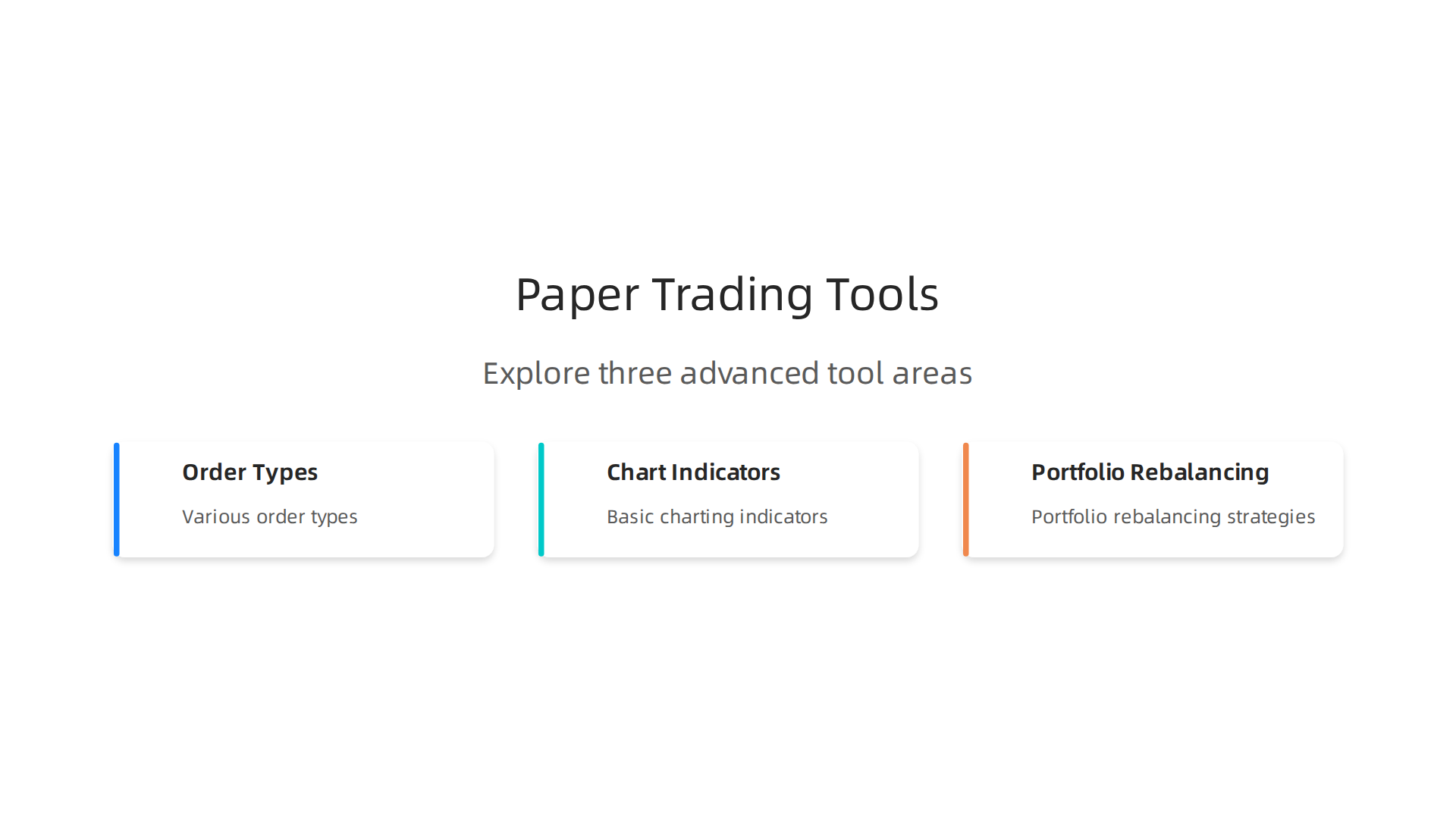
Practice with Limit, Stop, and Other Order Types
Moving beyond a simple market order is a game changer. These tools help you control your entry and exit prices with precision, which is crucial for managing risk.
- Limit Order: You set the exact price you want to buy or sell at. The trade only happens if the market reaches your price. This prevents you from overpaying on a buy order or selling for too little.
- Stop Order (Stop-Loss): This is your safety net. You set a price at which to automatically sell a losing position. It’s essential for leverage trading crypto or day trading crypto, where prices can move fast.
- Stop-Limit Order: A combination of the two. You set a stop price to trigger the order and a limit price to define the worst price you’ll accept. It gives you more control over your exit in a volatile market.
Spend time in your simulator placing these orders. See how they behave in different market conditions. Top platforms recommended for beginners, like those listed in guides to the best paper trading platforms for 2026, offer these tools so you can practice effectively.
Using Basic Charting Indicators
Charts can tell a story, and indicators help you read it. In your paper trading account, experiment with adding these common tools to your charts to simulate smarter trades.
- Moving Averages: These lines smooth out price data to show a trend. When a short-term average crosses above a long-term one, it can signal a potential upward move (and vice versa).
- Relative Strength Index (RSI): This measures whether an asset is overbought (possibly ready to drop) or oversold (possibly ready to rise). An RSI above 70 suggests overbought, below 30 suggests oversold.
Don’t just add them and guess. Make a rule: “I will only simulate a buy if the RSI is below 30 and the price is above the 50-day moving average.” Then test it. See if your rule works over many trades. This turns random guessing into a structured strategy. Many crypto trading platforms for beginners in 2026 integrate these charting tools directly, allowing for seamless practice.
Portfolio Rebalancing Simulations
Trading isn’t just about single trades. It’s about managing a whole portfolio. Use your virtual cash to practice this crucial skill.
Let’s say you start with a goal: 50% in crypto, 30% in stocks, and 20% in cash. After a big rally, your crypto might grow to be 70% of your portfolio. That’s much riskier than you planned.
Portfolio rebalancing is the act of selling some of the winners and buying more of the losers to get back to your 50/30/20 target. It forces you to “sell high” and “buy low” systematically. In your simulator, set a target allocation and practice rebalancing every month. It teaches discipline and long-term risk management.
As you explore these advanced features on real platforms, always prioritize security. For instance, if you’re practicing on a platform like E*Trade, ensure you are always using the official site. You can learn more about this critical safety step in our guide on how to find the official E*Trade login page safely.
Learning these tools in your paper trading account turns you from a beginner into a prepared trader. You stop reacting and start executing a plan. For more step-by-step guides on using these tools and building your strategy, clear and simple advice is key.
Sign Up for the free Clicks and Trades newsletter to get helpful insights and tips that make learning these advanced concepts feel straightforward and safe.
Summary
This article explains why paper trading (simulated trading) is the safest and smartest first step for new traders, especially in crypto. It defines paper trading, describes how modern demo platforms mirror real market prices, and shows what paper trading can and cannot do. You’ll get a practical five-step starting plan—choose a platform, set up a demo account, place your first trade, keep a trading journal, and review your results—plus three core strategies to practice: dollar-cost averaging, basic technical analysis, and risk management with stop-loss/take-profit orders. The guide also warns about common pitfalls like treating fake money casually, ignoring fees and slippage, and chasing hype, and it explains how to know when you’re ready to go live and how to start small. Finally, it recommends exploring advanced tools (order types, chart indicators, portfolio rebalancing) in your simulator so you move to real trading with skill and discipline.
