Crypto for Beginners: What Nobody Tells You Before You Start
Welcome, Curious Gemini: Your Stars Align with Crypto Basics
Hello there. If you’re checking your gemini horoscope today and felt a pull to finally understand what this whole crypto thing is about, you’ve found the right spot. That curiosity of yours? It’s not random. As a Gemini, your mind is naturally wired to learn and adapt quickly, always seeking new and interesting ideas to discuss

But here’s the thing. That same quick mind can also spin out when faced with a flood of technical terms. Words like blockchain, DeFi, and wallets can feel like a foreign language. You might be excited but also a little nervous. That’s completely normal. The fear of scams, the worry about making a wrong move with your money, and the sheer overload of information are real barriers that stop most beginners in their tracks.
This isn’t another confusing tech lecture. Consider this your safe, trustworthy, and jargon-free guide. We’re going to use your Gemini strengths—your curiosity and ability to grasp new concepts—to build your confidence from the ground up. We’ll start with the absolute basics, just like learning the gemini pronunciation before diving into a deep conversation.
Our first, most important step is learning in a completely risk-free environment. Before you even think about real money, you should explore paper trading, the risk-free first step every beginner should take. It’s the perfect way to satisfy your curiosity without any pressure.
Think of this as the beginning of a clear conversation, not a confusing monologue. Your journey to understanding crypto starts right here, and it’s designed to make you feel informed and secure, not overwhelmed.
Ready to turn that curiosity into confidence? For clear, step-by-step lessons delivered right to you, sign up for the free Clicks and Trades newsletter. It’s the easy way to keep learning safely.
Forget the Jargon: Crypto Explained in Plain Language
Okay. So all those confusing words you keep hearing. They’re just labels for simple ideas. Once you learn the three core ideas, everything else clicks into place.
Let’s define the big three.
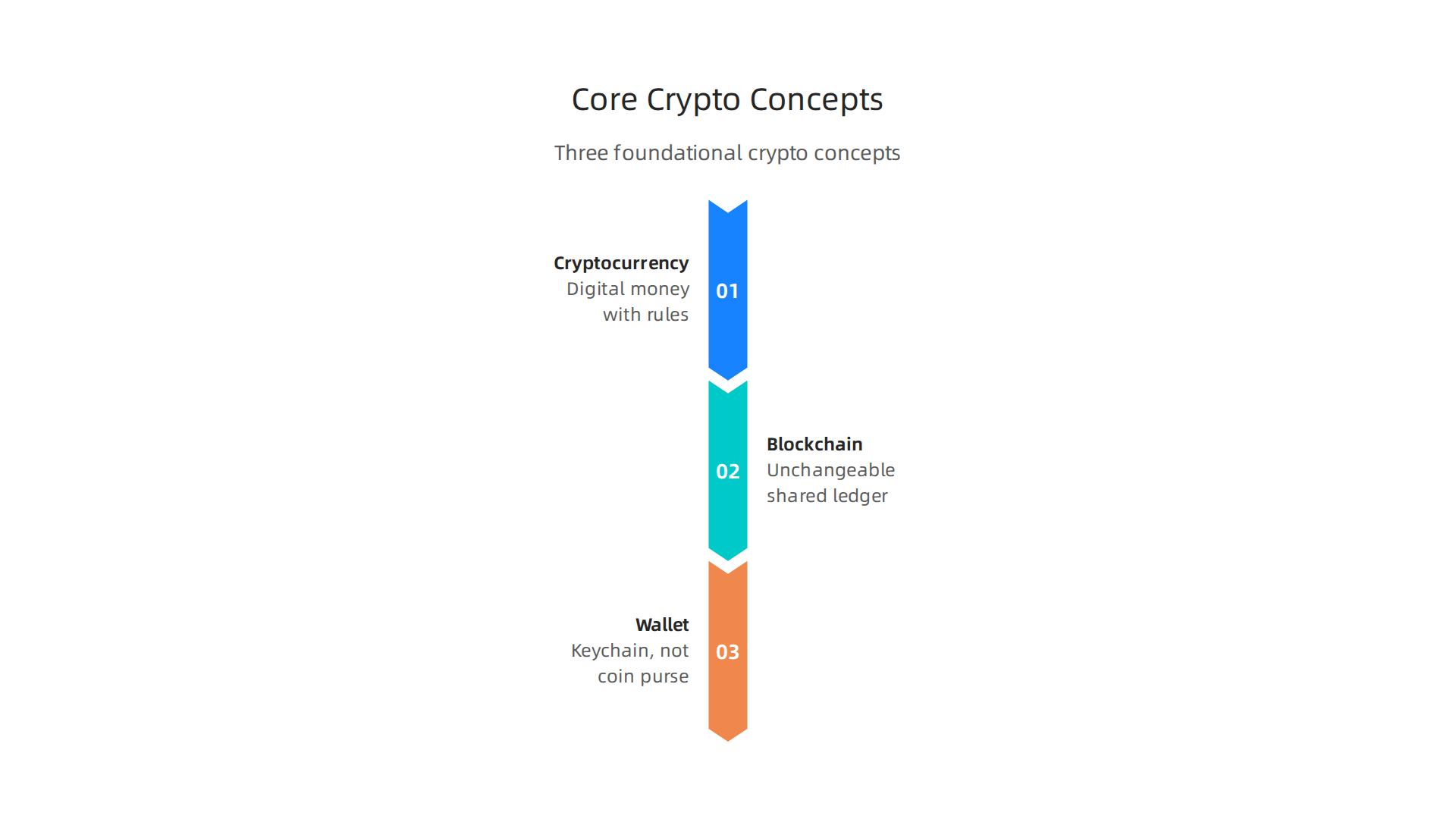
1. Cryptocurrency: Digital Money with Rules
Think of it like digital tokens for a specific club. Bitcoin (BTC) tokens are for the Bitcoin club. Ethereum (ETH) tokens are for the Ethereum club. They have value because people agree they do and because the rules of each club (its software) control how many can exist and how they move around. It’s not a file on your computer. It’s an entry on a massive, shared digital list.
2. Blockchain: The Unchangeable Shared Ledger
This is the “shared digital list.” Imagine a Google Doc that thousands of people have a copy of. Every time someone sends a crypto token, that transaction gets written as a new line in the Doc. Everyone updates their copy. You can’t go back and secretly change an old line because everyone else would see their copy doesn’t match. That’s the basic idea of a blockchain, a secure, shared record of transactions. As a guide from the Cardano Foundation explains, it’s this transparency and security that forms the foundation of the entire system.
3. Wallet: Your Keychain, Not Your Coin Purse
This is the biggest mind-shift. Your crypto isn’t “in” a wallet. It’s always on the blockchain ledger. Your wallet is a tool that holds the digital keys that prove you own those entries on the ledger. One key is public (like your email address, you can share it to receive funds). The other is private (like the password to your email, you NEVER share it). As the Britannica guide to cryptocurrency wallets states, losing your private key means losing access to your funds forever.

So a wallet is really a key manager.
See? Not so scary. A digital token, a shared list, and a keychain.
Decoding the Alphabet Soup
Now, what about all those other letters people throw around? Here’s your quick cheat sheet.
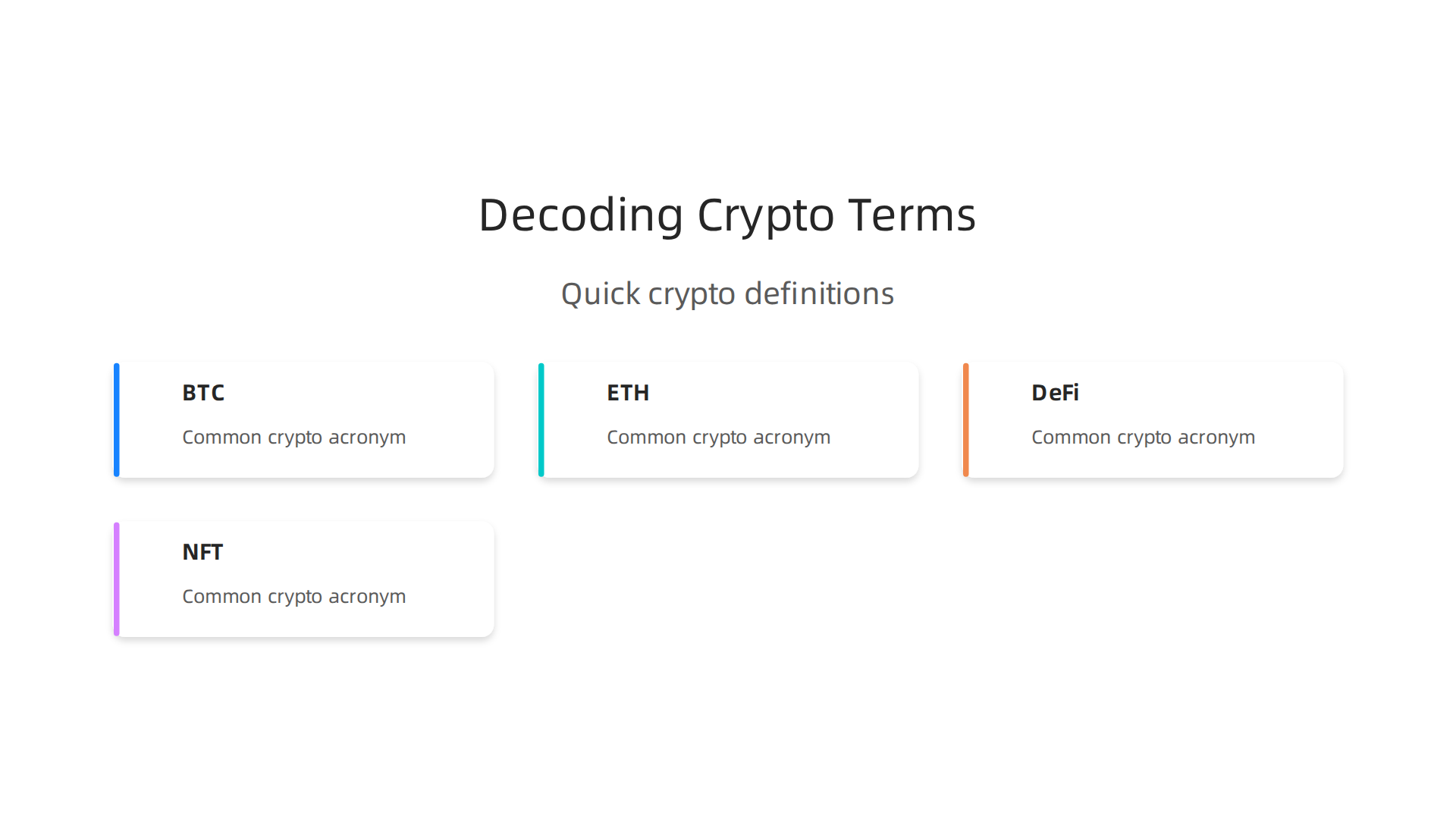
- BTC: Bitcoin. The first and most famous cryptocurrency.
- ETH: Ethereum. More than digital money, it’s a platform for apps (called “smart contracts”) that run on its blockchain.
- DeFi: Decentralized Finance. Financial services (lending, borrowing) run by code on a blockchain instead of by a bank.
- NFT: Non-Fungible Token. A unique digital certificate of ownership for an item, like digital art or a collectible. It’s the “certificate,” not the artwork itself.
That’s honestly 90% of the battle. You don’t need to be a tech genius. You just need these simple mental models.
Your gemini horoscope today might highlight your curiosity. Use it to ask questions. If you hear “DeFi,” you now know it’s just about financial apps without the bank middleman. The goal is to go from confused to confident, one simple concept at a time.
The best way to build that confidence is to practice in a risk-free space. Before touching a real wallet or keys, I always recommend beginners start with paper trading, the risk-free first step every beginner should take. It lets you test everything you’re learning.
To keep getting clear, step-by-step breakdowns like this delivered to you, the easiest next step is to Sign Up for the free Clicks and Trades newsletter. It’s your guide out of the jargon jungle.
Your #1 Priority: How to Spot (and Avoid) Crypto Scams
Now that you know the basic words, here is the most important lesson. It is not about making money fast. It is about not losing it. Scammers love beginners. In 2025 alone, cryptocurrency scams took in at least $14 billion, as reported in The 2026 Crypto Crime Report. Your first job is to learn how to protect yourself.
Think of your gemini horoscope today talking about being alert and cautious. Use that energy.

Here is your simple guide to the most common traps and how to avoid them.
The Most Common Beginner Traps
Scammers have playbooks. Knowing their tricks is your best defense.
-
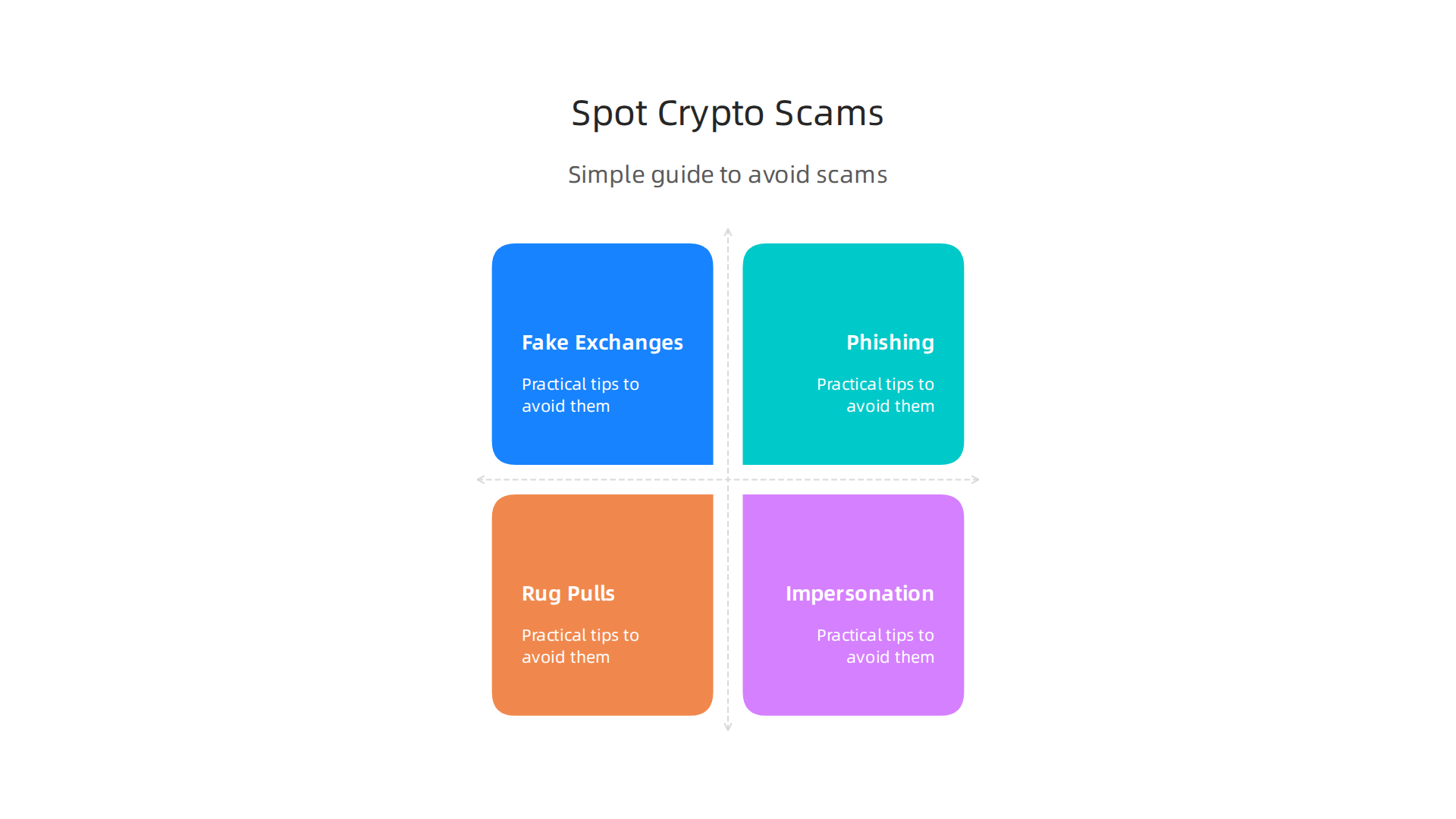
Fake Exchanges and "Support"
- The Scam: You search for "how to buy crypto" and click on a sponsored ad or a link that looks almost exactly like a real exchange website. Or, you get a direct message from "support" saying your account has a problem.
- Red Flags: A website with a slightly wrong URL (like "coinbasse.com"). Urgent messages asking you to "verify" your wallet by entering your private key or seed phrase. Guarantees that you need to act now.
- How to Avoid: Always type the official exchange URL yourself. Real support will never, ever ask for your private key. For a great example of how to spot a real website, check out our guide on how to find the official eTrade login page safely.
-
Phishing for Your Keys
- The Scam: You get an email or text that looks like it’s from your wallet provider or an airdrop notification. It asks you to click a link and log in.
- Red Flags: Poor spelling or grammar. An email address that doesn’t match the official company domain. A sense of urgency or an offer that seems too good to be true.
- How to Avoid: Never click links in emails or DMs about your crypto. Always go to the app or website directly. Legitimate services do not ask for your secret recovery phrase.
-
The "Rug Pull"
- The Scam: A new, exciting project gets promoted heavily on social media, promising huge returns. People invest money. Then, the developers suddenly take all the money and disappear.
- Red Flags: Promises of "guaranteed" high returns with no risk. An anonymous team. Pressure to buy before you "miss out." Lots of hype but no real product.
- How to Avoid: If it sounds too good to be true, it is. Stick to well established projects, especially when you are starting out. Do your own research.
-
Impersonation and Giveaway Scams
- The Scam: A fake social media account posing as a famous crypto person or company announces a "giveaway." They say, "Send 1 ETH to this address and we’ll send back 2 ETH!"
- Red Flags: Any offer that asks you to send crypto first to get more back. An account with a weird spelling of a famous name. This is a classic scam that still works, as noted in global fraud studies by organizations like the Global Anti-Scam Alliance (GASA).
- How to Avoid: Celebrities and real companies do not run giveaways where you have to send them money first. Ever.
Your Foundational Security Rules
Make these your non negotiable habits. Governments are even making rules, like requiring fraud prevention warnings on crypto kiosks, to help protect people. You need your own rules too.
- Use Reputable Sources: Stick to major, well known exchanges and wallet apps. Read reviews and do a quick search for any complaints.
- Enable 2FA Everywhere: Two Factor Authentication (2FA) adds a critical extra lock on your accounts. Always turn it on.
- Never Share Your Private Keys or Seed Phrase: This is the golden rule. These words are the absolute keys to your crypto. Anyone who has them owns your funds. No legitimate service will ever ask for them.
- Verify, Then Trust: Double check URLs. Double check social media accounts. Take a breath before you click or send.
Staying safe is an ongoing process. The best way to keep learning about new threats and safe practices is to get clear, trusted information sent right to you. For straightforward tips and guidance, many beginners find it helpful to follow a dedicated educational source like the free Clicks and Trades newsletter.
Building your knowledge is how you build a strong defense. Ready to put this into practice safely? Sign Up for regular tips to help you navigate confidently.
Step-by-Step: Making Your First Crypto Purchase Safely
You have your security rules ready. Now, let’s take that first exciting step. Buying crypto should feel empowering, not scary. This guide will walk you through the entire process, from picking a safe place to buy to seeing your first crypto in your account.
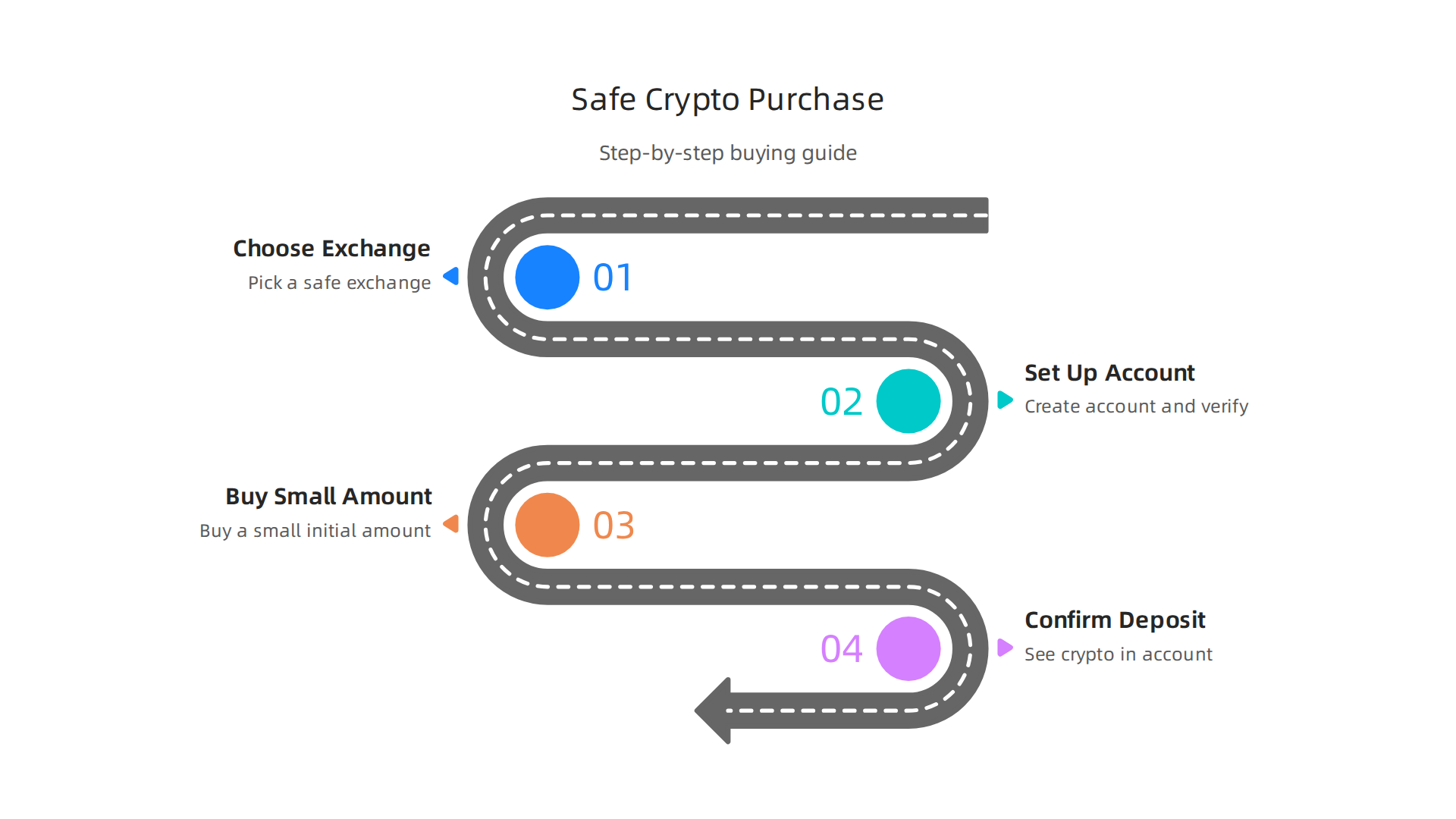
If your gemini horoscope today suggests being analytical and careful, that’s the perfect energy for this step. Your goal is to move forward with confidence, not confusion.
Step 1: Choose a Reputable, Beginner-Friendly Exchange
Think of a crypto exchange like a digital currency bank and store combined. It’s where you can trade your regular money (like dollars) for cryptocurrency. Choosing the right one is your most important first decision.
For beginners in 2026, experts recommend looking for three key things:
- Easy-to-Use Interface: You want a clean, simple website or app that doesn’t overwhelm you.
- Strong Security: Look for features like two-factor authentication (2FA) and a good reputation for keeping funds safe.
- Clear Fees: The cost to buy should be easy to understand with no hidden surprises.
Based on expert reviews for 2026, top beginner-friendly exchanges often include Coinbase, Kraken, and Gemini (pronounced "JEM-in-eye").
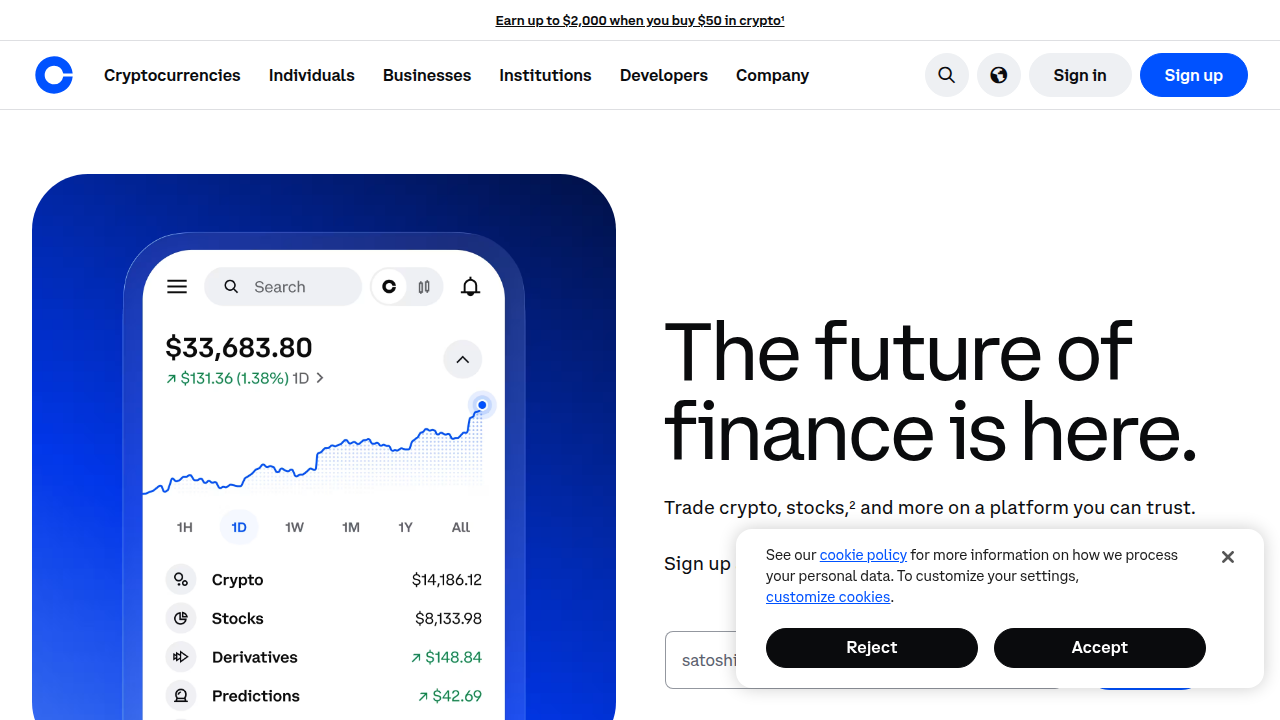
A 2026 comparison of the best crypto exchanges for beginners notes that these platforms balance ease of use with strong security tools. Another 2026 review of the safest exchanges also lists these among the top for security.
Before you commit real money, consider practicing with no risk. A great way to learn the mechanics is through paper trading, the risk-free first step every beginner should take.
Step 2: Set Up and Secure Your Account
Once you’ve chosen your exchange (for this example, let’s use a popular choice like Coinbase or Gemini), follow these steps.
- Sign Up: Go to the official website directly. Never click an ad link. Double-check the URL, just like you learned in our guide on how to find the official eTrade login page safely. Create your account with your email and a strong, unique password.
- Complete Verification (KYC): This stands for "Know Your Customer." It’s a standard legal process. You’ll need to provide some form of ID, like a driver’s license or passport, and sometimes a selfie. This helps keep the platform safe for everyone.
- Enable Security Features IMMEDIATELY: Before you even link a payment method, turn on Two-Factor Authentication (2FA). This adds a second code, sent to your phone, that you need to log in. It’s your best defense against someone accessing your account.
Step 3: Buy a Small Amount of a Major Cryptocurrency
Start small. Your first purchase isn’t about getting rich. It’s about learning the process. Bitcoin (BTC) and Ethereum (ETH) are the most established, like the "blue chip" stocks of crypto.
Here’s how the purchase process typically works:
- Link a Payment Method: In your account, find the option to add a payment method. Most exchanges allow you to connect a bank account or debit card. Cards are usually faster but may have higher fees.
- Navigate to "Buy": Look for a clear "Buy" or "Trade" button on the main screen.
- Select Your Crypto: Choose Bitcoin or Ethereum from the list.
- Enter the Amount: Start with a small, comfortable amount, like $10 or $25. Type in how much money you want to spend.
- Review and Confirm: The exchange will show you exactly how much crypto you’ll get and any fees. Read this carefully. Then, click "Confirm" or "Buy."
And that’s it. The cryptocurrency will be credited to your exchange account. Think of your exchange account like a checking account at a crypto bank. For maximum long-term security, experts recommend moving crypto to your own private wallet, as a cryptocurrency wallet guide from Britannica explains. But for your very first step, leaving it on a reputable, secure exchange is perfectly fine.
You did it. You’ve safely entered the world of crypto. The journey to understanding is ongoing, and having a trusted guide makes all the difference. For clear, step-by-step lessons and safety tips delivered right to you, many successful beginners follow the free Clicks and Trades newsletter. It’s a simple way to keep building your confidence.
Ready to turn this first step into a solid foundation? Sign Up for straightforward guidance that helps you grow your knowledge safely.
Building Your Knowledge: Finding Trustworthy Crypto Information
You’ve made your first purchase. That’s a huge step. Now, you might be thinking, "What’s next?" The crypto world moves fast, and information is everywhere. But not all of it is good. Where do you even start? If your gemini horoscope today suggests a curious and analytical mind, that’s perfect. Your next task is to learn how to separate helpful facts from noisy hype.
Finding good information is just as important as choosing a safe exchange. Let’s talk about how to build a solid learning foundation without getting overwhelmed.

How to Spot a Trustworthy Source
First, you need to know what to look for. A good source is like a good teacher. It explains things clearly and doesn’t try to scare you or promise you easy money.
Here are three simple checks you can do:
- Look for Transparency. Who wrote this? Trustworthy articles and reports have clear author names. Often, the best authors have verifiable experience in finance or technology. A recent analysis of crypto influencers highlights key markers of credibility, including accountability and transparency. If you can’t find who is behind the information, be careful.
- Watch for Hype and Promises. If a source is screaming about a coin that will "100x by next week" or uses a lot of fear words, it’s probably not educational. Its goal is to get you to act fast, not to help you understand. Reliable news keeps reporting and opinion separate.
- Check for Reputable Backing. Is the information from a known educational platform, a major news outlet, or an official regulatory body? For example, when the U.S. Securities and Exchange Commission (SEC) releases new guidance, it’s a primary source. You can read their 2026 interpretation on crypto assets directly. Reports from big professional firms, like the PwC Global Crypto Regulation Report 2026, are also based on deep research.
Where to Find Reliable Information
You don’t need to read everything. You just need to find a few good places. Focus on these types of sources:
- Educational Platforms: These are designed for learning, not selling. They offer courses, glossaries, and step-by-step guides (like practicing with paper trading, the risk-free first step every beginner should take).
- Established News Outlets: Look for financial or tech news sites with a good reputation. A 2026 guide on staying updated recommends following trusted crypto news outlets that clearly cite their sources and authors.
- Regulatory Bodies: For legal and safety rules, go straight to the source. Following updates from agencies like the SEC or reading summaries from law firms (like this 2026 expert insight on crypto democratization) gives you facts, not rumors.
Managing Your Information Flow
Trying to follow every news flash and Twitter thread is a recipe for burnout. Think of it like drinking from a water fountain, not a fire hose.
- Pick 2-3 Go-To Sources. Find a couple of news sites and one educational newsletter you trust. Stick with them.
- Schedule Your Learning. Instead of constantly checking, set aside 20 minutes a day or an hour a week to read your chosen sources. This prevents you from reacting to every market dip or spike with panic.
- Verify Big Claims. If you hear a major claim (like a new regulation or a huge partnership), cross-check it with one of your trusted outlets before you believe it or act on it.
Building knowledge is a marathon, not a sprint. The goal is to become confidently informed, not desperately overloaded. A great way to get steady, reliable lessons is to follow a free educational newsletter like the Clicks and Trades newsletter. It delivers clear, step-by-step guidance right to your inbox, helping you learn safely at your own pace.
Ready to cut through the noise and get clear, trustworthy crypto lessons? Sign Up for free insights that help you build real understanding.
Gemini’s Adaptability: Applying Your Learning Style to Crypto
Now that you know where to find good information, let’s talk about how you learn best. If your gemini horoscope today highlights your curious and adaptable nature, that’s a superpower in the crypto world. Geminis are known for being quick learners who love to gather information from all sides. Astrology sources often list key Gemini strengths like being curious, adaptable, and able to learn quickly. This dual nature is perfect for crypto, where you need to balance learning with doing, and caution with curiosity.
The key is to match your natural style to the way you absorb new information. Not everyone learns the same way, and that’s okay.
Find Your Learning Pathway
Think about how you usually enjoy learning new things. Then, try one of these crypto-friendly paths:
- For the Visual and Social Learner (The Talkative Gemini): If you love discussions and explanations, short video courses and interactive webinars are great. You can watch, listen, and often ask questions in real-time. Following a few thoughtful educators on social media can feel like a dynamic conversation.
- For the Reader and Researcher (The Analytical Gemini): If you prefer to go at your own pace with deep dives, detailed articles and long-form guides are your best friends. Start with the official educational resources from your exchange and build out from trusted news outlets.
- For the Hands-On Tinkerer (The Curious Gemini): You learn by doing. The absolute safest way to start is with a practice account. This is called paper trading, and it lets you practice buying and selling with fake money. It’s a risk-free simulator for the real market.
Start Small and Learn by Doing
Your Gemini ability to adapt really shines when you move from theory to practice. The biggest mistake beginners make is going too big, too fast.
Instead, use your curiosity in a safe way. Once you understand the basics of a wallet or an exchange, make your first real transaction with a tiny amount of money. Think of it as the cost of a coffee. The goal isn’t to make profit. The goal is to learn the process, feel the nerves, and see how it all works in real time. Making a small, inexpensive mistake is a much better teacher than reading about a mistake.
This "learn by doing" approach helps you understand things no article can fully explain, like network fees, transaction times, and the actual feeling of moving your own digital assets.
The best way to stay on this steady learning path is with a guide that adapts with you. For clear, step-by-step lessons that come right to your inbox, many beginners find great value in the free Clicks and Trades newsletter. It breaks down complex topics into manageable steps, perfect for an adaptable mind.
Ready to put your natural curiosity to work with a practical, safe learning plan? Sign Up for free guidance that helps you learn by doing.
Looking Ahead: A Realistic View of Crypto’s Potential and Risks
So, you’ve started learning and even made your first small moves. What now? For your curious Gemini mind, looking ahead is exciting. The crypto space in 2026 is full of potential, but it’s crucial to see both the bright spots and the shadows clearly.

Think of it like checking your gemini horoscope today for guidance, but then using your own smart research to plan your actual day.
The Promise: Why People Are Excited for 2026
This year is being called a defining moment for digital assets. Big institutions like banks and investment firms are getting more involved, which can bring more stability and new products. Experts point to trends like the growth of stablecoins and real-world assets being represented on blockchains as signs of maturity.
Think of it as the technology moving from a wild experiment to building useful tools. This could mean faster, cheaper ways to send money globally or new forms of digital ownership. The World Economic Forum notes that 2026 is a key inflection point, with digital payments and assets becoming more woven into the global economy.
The Peril: Understanding the Real Risks
Now, here’s the other side. Cryptocurrency is famously volatile. Prices can swing dramatically based on news, regulations, or market sentiment. A report from Franklin Templeton in 2026 directly addresses what drives this recent volatility and what investors need to know.
Beyond price swings, there are systemic risks. If a major player in the ecosystem failed, it could cause wider issues. Regulatory rules are still being written globally, which creates uncertainty. Your best defense isn’t predicting the market, it’s understanding the risks so you’re never caught off guard.
Your Best Tool: A Long-Term Mindset and Continued Learning
The key to navigating this landscape isn’t a secret trading tip. It’s your mindset. Reacting to every price jump or drop is exhausting and often leads to mistakes. Instead, focus on what you can control, your knowledge and your strategy.
This is where your adaptable nature is a superpower. Frame your journey as a long-term learning project, not a get-rich-quick scheme. When you hear hype about a new coin, use your skills. Do a google gemini prompt for a balanced analysis, or check multiple trusted sources.
The number one rule for managing risk is to never stop learning. Markets change, new scams emerge, and better tools are developed. Continuous education is your safety net. It builds the confidence to stick to your plan when others are panicking.
A great way to keep learning manageable is with a steady source of clear guidance. For step-by-step lessons that help you build confidence safely, many beginners find the free Clicks and Trades newsletter incredibly helpful. It breaks down complex shifts into simple takeaways.
Ready to build a confident, long-term approach to crypto? Sign Up for free insights that help you see the big picture and avoid the common pitfalls.
Summary
This article is a friendly, jargon-free introduction to cryptocurrency aimed at curious beginners—especially Geminis—who want a clear path from confusion to confidence. It explains the three core ideas (cryptocurrency as digital tokens, blockchain as a shared ledger, and wallets as key managers), decodes common acronyms like BTC, ETH, DeFi, and NFT, and gives a practical security-first framework to avoid scams. You’ll learn simple, non-technical rules—never share private keys, enable 2FA, verify URLs—and step-by-step instructions for choosing an exchange, securing your account, and making your first small purchase. The guide recommends practicing with paper trading before using real money, shows how to find trustworthy information, and suggests learning methods tailored to different Gemini learning styles. It finishes with a realistic view of crypto’s potential and risks and encourages a long-term, education-first mindset so you can act wisely as the space evolves.
