Best Crypto Exchange Platforms
Starting Safely: What Makes a “Best” Crypto Exchange for Beginners?
If you are new to crypto, it can feel like walking into a huge, loud market.

So many names. So many coins. So many rules.
It is easy to think, “All exchanges are the same. I will just pick one and start.”
Actually, that is where many beginners get hurt.
In 2026, rules for crypto are changing fast in the U.S., Europe, and Asia, and this is shaping how exchanges must work and protect you as an investor.[^1] Some platforms now have strong rules, clear checks, and better safety. Others still do the bare minimum or focus only on trading speed and lots of coins.
This guide is here to help you find the best crypto exchange platform for beginners, not just the biggest or the flashiest.
Why exchanges are not all the same
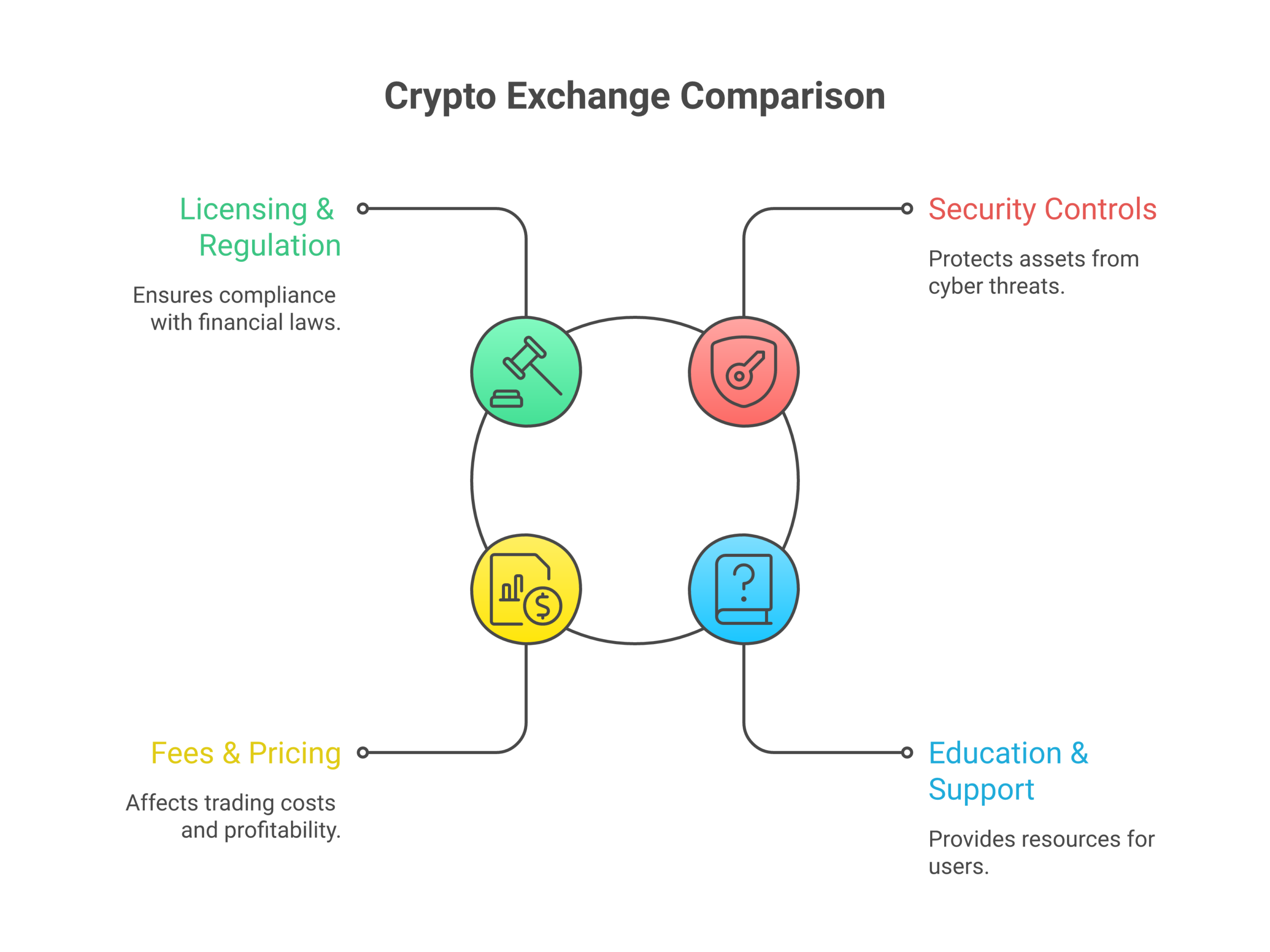
When you look at a crypto exchanges list or see people talk about the top crypto trading platforms, it might seem like you can just pick any name from the top 10 crypto exchanges and be fine. But key things are very different from one site to another:
-
Licensing and regulation
Some exchanges are registered, follow local laws, and work with regulators. Others sit in “gray areas” and may move or change fast if rules shift. Clear rules can help protect users when things go wrong.[^2] -
Security controls
Good platforms use tools like cold storage, two factor login, and regular checks for risk. Weak platforms may have poor security or a long history of problems. -
Fees and pricing
One exchange might look cheap at first, then charge high trading or withdrawal fees. Another might have clear, simple fees that are easy to see and compare. -
Education and support
Many beginners need help with basics like a simple crypto to-crypto exchange, how deposits work, or what a limit order is. Some exchanges offer strong guides, videos, and live chat. Others leave you on your own.
This is why just chasing the biggest crypto exchanges or the top 10 crypto exchanges in USA is not enough. The right fit for a pro trader is often very wrong for a first timer.
What this guide will focus on
In this guide, we are not only looking at names like Bitfinex exchange, Bitmart exchange, or KuCoin exchange. We will look at what truly makes a platform “beginner friendly” and safer today:
- Regulated access wherever possible
- Transparent security that is easy to understand
- Clear fee structures with no hidden tricks
- Quality education, not just marketing
- Responsive support when you are stuck or scared
We will also touch on how top decentralized exchanges differ from regular platforms, and why most beginners should start with simpler, well regulated options before trying advanced tools.
If you want steady, step by step help as you learn, you can also join the free newsletter from Clicks and Trades. It shares plain language safety tips, first trade checklists, and simple explainers to help you build confidence over time.
When you feel ready to take your learning a bit further, you can Sign Up to get updates, guides, and beginner focused lessons that walk you through each step, from choosing an exchange to making your first safe trade.
[^1]: You can read more about how 2026 is a key year for digital asset rules in this overview from the World Economic Forum on what to expect for digital assets in 2026.
[^2]: For a deeper look at new global crypto rules, see the Global Crypto Policy Review Outlook 2025/26.
#1 Best Overall for Beginners: How to Spot a “Beginner‑First” Exchange
Imagine you open a new crypto app for the first time.
You do not see 100 charts. You do not see strange words.
You just see two big buttons: Buy and Sell.
That is what a true best crypto exchange platform for beginners feels like.

It is built for real people, not only for pro traders.
In 2026, many top crypto trading platforms say they are simple, but only a few are truly beginner first.In 2026, more exchanges are shifting to beginner friendly designs. Here is how to tell if an exchange deserves your “#1 overall for beginners” spot.
1. Beginner first design you can understand at a glance
A good starter exchange should feel calm and clear, even on day one.
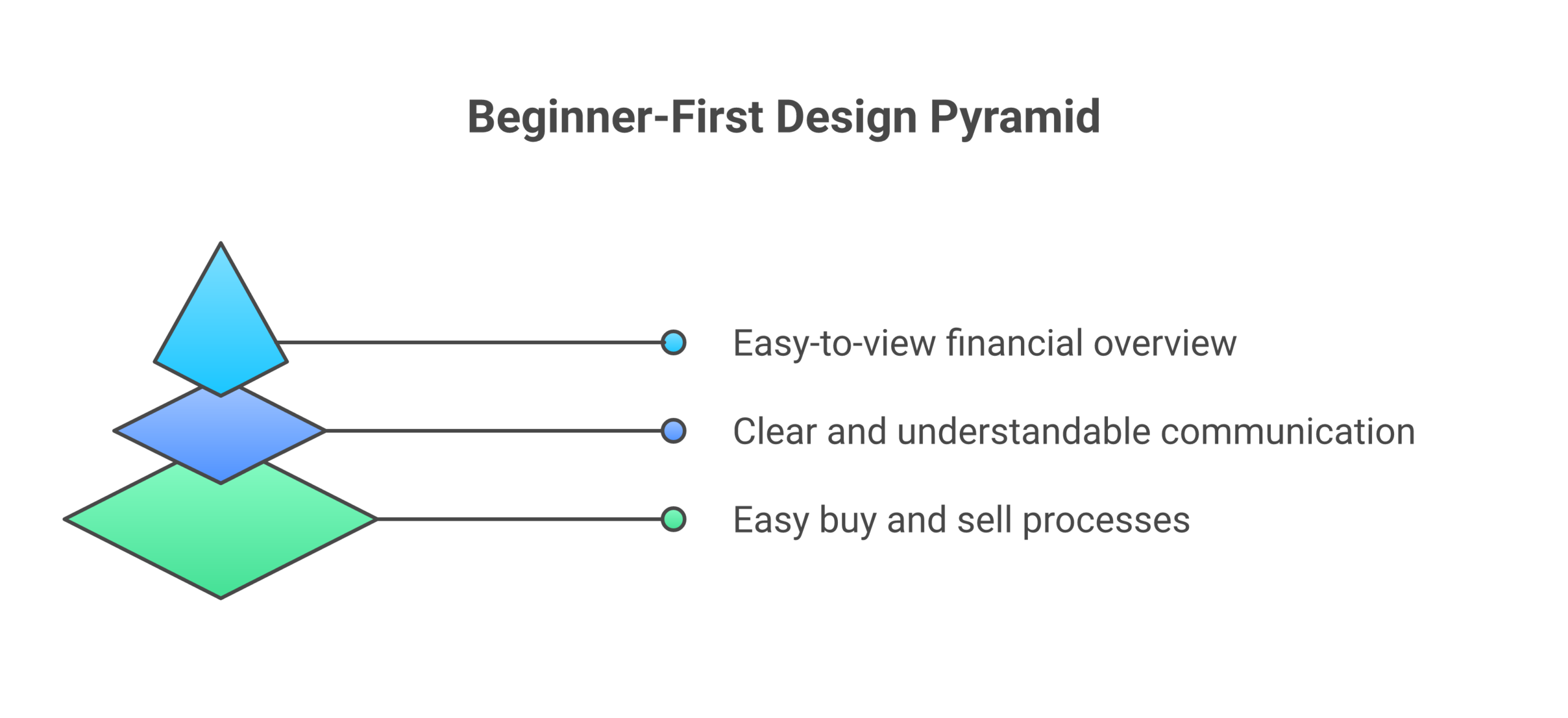
Look for:
-
Simple buy and sell flows
You should be able to pick a coin, enter an amount, and see what you get in one screen. No extra tools, no chart clutter. Some of the best UX leaders in 2026 focus on very clean layouts for first timers.Good UX lists for beginners often highlight this kind of simple design. -
Plain language
“Buy Bitcoin” is clear. “Open long with 5x leverage” is not. The main screen should use words you already know. -
A clear portfolio view
You should see:- How much money you put in
- Your total balance right now
- Simple gains or losses in one place
If an app throws you into advanced charts as soon as you log in, it may be better for day traders, not for you.
2. Strong fundamentals that protect beginners
A “best overall” beginner exchange is not only pretty. It also has strong bones under the hood.
Here is what to look for.
Transparent security
You should not have to guess how your coins are kept safe. A solid platform will clearly explain:
- How it stores most funds (for example, in offline, “cold” storage)
- What login tools it supports, like two factor codes
- How it checks for strange activity
Top tier exchanges now share more about how they handle user identity checks and account limits, so users can see that there are real controls in place.You can see examples of transparent identity and account checks here.
If you cannot find a clear security page, that is a red flag.
Responsive customer support
As a beginner, you will get stuck. That is normal.
Your “#1” exchange should offer:
- Live chat or fast email replies
- Simple help articles for common problems
- Extra help for first deposits and first withdrawals
If an exchange is on every “biggest crypto exchanges” or “top 10 crypto exchanges” list but makes support hard to reach, it may not be best for your first steps.
Helpful education built into the app
You should not have to open ten tabs just to learn what a “market order” is.
High quality beginner exchanges now add:
- Short, clear lessons inside the app
- Simple explainers next to each step
- Warnings when you try complex tools too early
Reviews of the best crypto exchange for beginners in 2026 often praise platforms that mix trading with education, not just trading alone.
If you want extra, outside the exchange, you can also use trusted learning hubs. The free newsletter from Clicks and Trades shares step by step safety tips and “first trade” checklists that match what you see inside real exchanges.
3. Clear, upfront fee display so you do not get surprised
Beginners often lose money to fees they did not see coming. A true “best overall” beginner platform will:
- Show fees before you tap “Confirm”
- Use simple terms, like “You pay 1 dollar in fees”
- Explain the fee parts in one short screen
Some beginner guides for 2026 also point to zero fee or low fee options for starters, since it gives you room to practice without large costs.You can see how one exchange uses low fees to help new users learn.
If an exchange hides fees in tiny text or only shows them after the trade, treat that as a warning.
4. Safe room to grow beyond your first trade
You might start with one simple buy, but over time you may want to try:
- A basic crypto to crypto exchange (like trading Bitcoin for Ethereum)
- Setting price alerts
- Learning about other coins from a trusted list
The best crypto exchange platform for you today should also give you a safe path to grow. It can offer an “easy mode” for now, then unlock more tools when you are ready, not on day one.
If you ever feel like the exchange is pushing you into risky tools just to trade more, pause.
A simple next step
Before you even pick your first platform, it helps to see all these pieces laid out in order.
If you want calm, guided help with this, you can use the free learning tools at Clicks and Trades. The newsletter is written in simple language and walks you through each part of choosing and using an exchange, so you do not have to figure it all out alone.
When you are ready to put this into action and feel more sure about your first exchange choice, you can Sign Up to get step by step lessons, safety checklists, and gentle reminders that keep you on track.
#2 Best Low Fee Spot Trading: How to Keep More of Your Money
You make your first crypto buy.
The price goes up. You feel great.
Then you see it.
Fees took a big bite out of your gain.
This is why your best crypto exchange platform for everyday use should have low, clear spot trading fees, not just a pretty app.
In 2026, many of the best crypto exchanges by fees compete hard on costs. The good news is that you can use this to your advantage if you know what to look for.
1. Maker and taker fees, in plain words
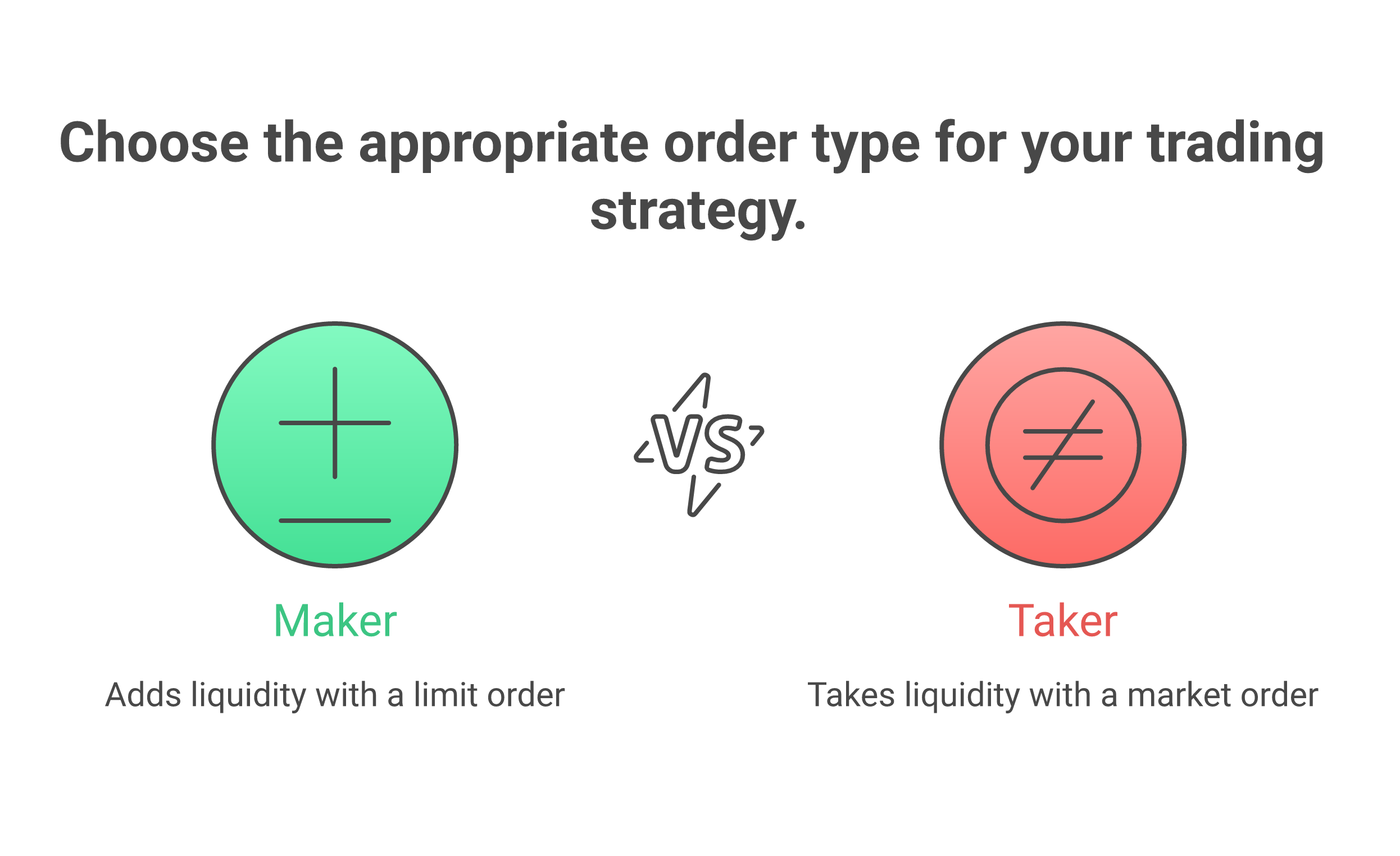
Most spot trading fees use two simple ideas:
-
Maker fee
You place an order that waits on the book.
Example: “Buy 50 dollars of Bitcoin if the price falls to X.”
Your order adds “liquidity,” so you are a maker. -
Taker fee
You accept a price that is already there.
Example: You click “Buy now” on the live order book.
You take liquidity, so you are a taker.
A strong low fee platform will:
- Show maker and taker fees in one clear table
- Use simple numbers, like “0.10% maker, 0.20% taker”
- Explain if fees get lower when you trade more
Good fee guides stress that even tiny fee cuts can matter a lot over time, especially if you make many small trades or recurring buys, since costs can stack up fast across the big names on any crypto exchange fees comparison.
If you can not find the fee table within two or three taps, that is a bad sign.
2. Why “instant buy” is different from real spot trading
Here is a trap many beginners face.
On a lot of top crypto trading platforms, you will see:
- A fast “Buy with card” or “Instant buy” screen
- A deeper “Market” or “Spot” screen with an order book
They look similar, but they do not always cost the same.
Instant buy often:
- Uses a spread (the app sells to you at a higher price than it buys)
- Adds extra payment fees for cards or bank buys
- Shows a big friendly button, but not the real market price
Spot orders on the trading screen usually:
- Use the live market price from the order book
- Charge a clear maker or taker fee
- Show your price and fee before you confirm
Many low fee guides in 2026 warn that a “zero fee” or “no commission” instant buy can still hide costs inside wide spreads, so you need to read the total price, not just the fee line, to find the lowest real cost exchange for your style.
So, before you tap “Buy,” pause and ask:
- Am I on the instant buy screen, or the spot market?
- Is the fee low, but the price much higher than the live chart?
- Does the app show the market price and my final price side by side?
If the platform never explains this, it may not be your best choice for regular spot trading.
3. Why low spot fees matter for small and recurring trades
If you only trade once a year, fees may not feel like a big deal.
But most people use:
- Small test buys to learn
- Weekly or monthly recurring buys
- Occasional crypto to crypto exchange moves, like swapping one coin for another
In all those cases, fee levels can decide if you slowly build up, or slowly leak money.
Low fee spot platforms help you by:
- Keeping maker and taker fees low on even tiny orders
- Showing the fee before you confirm, in dollars, not just in percent
- Letting you set up recurring buys with the same clear fee rate each time
When fee experts compare low fee crypto exchanges in 2026, they highlight that even a 0.10% difference per trade can add up if you buy often.
You can think of it like this: lower steady fees are like a gentle tailwind that helps your long term plan.
4. A simple checklist for picking your low fee spot platform
Use this quick list when you compare the biggest crypto exchanges or any “top 10 crypto exchanges” review:
- Can you easily find a full fee schedule from the home page?
- Are maker and taker fees shown clearly for spot trading?
- Does the app warn you when you move from low fee spot to higher cost instant buys?
- Do recurring buys use the same fee rules as normal spot trades?
- Are spreads and extra card fees explained up front?
If a platform passes this test and still feels easy to use, it can be your “best low fee spot trading” choice, even if it is not the biggest name in every “top crypto trading platforms” list.
Want extra help reading fees page by page?
Fee tables can feel dry and confusing, even when they are clear.
If you would like slow, friendly walks through real examples, the free newsletter from Clicks and Trades can help. It breaks fee terms into tiny steps, with screen by screen checklists you can follow at your own pace.
When you are ready to go deeper, and want steady reminders that keep you away from hidden costs, you can Sign Up to get beginner safe lessons, fee breakdowns, and simple guides that match how real exchanges work in 2026.
#3 Best for Mobile Ease and Built-In Education: [Exchange Placeholder C]
You open a crypto app on your phone.
You see charts, red and green lines, and strange words.
You think, “I just want to buy a little, not learn a new language.”
If that feels like you, then your best crypto exchange platform might be one that teaches you as you tap, not one that hides all the hard parts.
In 2026, many top crypto trading platforms race to add more coins and more charts. At the same time, a growing group of exchanges focuses on clear design and strong help for beginners. Industry writers note that beginner friendly crypto exchanges are turning into a major trend in 2026, as more everyday people start with mobile first apps instead of pro style desktop tools, and platforms respond with simpler flows and built in guides for new users who feel nervous about mistakes in a fast moving market. You can see this shift in how many “best for beginners” lists now rate apps on ease and safety, not just on coin count or leverage features, which marks a real change from earlier years when power tools and complex order types often came first in product plans for large consumer platforms, even if that meant new users felt lost on day one, or never got far beyond a first test buy.
[Exchange Placeholder C] leans into that new style. It tries to meet you where you are, on your phone, with plain words and gentle nudges.
1. Simple mobile onboarding that talks to you
A strong mobile focused spot in any crypto exchanges list does more than ask for your email and ID. A good app guides you through each step.
On [Exchange Placeholder C], a beginner friendly flow might:
- Break sign up into tiny steps, one screen at a time
- Use short tooltips next to words like “KYC,” “limit order,” or “network fee”
- Offer a tap to open a simple glossary right inside the app
- Show risk prompts before you do anything big, like turn on margin
Top reviews of the best crypto exchange for beginners in 2026 point out that this kind of clear onboarding and safety prompt can make the first week feel much less scary, especially when rules around identity checks and account limits are involved for major platforms that need to follow strict KYC laws across different regions, and that often trip up new users who do not know what to expect or which documents they need to pass basic checks on large regulated services. You can see this focus on safe, step by step setup in some leading beginner lists that highlight clear wording and friendly flows as key parts of a good starter choice, not just afterthoughts added on top of complex pro tools.
This kind of flow matters if you are just starting out and want your best crypto exchange platform to feel like a simple banking app, not a trading desk.
2. In-app lessons, alerts, and practice modes
Once you are inside, you still want to avoid big, costly errors. That is where strong in-app education can help.
A mobile first learning friendly exchange can give you:
- Short lessons that pop up when you tap a new feature
- Quiz cards that ask, “What happens if you send to the wrong address?”
- Risk alerts when you try a new order type for the first time
- Practice modes or tiny “test trades” with very small amounts
Some modern platforms even add “bear market guides” and simple steps for dollar cost averaging, to help new users avoid panic moves during down periods. Educational guides for beginners in 2026 often stress that safe, small steps and clear risk tips can help you stay calm when prices drop, instead of rushing into high risk bets you do not really understand or copying strangers from social media who may not be honest about their own risk level or past losses. A mobile app that builds these lessons right into your normal flow can save you from many of the common early mistakes that hurt new traders and holders.

For a new user, this can be the difference between:
- Clicking random buttons and hoping, and
- Taking guided, low risk steps while you learn
If you plan to try a crypto to crypto exchange swap, for example, a good app might explain in plain words what you are trading away, what you are getting, and how the network fee and spread work for that pair, before you tap “Confirm.”
3. How this compares to more complex exchanges
Some of the biggest crypto exchanges and pro style platforms, like a bitfinex exchange, bitmart exchange, or kucoin exchange, can be great for deep order books and advanced tools once you know what you are doing. Many also support a long crypto exchanges list of niche coins.
But if you are still learning:
- A busy screen full of charts can feel scary
- You may not spot key safety warnings in time
- You might mix up instant buy, spot, and margin tools
That is why starter reviews often split the top 10 crypto exchanges into groups, such as “best for beginners” and “best for pros,” instead of naming just one winner for everyone. Some of the top 10 crypto exchanges in USA also keep a separate “simple” home view and a deeper “pro” tab for this reason.
[Exchange Placeholder C] fits best in the beginner friendly group. It aims to give you:
- A clean home screen with only the basics
- Clear paths for “Buy,” “Sell,” and “Learn”
- Guardrails so you do not jump into complex tools too soon
You can still move later to more advanced top decentralized exchanges or pro platforms when you feel ready. Early on, though, a mobile app that teaches as you go can be a smart first stop.
4. A quick checklist for mobile ease and education
Use this list when you judge how beginner friendly a mobile exchange really is:
- Can you finish sign up and basic checks from your phone in under 10 to 15 minutes, with clear hints at each step?
- Do you see tooltips or short helps beside new words, not just in a long help center?
- Are there in-app lessons or mini courses that match what you are trying to do today?
- Does the app warn you kindly before you do anything high risk, like large trades or new networks?
- Is there a way to test with very small amounts, or a practice style mode, before you go bigger?
If an app passes most of these, it can be your personal “best crypto exchange platform for learning,” even if it is not number one on every “top crypto trading platforms” chart.
Want calm, step by step help outside the app too?
Even the friendliest mobile exchange will not teach you every big idea. You still need a wider plan, like how to spot scams, how to pick long term holds, and how to avoid hype.
That is where steady, plain language guides can help.
The free newsletter from Clicks and Trades is built for this. It uses short lessons, checklists, and simple stories that match what real people face when they open a new app or pick from a long crypto exchanges list for the first time. You can read it on your phone, at your own pace.
If you want gentle reminders, practice steps, and beginner safe tips that match how real exchanges work in 2026, you can Sign Up to get the Clicks and Trades newsletter sent right to your inbox. It pairs well with any mobile app you choose, so you are not learning only from fast buttons and bright charts.
#4 Best for Security and Transparency (Proof of Reserves): [Exchange Placeholder D]
You might be thinking, “If an exchange goes away, do my coins go away too?”
This is the big fear for many new users. You do not just want the best crypto exchange platform for low fees or a long crypto exchanges list. You want one that can prove your coins are really there, and kept safe.

[Exchange Placeholder D] is the pick in our list for people who care most about strong security and clear proof.
1. What “proof of reserves” really means for you
Some exchanges say, “We have enough coins.” That is not enough anymore in 2026.
Good proof of reserves should:
- Show real wallet addresses that hold the coins
- Use a clear method to prove the exchange controls those wallets
- Match customer balances to those wallets, so totals line up
Security writers explain that you should look for both public reserve wallet addresses and a sound control test, since a simple number without verifiable wallets does not prove much by itself. A helpful guide on how proof of reserves works for exchange users in 2026 stresses this point and urges users to check for real on chain data, not only marketing claims.
[Exchange Placeholder D] focuses on this kind of full picture, not just a single “we are fine” page.
When you open its proof page, you might see:
- A list of main wallets for big coins, with links to block explorers
- A simple report that shows total customer deposits and total reserves
- A clear date and time stamp, so you know how fresh the data is
This helps you feel safer using any service, from a simple buy to a crypto to crypto exchange swap.
2. Independent audits and clear reserves reports
In 2026, many large and even biggest crypto exchanges talk about proof of reserves. What sets a top pick apart is outside checks.
Good practice for proof and audits can include:
- Regular reviews by a known, third party audit firm
- A public statement that client assets are fully backed at 1:1
- Extra room, so reserves stay above 100 percent in stress times
Some industry reports on top exchanges with proof of reserves in 2026 show how major platforms now share these audits to win back trust. There are also public cases where an exchange publishes reserve ratios over 100 percent for main coins to show strong backing across markets, even during high price swings, and this kind of open report is slowly becoming a new norm instead of a rare extra.
[Exchange Placeholder D] aims to sit in that newer group. Its page does not hide the auditor name or dates. It shows when the last check was done, and what coins and tokens were covered.
For you, this means:
- You do not have to guess if your assets are mixed with company funds
- You can see if reserves cover all customer claims, not just some
- You can compare its reports with other top crypto trading platforms before you pick a home base
If you like simple, plain talk on topics like this, the free Clicks and Trades newsletter can also walk you through how to read proof of reserves pages, using beginner friendly steps.
3. Strong security design, not just nice words
Proof of reserves is one part of the story. You also want a safe security setup around it.
When you check [Exchange Placeholder D], look for details like:
-
Cold storage first
Most user funds should sit in offline wallets, away from the internet. Only a small slice stays in “hot” wallets for daily use. Modern security guides for the highest security standards in 2026 point out that strong cold storage use is still a key part of a safe exchange. -
SOC style controls and clear rules
The platform should describe how it protects data, who can move funds, and how changes get logged and checked. In 2026, rules and audits for financial tech are tighter, and crypto services face growing oversight on topics like AML, sanctions, and client fund safety, as noted in recent work on crypto compliance in 2026. -
Bug bounty program
Good teams invite security researchers to test their systems, then pay rewards when bugs are found. This turns “hackers” into helpers, and gets issues fixed faster. -
Incident reports you can read
If something goes wrong, a serious platform posts a plain language report. It should explain what happened, which users were touched, and what has changed so it will not happen again.
Put together, this kind of setup can make [Exchange Placeholder D] feel safer than some busy pro tools like a bitfinex exchange, bitmart exchange, or kucoin exchange that focus mainly on deep markets and the top 10 crypto exchanges race, but do not always lead on clear public reports.
4. Simple checklist for picking a safe, transparent exchange
Here is a quick, kid friendly checklist you can save.
When you test any “best crypto exchange platform,” ask:
-
Proof of reserves
- Can you see real wallet addresses for main coins?
- Does the report show client balances and match them to reserves?
- Is there a recent date and a simple method you can follow?
-
Independent checks
- Is there a named third party firm doing audits or reviews?
- Do they state at least 1:1 backing, not just “strong reserves”?
-
Security setup
- Do they say most funds are in cold storage?
- Is there a bug bounty or security program listed on the site?
- Can you find a security or “status” page with past incident notes?
-
Rules and trust
- Do they talk about keeping customer funds separate from company money, just like newer 2026 rules expect from serious providers?
- Are there clear steps for support, complaints, or disputes if something goes wrong?
If an exchange passes most of this list, it earns a spot in your own “safe picks,” even if it is not the flashiest name in the top 10 crypto exchanges in USA or the largest by volume.
If it fails, you may want to look at other options, like different centralized services or even some top decentralized exchanges, once you know how to use wallets and self custody.
5. Want help reading all this without getting lost?
Security pages can still feel heavy, even with simple words.
If you want slow, clear help to:
- Read proof of reserves pages
- Compare reports between the biggest crypto exchanges
- Decide when to trust a crypto to crypto exchange offer or walk away
You do not have to learn it all from scratch on your own.
The free Clicks and Trades newsletter is built for everyday people who want safety and calm, not hype. Each issue breaks down real examples from live platforms in 2026, with short lessons, checklists, and warnings in plain language that fits your pace.
If that sounds useful, you can Sign Up in a minute and start getting simple guides that make security and transparency feel much less scary, no matter which exchange you choose next.
#5 Best for Dollar Cost Averaging (Recurring Buys): [Exchange Placeholder E]
Have you ever thought, “I wish I could just set it and forget it, and let a small amount of crypto buy itself each week”?
If that sounds nice, then [Exchange Placeholder E] may feel like the best crypto exchange platform for you. It is built for calm, steady buying instead of fast trading.
1. Why dollar cost averaging helps beginners
Dollar cost averaging (DCA) is a simple plan:
- You pick a coin
- You pick an amount, like $10 or $50
- You pick a time, like every week or every month
- The app buys for you on that schedule
You do not try to guess the “perfect” price. You just keep buying over time. Many fee guides in 2026 note that small, steady buys work best when the platform keeps costs low and simple, since high fees can eat a big part of tiny orders if you are not careful. A clear overview of cheapest crypto exchanges and hidden costs shows how fees and spreads matter most for people who buy in small steps.
This style can feel gentler than trying to trade like pros on a bitfinex exchange, bitmart exchange, or kucoin exchange.
2. Flexible auto buys with low fees and clear spreads
[Exchange Placeholder E] is on this list because its auto buy tools are:
-
Flexible
You can choose daily, weekly, every two weeks, or monthly. You can also set start and end dates, so the plan fits your life and budget. -
Friendly for small amounts
There is no huge minimum. You can test with a tiny amount first. -
Built to show real costs
Before each buy, it shows:- The fee
- The spread (how far the buy price is from the live market price)
- The total coin you will get
In 2026, fee comparison guides on the lowest fee crypto exchanges keep warning that you should look at both fees and spreads, not just one number. [Exchange Placeholder E] leans into that idea and tries to make both pieces easy to see.
If you ever want to go deeper on fees across many of the biggest crypto exchanges, full lists like the best crypto exchanges in 2026 comparison can help you see how this one stacks up against other top crypto trading platforms.
3. Easy pause, edit, or cancel at any time
Real life changes. Maybe you:
- Lose a job
- Need extra cash for a bill
- Decide to change coins
With [Exchange Placeholder E], your DCA plan is not locked in.
On the recurring buys page, you can:
- Pause a plan with one tap
- Change the amount or coin
- Move the date or time
- Cancel the plan fully
There is no penalty fee for canceling a plan early. For new users, this kind of control can matter more than tiny fee changes when you pick from a big crypto exchanges list.
If you like slow, step by step help with choices like this, the free Clicks and Trades newsletter shares beginner friendly guides that walk you through setting and adjusting auto buys without stress.
4. Clear logs so you can track your cost basis
A good DCA tool should also help you understand what you paid over time.
[Exchange Placeholder E] keeps a simple history for each plan:
- Date and time of each buy
- Price per coin at that moment
- Fee and spread details
- Total coins you got
From this, it shows your average cost per coin. That is your cost basis. It helps you see if you are:
- Buying high
- Buying low
- Or landing in the middle over many months
For kids, you can think of it like buying the same toy each week at different prices, then asking, “On average, how much did I pay?” The log answers that for you.
Some users like to mix DCA on a simple platform like this with a one time swap on a crypto to crypto exchange or even test small trades on bigger names in the top 10 crypto exchanges in USA. Having clean records from [Exchange Placeholder E] makes that mix less confusing.
5. Where DCA fits with the rest of your exchange choices
Dollar cost averaging is not a magic trick, and it does not remove risk. Prices can still drop, and you can still lose money.
Still, for many beginners, a calm DCA plan on [Exchange Placeholder E] can be a nicer first step than jumping right into fast trades on the top 10 crypto exchanges or on more complex top decentralized exchanges.
You can always:
- Start small with DCA here
- Learn how fees work
- Get used to checking your logs
- Then later explore other biggest crypto exchanges for new features
If you want gentle, plain language lessons on how to:
- Set up your first recurring buy
- Pick amounts that fit your real life
- Read fee lines and cost basis charts
You might like getting slow, clear help by email. You can Sign Up for the free Clicks and Trades newsletter, and learn how to use tools like DCA with less fear and more calm, one small step at a time.
#6 Best for Small Purchases and Instant Buy: [Exchange Placeholder F]
Picture this. You are on your couch at night, you just heard about a new coin, and you think, “I just want to buy $20 right now and be done.”
That is the kind of moment where [Exchange Placeholder F] can feel like the best crypto exchange platform for you.
It is not built for pro traders on a bitfinex exchange or a big crypto to crypto exchange. It is built for quick, small buys that feel simple and clear.
1. How instant buy works on [Exchange Placeholder F]
Instant buy is like a “fast lane”:
- You pick a coin
- You pick a small dollar amount
- You pick how to pay, like a debit card or bank transfer
- The app shows you the price and total coin
- You tap buy, and it fills right away
You do not have to place a limit order or learn a complex trade screen like on some top crypto trading platforms.
2. Transparent markup and simple fee warning
Here is the key part. Instant buys usually cost more than slow limit orders on many of the biggest crypto exchanges. In 2026, full fee guides keep saying that fast card buys often have higher spreads and fees than normal trades, so you should know what you pay and why it costs more. A clear report on exchange fee structures and hidden costs explains how instant options trade ease for higher total cost.
[Exchange Placeholder F] tries to be very clear about this. Before you tap “confirm,” it shows:
- The base market price
- The extra instant buy markup
- Any card or bank fee
- Your final “all in” price per coin
It also uses a simple note like:
“This instant buy is more expensive than a limit order. For larger amounts, you may want to place a normal trade.”
For a new user, this kind of warning can feel more honest than some names you see in long crypto exchanges list articles or top 10 crypto exchanges in USA roundups.
3. Beginner friendly payment options
If you are just starting, you might not want to wire big money into a complex trading site like a bitmart exchange or kucoin exchange. You may just want to test with lunch money.
[Exchange Placeholder F] keeps payment options simple:
-
Debit card
Good for very small, instant buys. The money leaves right away. Limits are usually lower, and fees are higher, but it is fast and easy. -
Basic bank transfer
Good if you plan to buy a bit more and do not mind a short wait. Fees are often lower than card buys on many of the low fee platforms that fee comparison guides track in 2026, like the cheapest crypto exchanges overview.
[Exchange Placeholder F] also gives hints on timing, such as:
- When daily card limits reset
- How long a bank transfer may take
- When it is better to wait for cleared funds before you buy
This can feel less scary than jumping straight into the deep end with the top decentralized exchanges, where you must also manage your own wallet and gas fees.
4. When instant buy makes sense, and when it does not
Instant buy is not the cheapest way to buy crypto. Platforms that focus on low trading fees, like the ones listed in many “best crypto exchange for low fees” guides, reward patient users who place limit orders on a full trade screen instead of hitting quick buy every time. A 2026 comparison on crypto exchanges with the lowest real trading fees points out that even tiny fee cuts matter if you trade often.
So, when might instant buy on [Exchange Placeholder F] still be worth it?
- You are testing your first $10 or $20
- You care more about speed and ease than saving every cent
- You feel nervous on complex charts and just want one clean screen
- You are not yet ready to move to a pro style platform from the top 10 crypto exchanges list
When should you avoid it?
- You are buying a big amount
- You already feel calm using a full trade screen
- You plan to trade often, like a more active user of a bitfinex exchange or other biggest crypto exchanges
A simple rule of thumb:
Use instant buy for “learning money,” not “serious money.”
5. How to use [Exchange Placeholder F] as a gentle first step
You do not have to pick between this and every other platform forever. You can use [Exchange Placeholder F] for your very first small buys, then later move some coins to a lower fee site from a full best crypto exchanges in 2026 comparison.
A simple path could look like this:
- Start with one small instant buy using a debit card
- Learn how the higher markup works
- Try a bank transfer and compare costs
- When you feel ready, learn about limit orders on a bigger top crypto trading platform
- Over time, compare what you pay here with fees on other top 10 crypto exchanges
If you like this slow, one step at a time style, you might enjoy more clear lessons from the team behind Clicks and Trades. They focus on helping beginners understand fees, safety, and basic tools before you ever touch more advanced sites or top decentralized exchanges.
If you want gentle email help on things like:
- When to use instant buy
- How to read “all in” price per coin
- How to move from instant buys to cheaper limit orders
you can Sign Up for the free Clicks and Trades newsletter. It walks you through each step with plain language, so you can explore the best crypto exchange platform for your style without feeling rushed or lost.
#7 Best for Staking/Earn With Beginner Safeguards: [Exchange Placeholder G]
You might look at “earn” or “staking” screens and think,
“Wait, is this safe? Why am I getting free money?”
In 2026, more people use crypto staking as a kind of extra income, but rules are also getting tighter so users stay safer and platforms must follow clear laws. Governments are working on stricter staking rules and clearer risk checks to protect everyday users who want simple yield, not wild bets, as guides on how staking works and what can go wrong in 2026 explain.
That is where [Exchange Placeholder G] fits in. It is not the flashiest or the highest yield. It tries to be the best crypto exchange platform for beginners who want staking or earn, but with clear guardrails.
1. Simple, conservative staking and earn choices
On many top crypto trading platforms, you see long staking menus, double digit yields, and complex “restaking” tools. Some of the biggest crypto exchanges now mix in new yield products that can be hard to understand if you are still learning.
[Exchange Placeholder G] keeps it much simpler:
- Only a short list of large coins
- No wild “experimental” yield farms
- No complex leverage tricks behind the scenes
Next to each coin, you see:
- Plain language risk level, like “low / medium / high”
- A short line that says what can go wrong, such as “coin price can fall” or “earn rate may change”
- If there is any chance of loss from penalties on the chain
This style can feel much safer than diving right into a busy crypto to-crypto exchange, or a pro spot like a bitfinex exchange, bitmart exchange, or kucoin exchange, where staking and margin can sit side by side on the same screen.
If you like clear, step by step help with how staking works, you can also learn from the team at Clicks and Trades. Their beginner guides focus on safety first, then slow, careful earning.
2. Clear lock up rules and access to your money
With staking, the big fear is, “Will my coins get stuck if I need them?”
Regulators in 2026 are watching this closely, and many regions now push for clearer lock up notes and exit paths for users who stake on centralized platforms, as updates on staking regulation and market rules describe.
[Exchange Placeholder G] tries to answer your key questions right on the staking tile, before you tap “start”:
For each staking or earn option, it shows:
- Lock up time
“Flexible” or a clear number of days - Unstake time
How long it takes to get coins back once you stop - Early exit rules
If you lose any rewards by leaving early - Minimum amount
So you know if a small test makes sense
It also gives a simple “break glass” tip, such as:
“If you think you may need this money in less than 30 days, consider a flexible option or keep funds in your spot wallet.”
For a new user coming from a simple instant buy app, this kind of warning can prevent scary surprises later.
3. On chain vs custodial: what is really happening to your coins
One detail most beginners never see: where your coins actually sit.
Some top 10 crypto exchanges and top decentralized exchanges let you stake directly on the blockchain with your own wallet. Others run “earn” programs inside the company. In 2026, more watchdogs want platforms to spell out this difference so users know who is really holding their funds, as reports on crypto regulation and custody rules explain.
[Exchange Placeholder G] does this in a friendly way:
-
If it is true on chain staking
It says something like “We stake your coins directly on the network. You earn network rewards and face network risks, like slashing.” -
If it is a custodial earn program
It says “We hold coins for you and share part of the yield. There is no on chain slashing, but your rewards depend on our lending and risk systems.”
You also see a small tag, such as:
- “On chain, non custodial staking”
- “Custodial earn, funds held by [Exchange Placeholder G]”
This helps you compare it in your mind with a more self directed setup on a big crypto to-crypto exchange or a top decentralized exchange, where you must handle your own wallet and gas fees.
If unpacking these words feels like too much, the free Clicks and Trades email lessons can slow things down and explain each type with pictures and checklists. You can Sign Up any time to get those in your inbox.
4. Easy rewards tracking and tax friendly reports
Earning is fun. Tax forms are not.
In 2026, many tax offices treat staking and earn payouts as income when you receive them, which means you need dates and amounts, not just “I made some yield somewhere.” Lawmakers are even asking tax agencies to fine tune rules for staking rewards before they are sold, so users are not taxed twice on the same coins, as noted in calls to update staking tax guidance.
[Exchange Placeholder G] leans into this problem and tries to solve it for you.
Inside the earn page you can see:
- Total rewards for each coin
- Rewards earned today, this week, and this year
- A clear yield number, shown both as a yearly percent and as your real coin amount
On a simple “reports” tab you get:
- A list of every reward payout with date, coin, and value at that time
- A download file you can give to your tax tool or tax pro
- A quick note that staking rewards may be taxable in your country
This makes [Exchange Placeholder G] feel more friendly for normal people than some of the biggest crypto exchanges that still expect you to build your own spreadsheet from on chain data.
5. Where this fits in your bigger crypto path
[Exchange Placeholder G] is not for every single user.
It is a good fit if you:
- Want to earn a bit on coins you already planned to hold
- Prefer clear, low risk options over chasing the very top rate
- Like seeing lock ups, risks, and tax info before you click “start”
- Are not ready yet for complex DeFi tools on the top decentralized exchanges
It might not be your final stop. Over time, you may:
- Start with simple earn here
- Learn more about how staking works in general
- Later explore more advanced yield routes on a large crypto to-crypto exchange or a pro style bitfinex exchange or kucoin exchange
The key is to move at your own pace and never feel pushed into locking money you do not fully understand.
If you want a full, gentle roadmap from “What is crypto?” to “How do I pick a safe earn option?” resources like Clicks and Trades and other beginner first tools can help. Their guides match the same slow, careful spirit you see in safer platforms like [Exchange Placeholder G], so you can learn and earn without feeling rushed.
#8 Best for International Availability and Fiat On-Ramps: [Exchange Placeholder H]
Have you ever tried to sign up for a “top” crypto app, only to see a message like
“Sorry, we don’t serve your country”?
You are not alone. In 2026, crypto rules are changing fast in many places, and some of the biggest crypto exchanges now limit who they can take. New laws in the U.S., EU, and parts of Asia are pushing platforms to follow stricter local rules on identity checks, money laundering, and consumer safety, as new frameworks in 2026 aim to reshape how global exchanges operate for regular users who just want fair access and clear rules, not legal drama, as guides to the new crypto regulatory landscape in 2026 explain.
That is where [Exchange Placeholder H] comes in. It tries to be the best crypto exchange platform for people in many countries who need:
- Easy ways to put money in with local cash or bank
- Clear rules on where the platform is allowed to work
- Simple, safe “on-ramps” from your regular money into crypto
1. Broad country coverage with real local payment rails
Some top crypto trading platforms focus on only a few regions. Others make a big “crypto exchanges list” but hide the fact that most users must wire money in a foreign currency.
[Exchange Placeholder H] aims to support users across a wide map, with:
- Service in many countries, not just the top 10 crypto exchanges in USA type markets
- Local bank transfer options where possible
- Card payments in common local currencies
- In some cases, support for local e-wallets or popular payment apps
Instead of only “USD deposit” or “EUR deposit,” you may see local options that match your region. For a new user, this can make [Exchange Placeholder H] feel more friendly than a pro level bitfinex exchange or kucoin exchange where funding can feel complex or foreign.
If you live outside large hubs, it helps to check if the platform lists your country and your local rails before you decide it is the best crypto exchange platform for you.
2. Compliance with local KYC and AML rules
In 2026, regulators are much more focused on KYC (Know Your Customer) and AML (Anti Money Laundering). Many countries now share data and coordinate more closely on crypto rules so that bad actors have less room to move, as global policy reviews across dozens of jurisdictions show, with more than 70% of worldwide crypto use now covered by clearer frameworks and stronger enforcement tools, according to a global crypto policy outlook for 2025 and 2026.
[Exchange Placeholder H] leans into this trend. It has:
- Standard identity checks for all users
- Extra checks in higher risk regions
- Clear steps for what documents you need
- A simple page that explains why KYC is needed and how your data is protected
For you, this means two things:
- You might spend a few more minutes on sign up.
- Once you are in, you can feel more sure the platform is trying to follow local law, not dodge it.
If you ever feel lost on what KYC is or why AML checks matter, a simple learning hub like Clicks and Trades can help you slow down and understand the basics in plain language before you upload any documents.
3. Clear list of supported and restricted regions
Many users only find out they are not allowed when their account gets frozen. That is a scary way to learn.
[Exchange Placeholder H] tries to avoid this by giving a clear, public list that shows:
- Countries where full service is supported
- Countries where you can view prices but not trade
- Countries where service is not offered at all
This list sits in a simple “where we operate” page, linked from the footer and from the sign up flow. You do not need to dig through long legal files.
In a world where some of the biggest crypto exchanges change rules quickly as new laws arrive, this kind of upfront list helps you compare [Exchange Placeholder H] to other top 10 crypto exchanges and top decentralized exchanges that may block users in your area.
If your region is on a limited list, the site explains what you can and cannot do, instead of letting you guess. This is important when new rules land in your country and exchanges must react fast.
4. Local language help and fiat on-ramp support
Getting money in is hard if you do not understand the steps.
[Exchange Placeholder H] supports local users with:
- Key pages in several major languages
- Simple “how to deposit” guides for each payment type
- Clear fee notes before you confirm a transfer
- Support staff who can answer basic questions about funding methods
You might still need to learn how to pick between a crypto to-crypto exchange trade and a simple “buy with card.” But at least the words on the screen match your own language and currency.
For beginners who want even more hand holding across this whole journey, from “What is a wallet?” to “How do I move funds in from my bank?”, it can help to follow a structured learning path. The free newsletter from Clicks and Trades sends small, clear lessons to your inbox so you can build comfort with topics like fiat on-ramps, KYC checks, and the different styles of exchanges at your own pace, without feeling rushed or pushed.
If you would like that kind of step by step support, you can Sign Up with just your email and start learning in short, friendly bites.
5. How [Exchange Placeholder H] fits into your wider exchange mix
[Exchange Placeholder H] will not replace every other platform in your life.
You might still choose:
- A large bitmart exchange or kucoin exchange for deeper crypto to-crypto exchange pairs
- A niche platform from the top decentralized exchanges list when you are ready to learn self custody
- One of the biggest crypto exchanges for very high volume trading
But for many people in less served regions, [Exchange Placeholder H] can be:
- The first place where fiat on-ramps actually work
- The easiest path from local money into your first coins
- The safest feeling bridge between your bank account and more advanced tools later
Over time, you can keep using it as your “on-ramp hub,” then move coins to other top crypto trading platforms when you want more features.
If you ever feel unsure about which platform to use first, or how to plan a safe path from beginner to more advanced tools, education is your best friend. A trusted learning space like Clicks and Trades focuses on clear steps, safety tips, and real world examples so you can choose the right mix of exchanges for your own life, not just follow hype.
#9 Best Decentralized Alternative (for the Self-Custody Curious): [Protocol Placeholder I]
You might like the idea of crypto, but hate the thought of someone else holding your coins. If so, a decentralized exchange, or DEX, can sound very tempting.
The problem is, most DEX screens look scary to a beginner. Wallets, gas, slippage, chains, phishing. It can feel like a maze, as many DeFi guides point out when they explain how much control and risk sit in your own hands in 2026 DeFi tools compared to normal exchanges, where a company holds your funds and runs the order book for you, as explained in this beginner friendly guide to DeFi in 2026.
[Protocol Placeholder I] tries to give you that self custody freedom in a calmer, clearer way.
1. You hold the keys, with guided wallet setup
With [Protocol Placeholder I], you use a non custodial wallet. That means:
- Your coins stay in your own wallet
- You sign each trade from your device
- You can leave the app and still keep full control
The special part is how it teaches you to set this up. Instead of a busy pro style screen like you might see on a bitfinex exchange, you get:
- A “first wallet” walkthrough with simple steps
- Clear tips on how to write down and store your seed phrase
- Warnings not to share your private keys or click random links
If you are used to a big, central platform from a top 10 crypto exchanges in USA list, this will feel different. There is no “forgot password” for your wallet. So slow, plain help in the app matters a lot for safety.
For more step by step basics on wallets and self custody, you can also lean on the free lessons from Clicks and Trades, which stay focused on simple language and real safety tips.
2. Built in slippage and scam protections
Dex trades can slip in price if the market moves while your trade is pending. Some DEX apps hide this. [Protocol Placeholder I] makes it easier to see and control by giving you:
- A simple slider to pick how much slippage you allow
- A clear warning if your slippage is too high
- A preview that shows “You will get about X coins” before you sign
It also has basic phishing and scam checks, such as:
- Flagging tokens that are brand new or that do not match common token lists
- Big red warnings if a site or link tries to connect as a fake version of [Protocol Placeholder I]
- Clear text that reminds you “We will never DM you for your seed phrase”
This mix of controls is handy if you are moving from a simple crypto to-crypto exchange on a big, central platform to your first DEX swap. You get more power, but also more gentle guard rails.
3. Beginner paths on testnets and tiny trades
One smart way to use a DEX for the first time is to practice where mistakes are cheap. Some step by step DEX guides for beginners suggest this kind of hands on practice on low risk networks before you move to real funds, so you can see how wallets, gas, and swaps work without fear, as seen in this walkthrough on using a DEX for the first time.
[Protocol Placeholder I] leans into this with:
- Test network support, so you can try “fake” coins and see each step
- A “practice mode” style flow that shows what each button does
- Gentle nudges to start with very small real trades, not your full stack
A simple path might look like:
- Set up your wallet with the in app guide
- Do 2 or 3 swaps on a test network
- Make one tiny real swap using only a small amount of crypto
- Only later, once you feel calm, try larger trades
This way, you build skill before you put real money at risk. It fits well with slow, steady learning, not hype.
4. How [Protocol Placeholder I] fits your exchange mix
[Protocol Placeholder I] will not replace every other app in your life. Instead, it can play a clear role in your full “stack” of tools:
- Use a simple, central app from the biggest crypto exchanges list for easy card buys
- Use a bitmart exchange or kucoin exchange when you want deeper order books and more pairs
- Use [Protocol Placeholder I] when you want self custody, on chain swaps, and DeFi access
You might still check prices on top crypto trading platforms, or read about top decentralized exchanges on crypto news sites. But [Protocol Placeholder I] can be your “first DEX home” if you are self custody curious and want a calmer start.
If you know you learn best with small, clear lessons, you do not have to explore this alone. The free Clicks and Trades newsletter sends short emails that walk through things like wallets, DEX safety, and how to spot common phishing tricks so you can enjoy tools like [Protocol Placeholder I] with less fear and more confidence.
If you would like that kind of gentle, step by step help, you can Sign Up with just your email and start getting simple, friendly guides that match the same beginner first style you see here.
#10 How to Choose Safely: A Beginner’s Checklist
When you go looking for the best crypto exchange platform, every site says it is “safe” and “easy”. That is not enough. You need simple checks you can do in a few minutes, even as a total beginner.
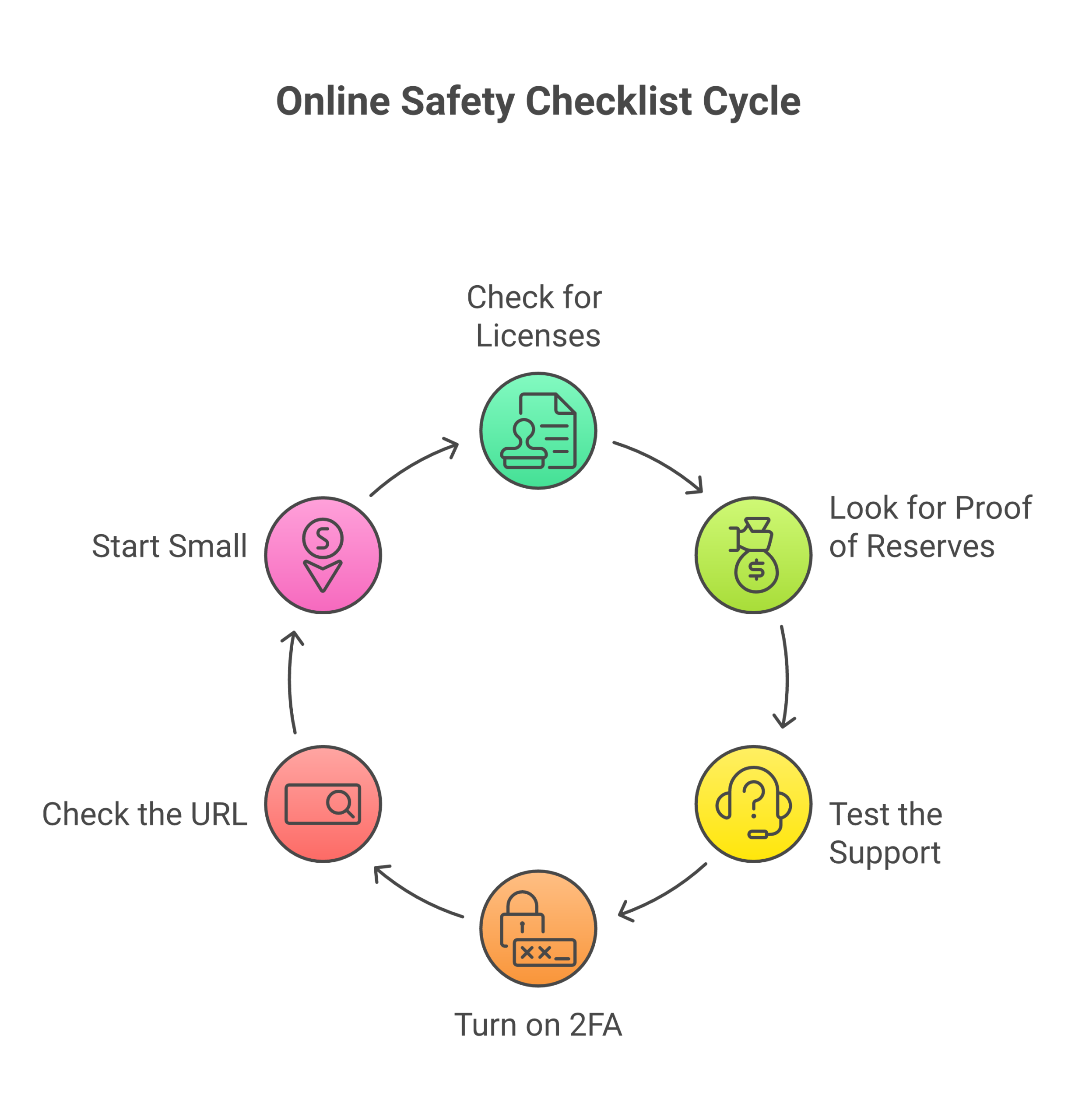
Use this short checklist any time you try a new app, from a big name on a top 10 crypto exchanges in USA list to a small crypto to-crypto exchange.
1. Check if the exchange is allowed to operate
In 2026, rules for crypto are getting much stricter in many places. Governments now want clear licenses, better customer protection, and stronger checks on how exchanges handle money, as recent 2026 policy reviews explain for major regions like the U.S., EU, and Asia in this global crypto policy outlook.
So before you send any money, do this:
- Look for a “Licenses”, “Regulation”, or “Legal” page in the footer
- See if they name real regulators, such as the SEC, FCA, or local central bank
- Search “ExchangeName + license” in a search engine to see if news sites confirm it
If you use one of the biggest crypto exchanges, you should also see clear info about which countries they serve and which they block.
If you cannot find any clear info on licensing, skip it. A real best crypto exchange platform will not hide this.
2. Look for proof of reserves and audits
Next, you want proof that the exchange truly holds user funds and does not mix them with company money. Many pro level guides now list proof of reserves and outside audits as basic requirements for safe platforms in 2026 as explained in this proof of reserves overview for exchange users.
On the site or app, look for:
- A “Proof of Reserves” page with fresh dates
- Simple charts that show “User assets” and “Reserves” are equal or higher
- The name of an outside auditor or on chain wallet addresses you can see
If the site only shows a big number with no method or outside check, treat that as a warning sign.
3. Test the support before you trust it
Even on top crypto trading platforms, things break. You might send to the wrong tag, or a card buy might fail. You want to know there is a real support team, not just a bot.
Quick checks:
- Find a clear “Support” or “Help” button in the app
- Make sure they offer at least two of these: email, chat, or ticket system
- Send a tiny test question, like “Where can I see your fee list?” and see if a human replies
If you only see a Telegram link or random social media account, be careful. A real bitfinex exchange, bitmart exchange, or kucoin exchange will have a proper help center and a way to track your ticket.
4. Turn on 2FA or passkeys from day one
Once you choose a platform from your crypto exchanges list, lock your account down before you deposit.
For each new app:
- Turn on 2FA (two factor) with an authenticator app or passkey, not just SMS
- Set a strong, unique password you do not reuse anywhere else
- Add extra locks like withdrawal passwords or address books if the app offers them
Security experts in 2026 keep saying that most account hacks come from weak logins, not fancy tricks as noted in many security focused checklists for top crypto exchanges with high standards. Simple habits like 2FA stop a lot of trouble.
5. Always check the URL and app name
Phishing sites love to copy the look of the best crypto exchange platform, then steal logins and funds. Take ten seconds each time you log in:
- Type the site address yourself, do not click random links in email or chat
- Check for small spelling changes, like “binence” or “kucoim”
- If you use a mobile app, install it only from the official app store and check reviews
If a “support” person ever sends you a link or asks you to share your screen, slow down. Real exchanges do not need your password or 2FA code.
If you want slow, clear lessons on common scams, fake apps, and phishing tricks, the free guides at Clicks and Trades break these down in plain language so you can feel calmer each time you log in.
6. Start small and build up
Even if you pick from a top 10 crypto exchanges list, never start with your full savings.
Instead:
- Deposit a tiny amount, just enough to test
- Make one small buy or a simple crypto to-crypto exchange trade
- Try a tiny withdrawal back to your bank or wallet
- Only then think about larger amounts
This slow path works for both central platforms and top decentralized exchanges. It also gives you time to learn the screens and fees without big stress.
If you enjoy clear steps like this, you will likely enjoy getting short, friendly checklists by email too. The free Clicks and Trades newsletter shares simple safety moves, how to compare platforms, and how to grow from “total newbie” to “calm user” one tiny step at a time. When you feel ready, you can Sign Up with just your email and keep learning at your own pace.
Summary
This guide helps beginners navigate the crowded world of crypto exchanges by explaining what truly makes a platform safe, easy, and beginner-friendly in 2026. It moves beyond flashy names and big coin lists to focus on the features that matter most when you’re just starting out: clear regulation, transparent security, simple fee structures, quality education, and responsive support. The article walks you through ten distinct exchange types, from low-fee spot trading platforms and mobile-first apps with built-in lessons, to proof-of-reserves leaders, dollar-cost-averaging tools, instant-buy services, beginner-safe staking options, internationally accessible fiat on-ramps, and even a calmer entry point into decentralized, self-custody trading. Each section provides practical checklists, plain-language explanations, and real-world tips so you can compare platforms confidently and avoid common beginner mistakes. By the end, you’ll understand how to match your own needs and comfort level to the right exchange, build safe habits from day one, and grow your skills without fear or hype.
